



 Chat with AI
Exam 2: Chest

Exam 1: Terminology, Positioning, and Imaging Principles199 Questions
Exam 2: Chest102 Questions
Exam 3: Abdomen92 Questions
Exam 4: Upper Limb107 Questions
Exam 5: Humerus and Shoulder Girdle80 Questions
Exam 6: Lower Limb110 Questions
Exam 7: Femur and Pelvic Girdle80 Questions
Exam 8: Cervical and Thoracic Spine84 Questions
Exam 9: Lumbar Spine, Sacrum, and Coccyx75 Questions
Exam 10: Bony Thoraxsternum and Ribs67 Questions
Exam 11: Cranium, Facial Bones, and Paranasal Sinuses181 Questions
Exam 12: Biliary Tract and Upper Gastrointestinal System127 Questions
Exam 13: Lower Gi System83 Questions
Exam 14: Urinary System and Venipuncture100 Questions
Exam 15: Trauma, Mobile, and Surgical Radiography108 Questions
Exam 16: Pediatric Radiography72 Questions
Exam 17: Angiography and Interventional Procedures72 Questions
Exam 18: Computed Tomography103 Questions
Exam 19: Special Radiographic Procedures69 Questions
Exam 20: Diagnostic and Therapeutic Modalities208 Questions
Select questions type


A patient is in the intensive care unit with multiple injuries.The attending physician is concerned about a pleural effusion in the left lung.The patient had surgery recently and cannot stand.Which position/projection would be best to rule out the pleural effusion?
(Multiple Choice)
4.8/5  (90)
(90) Select the exposure factor adjustments needed for the pathologic indication(s) using manual exposure settings (no AEC).Increases or decreases in manual exposure factors are compared with the ideal exposure factors that would be used on a normal, healthy individual.
-Pleurisy
(Multiple Choice)
4.8/5 (90)
(90) 
Match the correct disease or condition with the descriptions of radiographic appearance.(Use each choice only once.)
-Patchy infiltrate with increased radiodensity
(Multiple Choice)
4.8/5 (68)
(68) Top of image receptor placed approximately 3 inches (7.6 cm) above the shoulders is a recommended centering technique for adult chest radiography.
(True/False)
4.8/5 (73)
(73) The CR is centered to midsternum for the AP apical lordotic projection with a 14- × 17-inch (35- × 43-cm) image receptor (IR).
(True/False)
4.8/5 (83)
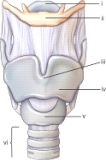
(83) The laryngeal prominence is a positioning landmark located at the level of:
(Multiple Choice)
4.9/5 (78)
(78) For an AP portable chest on an older or hypersthenic male patient, which of the following should occur?
(Multiple Choice)
5.0/5 (80)
(80) Pleurisy may be demonstrated radiographically by associated:
(Multiple Choice)
4.9/5 (80)
(80) What type of CR angle is required for the AP semi axial (alternative lordotic) projection for the lung apices?
(Multiple Choice)
4.9/5 (86)
(86) Why must the technologist slightly angle the CR caudad for most AP projections of the chest?
(Multiple Choice)
4.9/5 (90)
(90) Which of the following factors must be applied to minimize distortion of the heart?
(Multiple Choice)
4.9/5 (75)
(75) A patient enters the emergency department (ED) to be treated for severe trauma.The physician orders an AP supine chest to evaluate the lungs.What can the technologist do to reduce the magnification of the heart?
(Multiple Choice)
4.8/5 (70)
(70) Select the exposure factor adjustments needed for the pathologic indication(s) using manual exposure settings (no AEC).Increases or decreases in manual exposure factors are compared with the ideal exposure factors that would be used on a normal, healthy individual.
-Malignant lung neoplasia.
(Multiple Choice)
4.8/5 (81)
(81) The two most common landmarks for chest positioning are the:
(Multiple Choice)
4.9/5 (81)
(81) Which of the following is NOT a form of occupational lung disease?
(Multiple Choice)
4.8/5 (77)
(77) For an average-size female patient, where is the CR placed for a PA projection of the chest?
(Multiple Choice)
4.8/5 (77)
(77) A small pneumothorax may be detected by performing inspiration and expiration PA projections.
(True/False)
4.8/5 (82)
(82) 
Filters
- Essay(0)
- Multiple Choice(0)
- Short Answer(0)
- True False(0)
- Matching(0)