



 Chat with AI
Exam 34: Nursing Management: Vascular Disorders

Exam 1: The Importance of Nursing21 Questions
Exam 3: Health Disparities and Cultural Care18 Questions
Exam 4: Pain Management25 Questions
Exam 5: Palliative Care16 Questions
Exam 6: Substance Use and Dependency25 Questions
Exam 8: Nursing Management: Inflammation and Wound Healing22 Questions
Exam 9: Genetics and Genomics7 Questions
Exam 10: Altered Immune Responses and Transplantation26 Questions
Exam 11: Nursing Management: Infection and Human Immunodeficiency Virus Infection26 Questions
Exam 12: Cancer43 Questions
Exam 13: Nursing Management: Fluid,electrolyte and Acidbase Imbalances37 Questions
Exam 14: Nursing Management: Preoperative Care21 Questions
Exam 15: Nursing Management: Intraoperative Care18 Questions
Exam 16: Nursing Management: Postoperative Care25 Questions
Exam 17: Nursing Assessment: Visual and Auditory Systems26 Questions
Exam 18: Nursing Management: Visual and Auditory Problems47 Questions
Exam 19: Nursing Assessment: Integumentary System13 Questions
Exam 20: Nursing Management: Integumentary Problems26 Questions
Exam 21: Nursing Management: Burns31 Questions
Exam 22: Nursing Assessment: Respiratory System24 Questions
Exam 23: Nursing Management: Upper Respiratory Problems25 Questions
Exam 24: Nursing Management: Lower Respiratory Problems51 Questions
Exam 25: Nursing Management: Obstructive Pulmonary Diseases44 Questions
Exam 26: Nursing Assessment: Haematological System16 Questions
Exam 27: Nursing Management: Haematological Problems48 Questions
Exam 28: Nursing Assessment: Cardiovascular System24 Questions
Exam 29: Nursing Management: Hypertension24 Questions
Exam 30: Nursing Management: Coronary Artery Disease and Acute Coronary Syndrome43 Questions
Exam 31: Nursing Management: Heart Failure26 Questions
Exam 32: Nursing Management: Ecg Monitoring and Arrhythmias31 Questions
Exam 33: Nursing Management: Inflammatory and Structural Heart Disorders35 Questions
Exam 34: Nursing Management: Vascular Disorders36 Questions
Exam 35: Nursing Assessment: Gastrointestinal System18 Questions
Exam 36: Nursing Management: Nutritional Problems24 Questions
Exam 37: Nursing Management: Obesity20 Questions
Exam 38: Nursing Management: Upper Gastrointestinal Problems47 Questions
Exam 39: Nursing Management: Lower Gastrointestinal Problems56 Questions
Exam 40: Nursing Management: Liver,pancreas and Biliary Tract Problems46 Questions
Exam 41: Nursing Assessment: Urinary System24 Questions
Exam 42: Nursing Management: Renal and Urological Problems45 Questions
Exam 43: Nursing Management: Acute Kidney Injury and Chronic Kidney Disease39 Questions
Exam 44: Nursing Assessment: Endocrine System22 Questions
Exam 45: Nursing Management: Diabetes Mellitus49 Questions
Exam 46: Nursing Management: Endocrine Problems46 Questions
Exam 47: Nursing Assessment: Reproductive System19 Questions
Exam 48: Nursing Management: Breast Disorders28 Questions
Exam 49: Nursing Management: Sexually Transmitted Infections19 Questions
Exam 50: Nursing Management: Female Reproductive Problems49 Questions
Exam 51: Nursing Management: Male Reproductive Problems35 Questions
Exam 52: Nursing Assessment: Nervous System21 Questions
Exam 53: Nursing Management: Acute Intracranial Problems40 Questions
Exam 54: Nursing Management: the Patient With a Stroke30 Questions
Exam 55: Nursing Management: Chronic Neurological Problems36 Questions
Exam 56: Nursing Management: Delirium,depression and Dementia21 Questions
Exam 57: Nursing Management: Peripheral Nerve and Spinal Cord Problems33 Questions
Exam 58: Nursing Assessment: Musculoskeletal System16 Questions
Exam 59: Nursing Management: Musculoskeletal Trauma and Orthopaedic Surgery47 Questions
Exam 60: Nursing Management: Musculoskeletal Problems25 Questions
Exam 61: Nursing Management: Arthritis and Connective Tissue Diseases47 Questions
Exam 62: Nursing Management: Critical Care Environment41 Questions
Exam 63: Nursing Management: Shock,systemic Inflammatory Response Syndrome and Multiple Organ Dysfunction Syndrome29 Questions
Exam 64: Nursing Management: Respiratory Failure and Acute Respiratory Distress Syndrome27 Questions
Exam 65: Nursing Management: Emergency Care Situations26 Questions
Select questions type


Which action by a nurse who is giving fondaparinux (Arixtra)to a patient with a lower leg venous thromboembolism (VTE)indicates that more education about the drug is needed?

Free
(Multiple Choice)
4.8/5  (82)
(82) Correct Answer: Verified
C
While working in the outpatient clinic,the nurse notes that a patient has a history of intermittent claudication.Which statement by the patient would support this information?
Free
(Multiple Choice)
4.8/5 (70)
(70) Correct Answer:Verified
VerifiedD
The nurse reviews the admission orders shown in the accompanying figure for a patient newly diagnosed with peripheral artery disease.Which admission order should the nurse question? 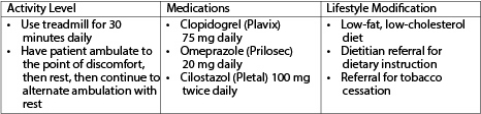
Free
(Multiple Choice)
4.8/5 (65)
(65) Correct Answer:Verified
VerifiedD
A patient with a venous thromboembolism (VTE)is started on enoxaparin (Lovenox)and warfarin (Coumadin).The patient asks the nurse why two medications are necessary.Which response by the nurse is most appropriate?
(Multiple Choice)
4.8/5 (79)
(79) When discussing risk factor modification for a 63-year-old patient who has a 5-cm abdominal aortic aneurysm,the nurse will focus discharge teaching on which patient risk factor?
(Multiple Choice)
4.9/5 (70)
(70) After receiving report,which patient admitted to the emergency department should the nurse assess first?
(Multiple Choice)
4.7/5 (78)
(78) A 67-year-old patient is admitted to the hospital with a diagnosis of venous insufficiency.Which patient statement is most supportive of the diagnosis?
(Multiple Choice)
4.7/5 (77)
(77) The nurse performing an assessment with a patient who has chronic peripheral artery disease (PAD)of the legs and an ulcer on the right second toe would expect to find
(Multiple Choice)
4.8/5 (70)
(70) The nurse is caring for a patient with critical limb ischemia who has just arrived on the nursing unit after having percutaneous transluminal balloon angioplasty.Which action should the nurse perform first?
(Multiple Choice)
4.8/5 (78)
(78) A 73-year-old patient with chronic atrial fibrillation develops sudden severe pain,pulselessness,pallor,and coolness in the right leg.The nurse should notify the health care provider and immediately
(Multiple Choice)
4.9/5 (79)
(79) Which topic should the nurse include in patient teaching for a patient with a venous stasis ulcer on the left lower leg?
(Multiple Choice)
4.8/5 (80)
(80) A patient is being evaluated for post-thrombotic syndrome.Which assessment will the nurse perform?
(Multiple Choice)
4.9/5 (65)
(65) When developing a teaching plan for a 76-year-old patient newly diagnosed with peripheral artery disease (PAD),which instructions should the nurse include?
(Multiple Choice)
4.7/5 (69)
(69) The nurse has started discharge teaching for a patient who is to continue warfarin (Coumadin)following hospitalization for venous thromboembolism (VTE).The nurse determines that additional teaching is needed when the patient says which of the following?
(Multiple Choice)
4.8/5 (72)
(72) Which assessment finding for a patient who has been admitted with a right calf venous thromboembolism (VTE)requires immediate action by the nurse?
(Multiple Choice)
4.8/5 (69)
(69) A 46-year-old is diagnosed with thromboangiitis obliterans (Buerger's disease).When the nurse is developing a discharge teaching plan for the patient,which outcome has the highest priority for this patient?
(Multiple Choice)
4.7/5 (82)
(82) When evaluating the discharge teaching for a patient with chronic peripheral artery disease (PAD),the nurse determines a need for further instruction when the patient says,"I will
(Multiple Choice)
4.8/5 (70)
(70) A patient who is 2 days post-femoral-popliteal bypass graft to the right leg is being cared for on the vascular unit.Which action by a licensed practical/vocational nurse (LPN/LVN)caring for the patient requires the registered nurse (RN)to intervene?
(Multiple Choice)
4.8/5 (75)
(75) A patient in the outpatient clinic has a new diagnosis of peripheral artery disease (PAD).Which group of medications will the nurse plan to include when providing patient teaching about PAD management?
(Multiple Choice)
4.7/5 (89)
(89) A patient has a 6-cm thoracic aortic aneurysm that was discovered during a routine chest x-ray.When obtaining an admission history from the patient,it will be most important for the nurse to ask about
(Multiple Choice)
4.8/5 (81)
(81) 
Filters
- Essay(0)
- Multiple Choice(0)
- Short Answer(0)
- True False(0)
- Matching(0)