



 Chat with AI
Exam 10: Blood

Exam 1: The Human Body: An Orientation128 Questions
Exam 2: Basic Chemistry118 Questions
Exam 3: Cells and Tissues142 Questions
Exam 4: Skin and Body Membranes108 Questions
Exam 5: The Skeletal System124 Questions
Exam 6: The Muscular System129 Questions
Exam 7: The Nervous System161 Questions
Exam 8: Special Senses128 Questions
Exam 9: The Endocrine System149 Questions
Exam 10: Blood116 Questions
Exam 11: The Cardiovascular System160 Questions
Exam 12: The Lymphatic System and Body Defenses135 Questions
Exam 13: The Respiratory System150 Questions
Exam 14: The Digestive System and Body Metabolism162 Questions
Exam 15: The Urinary System138 Questions
Exam 16: The Reproductive System169 Questions
Select questions type


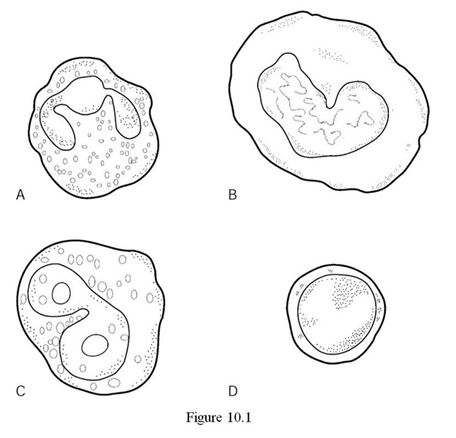 Using Figure 10.1, identify the following:
-The granulocytes are indicated by ________ and ________.
Using Figure 10.1, identify the following:
-The granulocytes are indicated by ________ and ________. (Multiple Choice)
4.8/5  (86)
(86) Match the following function with its blood cell:
-Immature form of this cell is called a reticulocyte
(Multiple Choice)
4.7/5 (82)
(82) All formed elements arise from a common type of stem cell called a hemocytoblast.
(True/False)
4.9/5 (81)
(81) Life at a high altitude, where less oxygen is available, can lead to a red blood cell disorder known as ________.
(Multiple Choice)
4.9/5 (78)
(78) Which blood type is referred to as the "universal recipient" since it can receive blood types A, B, AB, and O?
(Multiple Choice)
4.9/5 (92)
(92) Vascular spasms, a part of process of hemostasis, limit blood loss during blood vessel injury.
(True/False)
4.8/5 (87)
(87) Normal whole blood contains ________ g of hemoglobin per 100 mL.
(Multiple Choice)
4.7/5 (77)
(77) What long, hairlike molecules form the basis of a clot during coagulation?
(Multiple Choice)
4.9/5 (84)
(84) Hereditary bleeding disorders that result from lack of clotting factors are referred to as ________.
(Multiple Choice)
4.9/5 (90)
(90) Substances that the body recognizes as foreign are called ________.
(Multiple Choice)
4.8/5 (82)
(82) Which of the following cells are classified as granulocytes?
(Multiple Choice)
4.8/5 (70)
(70) Which one of the following represents the proper sequence of hemostasis?
(Multiple Choice)
4.9/5 (74)
(74) Why do you think Mrs. Gonzalez was prescribed heparin, an anticoagulant?
(Multiple Choice)
4.8/5 (68)
(68) While looking through a microscope in your anatomy lab, you see a cell whose cytoplasm has a pale pink color with fine granules and a tri-lobed deep purple nucleus. Determine what type of cell you see (be specific). Explain why you made this selection.
(Essay)
4.7/5 (81)
(81) 
Filters
- Essay(0)
- Multiple Choice(0)
- Short Answer(0)
- True False(0)
- Matching(0)