



 Chat with AI
Exam 5: The Chemistry of Life

Exam 1: The Nature of Science and the Characteristics of Life82 Questions
Exam 2: Biological Diversity, Bacteria, and Archaea101 Questions
Exam 3: Protista, Plantae, and Fungi83 Questions
Exam 4: Animalia81 Questions
Exam 5: The Chemistry of Life92 Questions
Exam 6: Cell Structure and Internal Compartments87 Questions
Exam 7: Cell Membranes, Transport, and Communication85 Questions
Exam 8: Energy, Metabolism, and Enzymes81 Questions
Exam 9: Photosynthesis and Cellular Respiration84 Questions
Exam 10: Cell Division89 Questions
Exam 11: Stem Cells, Cancer, and Human Health93 Questions
Exam 12: Patterns of Inheritance75 Questions
Exam 13: Chromosomes and Human Genetics75 Questions
Exam 14: Dna and Genes105 Questions
Exam 15: From Gene to Protein80 Questions
Exam 16: Dna Technology80 Questions
Exam 17: How Evolution Works80 Questions
Exam 18: Evolution of Populations80 Questions
Exam 19: Speciation and the Origins of Biological Diversity80 Questions
Exam 20: The Evolutionary History of Life100 Questions
Exam 21: The Biosphere89 Questions
Exam 22: Growth of Populations69 Questions
Exam 23: Ecological Communities133 Questions
Exam 24: Ecosystems75 Questions
Exam 25: Global Change70 Questions
Exam 26: Internal Organization and Homeostasis79 Questions
Exam 27: Nutrition and Digestion80 Questions
Exam 28: Circulation and Gas Exchange77 Questions
Exam 29: Animal Hormones78 Questions
Exam 30: Nervous and Sensory Systems78 Questions
Exam 31: Skeletons, Muscles, and Movement78 Questions
Exam 32: Defenses Against Disease78 Questions
Exam 33: Reproduction and Development76 Questions
Exam 34: Animal Behavior76 Questions
Exam 35: Plant Structure, Nutrition, and Transport80 Questions
Exam 36: Plant Growth and Reproduction80 Questions
Select questions type


The smallest unit of a chemical element that displays the properties of that element is a(n)
(Multiple Choice)
4.8/5  (79)
(79) O₂, also termed atmospheric oxygen, is considered to be a molecule but not a compound; why not?
(Multiple Choice)
4.9/5 (74)
(74) How many atoms are present in a single molecule of C₈H₁₀N₄O₂?
(Multiple Choice)
4.8/5 (95)
(95) When phospholipids are added to water, they arrange themselves so that
(Multiple Choice)
4.8/5 (71)
(71) A ____________________ is a compound that maintains the pH of a solution by taking up or releasing hydrogen ions.
(Short Answer)
4.9/5 (89)
(89) Based only on the illustration below it could be predicted that ice floats on liquid water because 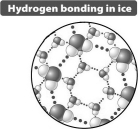
(Multiple Choice)
4.8/5 (72)
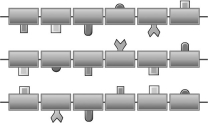
(72) Using hydrolysis, a total of ____________________ water molecules would be required to completely separate the polymer below into individual monomers.
(Short Answer)
4.8/5 (78)
(78) One of the symptoms of kidney disease is the presence of proteins in a patient's urine. To quickly test for kidney disease using a urine sample, a doctor might add a chemical that causes a color change when
(Multiple Choice)
4.8/5 (90)
(90) 
Filters
- Essay(0)
- Multiple Choice(0)
- Short Answer(0)
- True False(0)
- Matching(0)