



 Chat with AI
Exam 19: The Citric Acid Cycle

Exam 1: Biochemistry and the Organization of Cells73 Questions
Exam 2: Water: the Solvent for Biochemical Reactions85 Questions
Exam 3: Amino Acids and Peptides75 Questions
Exam 4: The Three-Dimensional Structure of Proteins82 Questions
Exam 5: Protein Purification and Characterization Techniques67 Questions
Exam 6: The Behavior of Proteins: Enzymes83 Questions
Exam 7: The Behavior of Proteins: Enzymes, Mechanisms, and Control81 Questions
Exam 8: Lipids and Proteins Are Associated in Biological Membranes90 Questions
Exam 9: Nucleic Acids: How Structure Conveys Information66 Questions
Exam 10: Biosynthesis of Nucleic Acids: Replication86 Questions
Exam 11: Transcription of the Genetic Code: Biosynthesis of RNA98 Questions
Exam 12: Protein Synthesis: Translation of the Genetic Message85 Questions
Exam 13: Nucleic Acid Biotechnology Techniques94 Questions
Exam 14: Viruses, Cancer, and Immunology42 Questions
Exam 15: The Importance of Energy Changes and Electron Transfer in Metabolism60 Questions
Exam 16: Carbohydrates92 Questions
Exam 17: Glycolysis67 Questions
Exam 18: Storage Mechanisms and Control in Carbohydrate Metabolism82 Questions
Exam 19: The Citric Acid Cycle80 Questions
Exam 20: Electron Transport and Oxidative Phosphorylation66 Questions
Exam 21: Lipid Metabolism95 Questions
Exam 22: Photosynthesis74 Questions
Exam 23: The Metabolism of Nitrogen78 Questions
Exam 24: Integration of Metabolism: Cellular Signaling68 Questions
Select questions type


Which of the reactions of the citric acid cycle requires FAD as a coenzyme?
(Multiple Choice)
4.7/5  (83)
(83) Which group of small molecules best fit the boxes associated with the reaction shown? 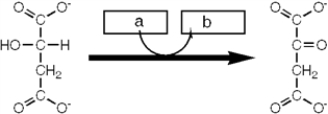 a b I. +2 II. III. IV.
 (Multiple Choice)
4.8/5 (93)
(93) Exhibit 19A The following compounds are all intermediates in the citric acid cycle.
 -Refer to Exhibit 19A. Which intermediate is formed from acetyl-CoA and oxaloacetate.
 (Multiple Choice)
4.8/5 (72)
(72) Which of the following is not a component of the pyruvate dehydrogenase complex?
(Multiple Choice)
4.8/5 (81)
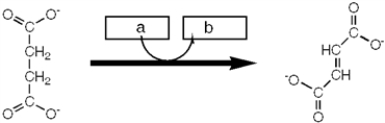
(81) 
An organism that undergoes the glyoxylate cycle can make sugar from fat because:
(Multiple Choice)
4.9/5 (84)
(84) A control point outside the citric acid cycle is the reaction catalyzed by
(Multiple Choice)
4.9/5 (83)
(83) Which of the following is true regarding the control of pyruvate dehydrogenase?
(Multiple Choice)
4.7/5 (77)
(77) The citric acid cycle is considered part of aerobic metabolism even though oxygen does not appear explicitly in any reaction because
(Multiple Choice)
5.0/5 (71)
(71) Which of the following describes a use for acetyl-CoA as an important intermediate in metabolism?
(Multiple Choice)
4.9/5 (82)
(82) Weight loss in humans can be difficult to achieve, since we lack the ability to convert our fats to sugars, and it is difficult to change our metabolism to using fats as a primary energy source.
(True/False)
4.8/5 (86)
(86) Intermediates of the citric acid cycle are especially important in the synthesis of fatty acids and amino acids.
(True/False)
4.9/5 (82)
(82) All but one of the enzymes of the citric acid cycle are found in this part of the mitochondrion:
(Multiple Choice)
4.9/5 (73)
(73) The citric acid cycle produces one high energy phosphate molecule per cycle directly in the form of ____
(Multiple Choice)
4.8/5 (86)
(86) Which of the following enzymes is allosterically inhibited by ATP?
(Multiple Choice)
4.9/5 (88)
(88) The only difference between succinate and fumarate is the geometry around their double bonds, one contains a cis double bond and the other contains a trans double bond.
(True/False)
4.8/5 (82)
(82) The citric acid cycle uses anaplerotic reactions to get rid of the many intermediates of the cycle that accumulate during catabolism of amino acids.
(True/False)
5.0/5 (91)
(91) Which of the following does not play a role in the overall aerobic metabolism of glucose?
(Multiple Choice)
4.8/5 (90)
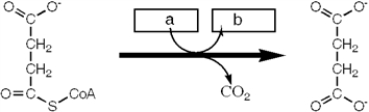
(90) 

Filters
- Essay(0)
- Multiple Choice(0)
- Short Answer(0)
- True False(0)
- Matching(0)