



 Chat with AI
Exam 13: Monetary Policy

Exam 1: The Wealth of Nations: Ownership and Economic Freedom87 Questions
Exam 2: Scarcity and Opportunity Costs87 Questions
Exam 3: The Market and Price System96 Questions
Exam 4: The Aggregate Economy61 Questions
Exam 5: National Income Accounting104 Questions
Exam 6: An Introduction to the Foreign Exchapterange Market and the Balance of Payments99 Questions
Exam 7: Unemployment and Inflation129 Questions
Exam 8: Macroeconomic Equilibrium: Aggregate Demand and Supply122 Questions
Exam 9: Aggregate Expenditures120 Questions
Exam 10: Income and Expenditures Equilibrium134 Questions
Exam 11: Fiscal Policy94 Questions
Exam 12: Money and Banking125 Questions
Exam 13: Monetary Policy141 Questions
Exam 14: Macroeconomic Policy: Tradeoffs, Expectations, Credibility, and Sources of Business Cycles117 Questions
Exam 15: Macroeconomic Viewpoints: New Keynesian, Monetarist, and New Classical103 Questions
Exam 16: Economic Growth95 Questions
Exam 17: Development Economics105 Questions
Exam 18: Globalization85 Questions
Exam 19: World Trade Equilibrium112 Questions
Exam 20: International Trade Restrictions109 Questions
Exam 21: Exchapterange Rates and Financial Links Between Countries132 Questions
Select questions type


To fix the foreign currency price of domestic currency below the free market equilibrium rate, a government must:
(Multiple Choice)
4.9/5  (82)
(82) According to the equation of exchange, if the money supply is $800 million, real GDP is $3,000 million, and nominal GDP is $4,000 million, then the velocity of money is equal to:
(Multiple Choice)
4.7/5 (81)
(81) Suppose a bond sells for $2,000 and pays $200 per year in interest. What will happen to the current interest rate if the price of the bond changes to $1,800?
(Multiple Choice)
4.7/5 (75)
(75) An outward shift of the money demand function indicates an increase in the market rate of interest and hence a decrease in the level of investment in the economy.
(True/False)
4.8/5 (76)
(76) Which of the following is assumed to be constant in the quantity theory of money?
(Multiple Choice)
4.7/5 (75)
(75) An individual who holds some of her wealth in the form of money in order to pay rent and buy groceries is illustrating the transactions demand for money.
(True/False)
4.9/5 (84)
(84) Suppose you hold $5,000 in cash when the interest rate on bonds is 4 percent. Other things equal, as the bond interest rate declines to 3 percent, you will want to hold more money because the opportunity cost of holding money has decreased.
(True/False)
4.7/5 (79)
(79) The supply curve of U.S. dollars in the foreign exchange market is:
(Multiple Choice)
4.9/5 (68)
(68) What is the current market price of a bond that pays $200 per year indefinitely and has a current yield of 16 percent?
(Multiple Choice)
4.8/5 (86)
(86) When the foreign exchange value of the Mexican peso is above its equilibrium rate, the peso will:
(Multiple Choice)
4.8/5 (75)
(75) Which of the following is the official policy-making body of the Federal Reserve System?
(Multiple Choice)
4.8/5 (97)
(97) An increase in the money supply will lead to an increase in equilibrium real GDP only if:
(Multiple Choice)
4.8/5 (77)
(77) Suppose that the nominal money supply equals $2 billion and nominal GDP is $16 billion. Then, according to the equation of exchange, the velocity of money equals 8.
(True/False)
4.8/5 (91)
(91) The table given below shows the assets and liabilities of the National Bank. Assume that this is the only bank in the economy.?
 -Refer to Table 13.2. If the reserve requirement is 10 percent, how much can the whole banking system expand the money supply?
 (Multiple Choice)
4.8/5 (73)
(73) The figure given below depicts the equilibrium exchange rate between the U.S dollar and the Mexican peso.?Figure 13.2
 -Refer to Figure 13.2. Given a target exchange rate of MXP 11 = $1 with S₁ the relevant supply curve and a decline in Mexican demand for U.S. dollars from D₁ to D₂ the Fed intervenes in the foreign exchange market by:
 (Multiple Choice)
5.0/5 (85)
(85) Scenario 13.1?Assume the following conditions hold.
Now the Federal Reserve engages in an open market operation by purchasing $1 billion worth of government bonds from private bond dealers, who then deposit the $1 billion in the banks. This acts to lower the equilibrium interest rate by 2 percent.
a.At all banks, excess reserves are zero.
b.The deposit expansion multiplier is 3.
c.The investment spending function is as illustrated in the figure below.
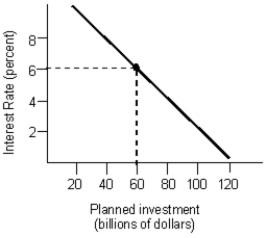 -Refer to Scenario 13.1. What is the change in excess reserves following the open market operation by the Fed?
 (Multiple Choice)
4.8/5 (88)
(88) The money supply function reflects a positive relationship between the interest rate and the quantity of money supplied.
(True/False)
4.8/5 (83)
(83) Each district bank of the Fed comprises of nine board of directors of which three are appointed by the:
(Multiple Choice)
4.8/5 (86)
(86) A leftward shift in the money demand function would result from:
(Multiple Choice)
5.0/5 (85)
(85) 
Filters
- Essay(0)
- Multiple Choice(0)
- Short Answer(0)
- True False(0)
- Matching(0)