



 Chat with AI
Exam 2: The Chemistry of Living Things

Exam 1: Human Biology, Science, and Society69 Questions
Exam 2: The Chemistry of Living Things100 Questions
Exam 3: Structure and Function of Cells107 Questions
Exam 4: From Cells to Organ Systems88 Questions
Exam 5: The Skeletal System74 Questions
Exam 6: The Muscular System83 Questions
Exam 7: Blood95 Questions
Exam 8: Heart and Blood Vessels107 Questions
Exam 9: The Immune System and Mechanisms of Defense102 Questions
Exam 10: The Respiratory System: Exchange of Gases81 Questions
Exam 11: The Nervous System: Integration and Control100 Questions
Exam 12: Sensory Mechanisms83 Questions
Exam 13: The Endocrine System82 Questions
Exam 14: The Digestive System and Nutrition80 Questions
Exam 15: The Urinary System70 Questions
Exam 16: Reproductive Systems89 Questions
Exam 17: Cell Reproduction and Differentiation78 Questions
Exam 18: Cancer: Uncontrolled Cell Division and Differentiation77 Questions
Exam 19: Genetics and Inheritance71 Questions
Exam 20: DNA Technology and Genetic Engineering71 Questions
Exam 21: Development and Aging72 Questions
Exam 22: Evolution and the Origins of Life78 Questions
Exam 23: Ecosystems and Populations74 Questions
Exam 24: Human Impacts, Biodiversity, and Environmental Issues71 Questions
Select questions type


Which one of the following is TRUE regarding electrons, shells, and energy?
(Multiple Choice)
4.7/5  (72)
(72) A diet rich in ________ fat is believed to contribute to the development of cardiovascular disease.
(Short Answer)
4.8/5 (83)
(83) Water held behind a dam has a large amount of ________ energy.
(Short Answer)
4.8/5 (73)
(73) The molecule that stores the set of instructions of a cell and directs everything a cell does is ________.
(Short Answer)
4.8/5 (78)
(78) Which one of the following is needed to synthesize a new strand of DNA?
(Multiple Choice)
4.8/5 (84)
(84) 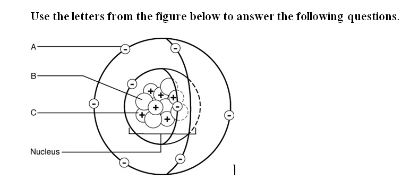 -In order for this atom to be electrically neutral, the number of subatomic particles labeled "A" in the figure would have to equal the number of ________.
 (Short Answer)
4.8/5 (72)
(72) Use the letters from the figure below to answer the following questions.
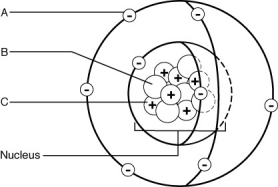 -The number of subatomic particles ________ is the atomic number of that atom.
 (Short Answer)
4.9/5 (86)
(86) Match each of the following descriptions to the appropriate term. Each term may be used only once.
Correct Answer: Verified
Premises:
Responses:
(Matching)
4.8/5 (87)
(87) If your blood pH is lowered significantly, many proteins will not be able to fold correctly. The result will be decreased enzyme function throughout the body.
(True/False)
4.8/5 (82)
(82) Body fluids in humans have a high buffering capacity because of
(Multiple Choice)
4.7/5 (89)
(89) The more buffers present in a body fluid, the more likely that the blood pH will change after absorbing nutrients during digestion.
(True/False)
5.0/5 (70)
(70) When water is released from a dam, potential energy is converted to chemical energy.
(True/False)
4.9/5 (76)
(76) A student has isolated a large compound (macromolecule) from cells. Chemical analysis of the compound shows that it is made up of the following elements: carbon, hydrogen, oxygen, nitrogen, and phosphorus. To which group of macromolecules does this compound most likely belong?
(Multiple Choice)
4.8/5 (78)
(78) Because carbon requires four additional electrons to fill its outermost shell, it has a natural tendency to form four covalent bonds with other atoms, making it an ideal element for forming structures in living cells.
(True/False)
4.8/5 (77)
(77) 
Filters
- Essay(0)
- Multiple Choice(0)
- Short Answer(0)
- True False(0)
- Matching(0)