



 Chat with AI
Exam 14: Olfaction

Exam 1: Introduction69 Questions
Exam 2: The First Steps in Vision: From Light to Neural Signals69 Questions
Exam 3: Spatial Vision: From Spots to Stripes63 Questions
Exam 4: Perceiving and Recognizing Objects57 Questions
Exam 5: The Perception of Color62 Questions
Exam 6: Space Perception and Binocular Vision60 Questions
Exam 7: Attention and Scene Perception64 Questions
Exam 8: Visual Motion Perception56 Questions
Exam 9: Hearing: Physiology and Psychoacoustics79 Questions
Exam 10: Hearing in the Environment49 Questions
Exam 11: Music and Speech Perception50 Questions
Exam 12: Vestibular Sensation63 Questions
Exam 13: Touch71 Questions
Exam 14: Olfaction68 Questions
Exam 15: Taste53 Questions
Select questions type


The processing of components in an odorant mixture is completed by using
(Multiple Choice)
4.9/5  (63)
(63) Over the course of 30 days, the percentage of correct recognitions of an odor
(Multiple Choice)
4.8/5 (70)
(70) When you smell a candle, what kind of olfaction are you engaging in?
(Multiple Choice)
4.9/5 (82)
(82) The _______ is a narrow space at the back of the nose into which air flows and where the main olfactory epithelium is located.
(Multiple Choice)
4.9/5 (87)
(87) Refer to the figure.
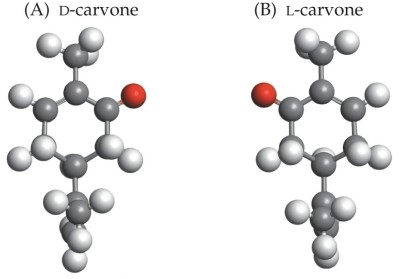 This figure illustrates the concept of
 (Multiple Choice)
4.7/5 (81)
(81) _______ is the psychological process by which, after long-term exposure to an odorant, one is no longer able to detect that odorant, or has very diminished detection ability.
(Multiple Choice)
4.9/5 (74)
(74) If you are in a food court and recognize the smell of a particular dish but cannot name it, you are experiencing the _______ phenomenon.
(Multiple Choice)
5.0/5 (86)
(86) _______ are chemicals emitted by one member of a species that trigger a psychological or behavioral response in another member of the same species.
(Multiple Choice)
4.8/5 (91)
(91) 
Filters
- Essay(0)
- Multiple Choice(0)
- Short Answer(0)
- True False(0)
- Matching(0)