



 Chat with AI
Exam 27: Plant Form and Function

Exam 1: Invitation to Biology100 Questions
Exam 2: Molecules of Life100 Questions
Exam 3: Cell Structure101 Questions
Exam 4: Energy and Metabolism100 Questions
Exam 5: Capturing and Releasing Energy100 Questions
Exam 6: Dna Structure and Function100 Questions
Exam 7: Gene Expression and Control100 Questions
Exam 8: How Cells Reproduce100 Questions
Exam 9: Patterns of Inheritance96 Questions
Exam 10: Biotechnology100 Questions
Exam 11: Evidence of Evolution85 Questions
Exam 12: Processes of Evolution99 Questions
Exam 13: Early Life Forms and the Viruses99 Questions
Exam 14: Plants and Fungi100 Questions
Exam 15: Animal Evolution100 Questions
Exam 16: Population Ecology100 Questions
Exam 17: Communities and Ecosystems100 Questions
Exam 18: The Biosphere and Human Effects99 Questions
Exam 19: Animal Tissues and Organs100 Questions
Exam 20: How Animals Move100 Questions
Exam 21: Circulation and Respiration100 Questions
Exam 22: Immunity100 Questions
Exam 23: Digestion and Excretion100 Questions
Exam 24: Neural Control and the Senses100 Questions
Exam 25: Endocrine Control100 Questions
Exam 26: Reproduction and Development100 Questions
Exam 27: Plant Form and Function100 Questions
Exam 28: Plant Reproduction and Development100 Questions
Select questions type


What compound diffuses through open stomata into plant tissues thereby initiating photosynthesis?
(Multiple Choice)
4.9/5  (83)
(83) Which of the following is a plant cell type that is commonly found in and gives support to vascular tissues in stems and leaves?
(Multiple Choice)
4.8/5 (73)
(73) Which of the following cells conduct sugars and other organic solutes?
(Multiple Choice)
4.8/5 (76)
(76) Fluid inside vessel elements is being pulled upward primarily by ____.
(Multiple Choice)
4.7/5 (81)
(81) Choose the one most appropriate answer for each.
Premises:
apical meristem
Responses:
long, tapered sclerenchyma cell occurring in a bundle that supports and protects vascular tissue in stems and leaves
mass of rapidly dividing stem cells in the tip of a shoot or root
gives rise to periderm
Correct Answer: Verified
Premises:
Responses:
(Matching)
4.9/5 (67)
(67) What type of specialized stem do plants such as irises and grasses possess?
(Multiple Choice)
4.9/5 (91)
(91) In older stems and roots, a complex dermal tissue called ____ replaces the epidermis.
(Multiple Choice)
4.9/5 (75)
(75) During secondary growth of a plant, ____ gives rise to wood and ____ gives rise to periderm.
(Multiple Choice)
4.9/5 (90)
(90) Structure of an older, woody eudicot stem.
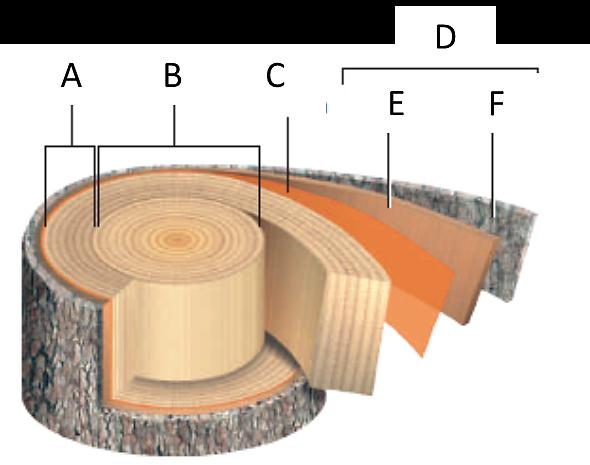
Premises:
Sapwood is denoted by letter _____.
Responses:
D
A
C
Correct Answer:Verified
VerifiedPremises:
Responses:
(Matching)
4.9/5 (92)
(92) Which of the following plants was used to remove contaminants from soil at the Aberdeen Proving Ground site?
(Multiple Choice)
4.8/5 (90)
(90) In an annual tree ring, the wood with large diameter, thin-walled cells is ____.
(Multiple Choice)
4.9/5 (87)
(87) 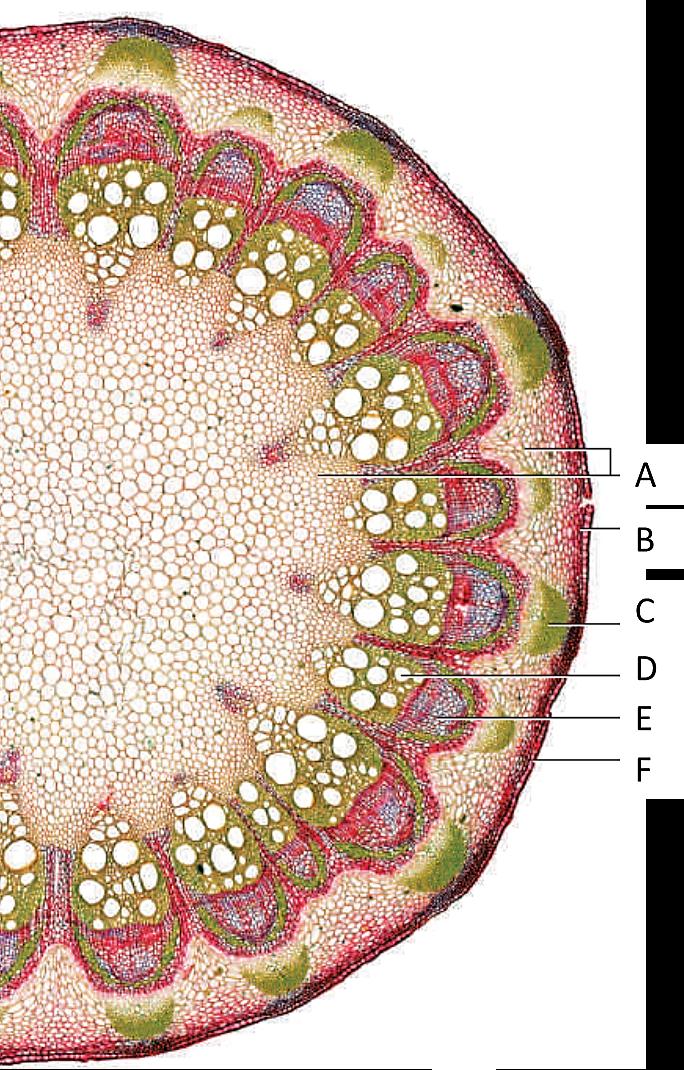
Locations of tissues in a eudicot stem .
Premises:
Sclerenchyma is denoted by letter _____.
Responses:
F
C
D
Correct Answer:Verified
VerifiedPremises:
Responses:
(Matching)
4.8/5 (83)
(83) Stem and root thickening in eudicots is accomplished by ___ and is called ___ growth.
(Multiple Choice)
4.9/5 (93)
(93) To which of the following processes is transpiration most analogous?
(Multiple Choice)
4.8/5 (72)
(72) Structure of an older, woody eudicot stem.
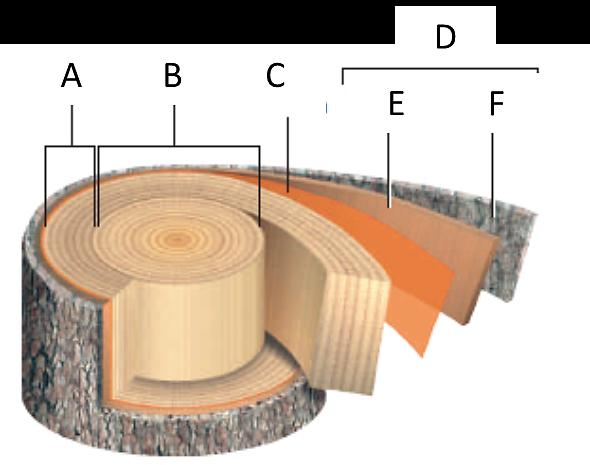
Premises:
The vascular cambium is denoted by letter _____.
Responses:
C
A
F
Correct Answer:Verified
VerifiedPremises:
Responses:
(Matching)
4.9/5 (81)
(81) What complex polysaccharide imparts flexibility to the unevenly thickened cell walls of collenchyma cells?
(Multiple Choice)
4.9/5 (74)
(74) 
Filters
- Essay(0)
- Multiple Choice(0)
- Short Answer(0)
- True False(0)
- Matching(0)