



 Chat with AI
Exam 18: The Biosphere and Human Effects

Exam 1: Invitation to Biology100 Questions
Exam 2: Molecules of Life100 Questions
Exam 3: Cell Structure101 Questions
Exam 4: Energy and Metabolism100 Questions
Exam 5: Capturing and Releasing Energy100 Questions
Exam 6: Dna Structure and Function100 Questions
Exam 7: Gene Expression and Control100 Questions
Exam 8: How Cells Reproduce100 Questions
Exam 9: Patterns of Inheritance96 Questions
Exam 10: Biotechnology100 Questions
Exam 11: Evidence of Evolution85 Questions
Exam 12: Processes of Evolution99 Questions
Exam 13: Early Life Forms and the Viruses99 Questions
Exam 14: Plants and Fungi100 Questions
Exam 15: Animal Evolution100 Questions
Exam 16: Population Ecology100 Questions
Exam 17: Communities and Ecosystems100 Questions
Exam 18: The Biosphere and Human Effects99 Questions
Exam 19: Animal Tissues and Organs100 Questions
Exam 20: How Animals Move100 Questions
Exam 21: Circulation and Respiration100 Questions
Exam 22: Immunity100 Questions
Exam 23: Digestion and Excretion100 Questions
Exam 24: Neural Control and the Senses100 Questions
Exam 25: Endocrine Control100 Questions
Exam 26: Reproduction and Development100 Questions
Exam 27: Plant Form and Function100 Questions
Exam 28: Plant Reproduction and Development100 Questions
Select questions type


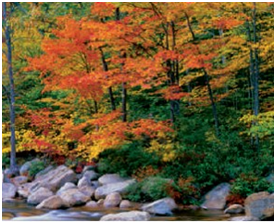
The conversion of grasslands or woodlands to desert-like conditions is called ____.
(Multiple Choice)
4.8/5  (91)
(91) 
Match each description with the appropriate biome. Some choices may be used more than once.
Premises:
dominant plants are drought-resistant shrubs adapted to fire
Responses:
boreal forest
tundra
tropical rainforest
Correct Answer: Verified
Premises:
Responses:
(Matching)
4.7/5 (81)
(81) Very high concentrations of ____ accumulates in large predatory fishes such as swordfish, bluefin tuna, and albacore tuna, which may cause developmental abnormalities when consumed by pregnant women.
(Multiple Choice)
4.9/5 (75)
(75) Which primary succession event led to the formation of the tundra?
(Multiple Choice)
4.8/5 (80)
(80) Scientists are documenting the level of radiation in ____ forests along the western coasts of North America because they tend to take up and concentrate radioactive material, making it easier to detect.
(Multiple Choice)
4.9/5 (82)
(82) Match each key concept with its correct description.
Premises:
biological magnification
Responses:
desertification
nonrenewable energy
deforestation
Correct Answer:Verified
VerifiedPremises:
Responses:
(Matching)
4.9/5 (92)
(92) The Klamath-Siskiyou forest in southwestern Oregon and northwestern California is home to many rare conifers, two endangered birds, and the endangered Coho salmon. Because of this, it is considered to be a conservation _____.
(Multiple Choice)
4.9/5 (77)
(77) Crater Lake in Oregon formed as a result of a(n)____ about 7,700 years ago.
(Multiple Choice)
4.8/5 (69)
(69) A(n)____ species resides where it evolved, and is found nowhere else on Earth.
(Multiple Choice)
4.8/5 (86)
(86) Match each description with the correct aquatic ecosystem.
Premises:
the type of rock present, plus its depth, and temperature, affect species composition along its length
Responses:
streams
hydrothermal vents
open ocean
Correct Answer:Verified
VerifiedPremises:
Responses:
(Matching)
4.8/5 (83)
(83) In this freshwater aquatic ecosystem, species composition varies along its length based on rock types, depth, oxygen concentrations, and temperature.
(Multiple Choice)
4.8/5 (87)
(87) Match each key concept with its correct description.
Premises:
hydroelectric power
Responses:
hole in the ozone layer
Great Pacific Garbage Patch
ecological restoration
Correct Answer:Verified
VerifiedPremises:
Responses:
(Matching)
4.8/5 (87)
(87) Which biome has a layered structure that will contain many vines and epiphytes?
(Multiple Choice)
4.9/5 (76)
(76) The Great Pacific Garbage Patch is a region of the north central Pacific where a high concentration of confetti-like plastic particles swirl slowly around an area as large as the state of ____.
(Multiple Choice)
5.0/5 (87)
(87) 
Filters
- Essay(0)
- Multiple Choice(0)
- Short Answer(0)
- True False(0)
- Matching(0)