



 Chat with AI
Exam 17: Lipids

Exam 1: Chemistry in Our Lives40 Questions
Exam 2: Chemistry and Measurements70 Questions
Exam 3: Matter and Energy77 Questions
Exam 4: Atoms and Elements83 Questions
Exam 5: Nuclear Chemistry64 Questions
Exam 6: Ionic and Molecular Compounds83 Questions
Exam 7: Chemical Reactions and Quantities96 Questions
Exam 8: Gases84 Questions
Exam 9: Solutions84 Questions
Exam 10: Reaction Rates and Chemical Equilibrium52 Questions
Exam 11: Acids and Bases72 Questions
Exam 12: Introduction to Organic Chemistry: Hydrocarbons105 Questions
Exam 13: Alcohols, Phenols, Thiols, and Ethers49 Questions
Exam 14: Aldehydes and Ketones44 Questions
Exam 15: Carbohydrates54 Questions
Exam 16: Carboxylic Acids and Esters55 Questions
Exam 17: Lipids70 Questions
Exam 18: Amines and Amides60 Questions
Exam 19: Amino Acids and Proteins66 Questions
Exam 20: Enzymes and Vitamins68 Questions
Exam 21: Nucleic Acids and Protein Synthesis55 Questions
Exam 22: Metabolic Pathways for Carbohydrates58 Questions
Exam 23: Metabolism and Energy Production51 Questions
Exam 24: Metabolic Pathways for Lipids and Amino Acids56 Questions
Select questions type


In a simple model of atherosclerosis and heart disease, the compound that forms plaques that adhere to the walls of the blood vessels is ________.
(Multiple Choice)
4.9/5  (81)
(81) Answer the question(s)that follow about the diagram shown below. 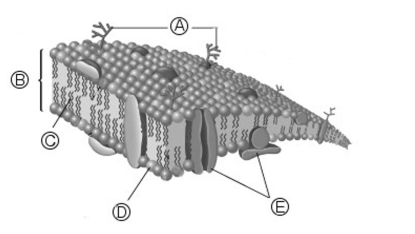 -In this diagram of a cell membrane, the small branched objects labeled (A)are part of a
 (Multiple Choice)
4.9/5 (73)
(73) Compared to saturated fatty acids, unsaturated fatty acids have
(Multiple Choice)
4.8/5 (73)
(73) Answer the question(s)that follow about the diagram shown below.
-In this diagram of a cell membrane, the object labeled (C)is a
-In this diagram of a cell membrane, the object labeled (C)is a (Multiple Choice)
4.9/5 (78)
(78) Choose the polyunsaturated triacylglycerol from the compounds below.
(Multiple Choice)
4.8/5 (68)
(68) Choose the satuarted triacylglycerol from the compounds below.
(Multiple Choice)
4.9/5 (71)
(71) The steroid hormone that increases the blood glucose and glycogen levels from fatty acids and amino acids is
(Multiple Choice)
4.8/5 (78)
(78) A double cheeseburger with bacon contains 640 kcal and 39 g of fat. Calculate the percentage of total kilocalories due to fat (1 gram of fat = 9 kcal).
(Multiple Choice)
4.8/5 (72)
(72) Which of the following lipids will give no fatty acid when hydrolyzed?
(Multiple Choice)
4.9/5 (75)
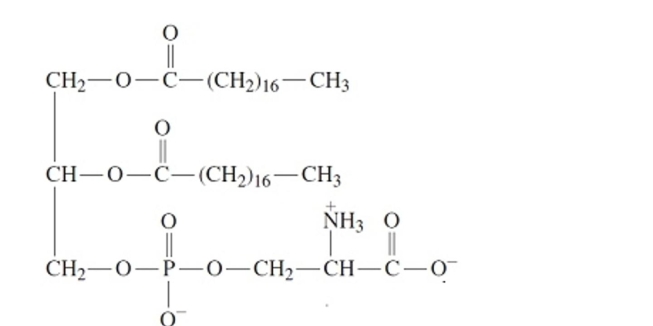
(75) 
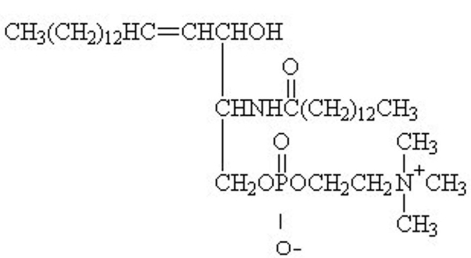
Unsaturated fatty acids have lower melting points than saturated fatty acids because
(Multiple Choice)
4.8/5 (89)
(89) 
Filters
- Essay(0)
- Multiple Choice(0)
- Short Answer(0)
- True False(0)
- Matching(0)