



 Chat with AI
Exam 20: Enzymes and Vitamins

Exam 1: Chemistry in Our Lives40 Questions
Exam 2: Chemistry and Measurements70 Questions
Exam 3: Matter and Energy77 Questions
Exam 4: Atoms and Elements83 Questions
Exam 5: Nuclear Chemistry64 Questions
Exam 6: Ionic and Molecular Compounds83 Questions
Exam 7: Chemical Reactions and Quantities96 Questions
Exam 8: Gases84 Questions
Exam 9: Solutions84 Questions
Exam 10: Reaction Rates and Chemical Equilibrium52 Questions
Exam 11: Acids and Bases72 Questions
Exam 12: Introduction to Organic Chemistry: Hydrocarbons105 Questions
Exam 13: Alcohols, Phenols, Thiols, and Ethers49 Questions
Exam 14: Aldehydes and Ketones44 Questions
Exam 15: Carbohydrates54 Questions
Exam 16: Carboxylic Acids and Esters55 Questions
Exam 17: Lipids70 Questions
Exam 18: Amines and Amides60 Questions
Exam 19: Amino Acids and Proteins66 Questions
Exam 20: Enzymes and Vitamins68 Questions
Exam 21: Nucleic Acids and Protein Synthesis55 Questions
Exam 22: Metabolic Pathways for Carbohydrates58 Questions
Exam 23: Metabolism and Energy Production51 Questions
Exam 24: Metabolic Pathways for Lipids and Amino Acids56 Questions
Select questions type


Urea is converted to ammonia and carbon dioxide by the action of urease. What will be the effect on the rate if the temperature of the reaction is lowered from  (the optimum temperature) to

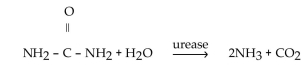
(the optimum temperature) to

Free
(Multiple Choice)
4.7/5  (66)
(66) Correct Answer: Verified
D
Another name for a zymogen is a(n)________.
Free
(Multiple Choice)
4.8/5 (94)
(94) Correct Answer:Verified
VerifiedB
 ions are used in the functioning of
Free
(Multiple Choice)
4.8/5 (73)
(73) Correct Answer:Verified
VerifiedE
Consider an enzymatic reaction in which the initial concentration of substrate is low. If the amount of enzyme is held constant, but the amount of substrate is increased, the rate of an enzyme catalyzed reaction will
(Multiple Choice)
4.8/5 (62)
(62) Indicate whether each of the following is fat soluble or water soluble.
-niacin
(Short Answer)
4.8/5 (80)
(80) When an end product from an enzyme-mediated sequence is also an inhibitor for an earlier step in the reaction sequence, the process is referred to as
(Multiple Choice)
4.8/5 (90)
(90) A compound that binds to the enzyme at a site other than the active site, and changes its shape so that a substrate cannot enter the active site, is called a(n)
(Multiple Choice)
4.9/5 (81)
(81) Indicate whether each of the following is fat soluble or water soluble.
-vitamin K
(Short Answer)
4.8/5 (72)
(72) Indicate whether each of the following is fat soluble or water soluble.
-pantothenic acid
(Short Answer)
4.9/5 (79)
(79) To what main class of enzymes does the enzyme that catalyzes the following reaction belong? 
(Multiple Choice)
4.8/5 (83)
(83) When a substrate binds to an enzyme for reaction, it binds to the
(Multiple Choice)
4.9/5 (78)
(78) The optimum pH for the activity of trypsin is about ________.
(Multiple Choice)
4.9/5 (86)
(86) Indicate whether each of the following is fat soluble or water soluble.
-riboflavin
(Short Answer)
4.9/5 (88)
(88) To what main class of enzymes does the enzyme that catalyzes the following reaction belong? 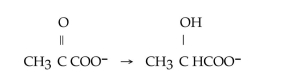
(Multiple Choice)
4.9/5 (81)
(81) Most enzymes are deactivated permanently above a temperature of about
(Multiple Choice)
4.8/5 (70)
(70) Urease catalyzes only the hydrolysis of urea, and no other substrates. This limited activity is called
(Multiple Choice)
4.8/5 (60)
(60) Indicate whether each of the following is fat soluble or water soluble.
-ascorbic acid
(Short Answer)
4.9/5 (74)
(74) When a cofactor is a small organic molecule, it is known as a(n)
(Multiple Choice)
4.9/5 (78)
(78) 
Filters
- Essay(0)
- Multiple Choice(0)
- Short Answer(0)
- True False(0)
- Matching(0)