



 Chat with AI
Exam 3: Water and Life

Exam 1: Evolution, the Themes of Biology, and Scientific Inquiry51 Questions
Exam 2: The Chemical Context of Life61 Questions
Exam 3: Water and Life55 Questions
Exam 4: Carbon and the Molecular Diversity of Life58 Questions
Exam 5: The Structure and Function of Large Biological Molecules70 Questions
Exam 6: A Tour of the Cell66 Questions
Exam 7: Membrane Structure and Function68 Questions
Exam 8: An Introduction to Metabolism67 Questions
Exam 9: Cellular Respiration and Fermentation68 Questions
Exam 10: Photosynthesis65 Questions
Exam 11: Cell Communication65 Questions
Exam 12: The Cell Cycle66 Questions
Exam 13: Meiosis and Sexual Life Cycles64 Questions
Exam 14: Mendel and the Gene Idea62 Questions
Exam 15: The Chromosomal Basis of Inheritance58 Questions
Exam 16: The Molecular Basis of Inheritance65 Questions
Exam 17: Gene Expression: From Gene to Protein67 Questions
Exam 18: Regulation of Gene Expression66 Questions
Exam 19: Viruses54 Questions
Exam 20: DNA Tools and Biotechnology57 Questions
Exam 21: Genomes and Their Evolution44 Questions
Exam 22: Descent with Modification: A Darwinian View of Life60 Questions
Exam 23: The Evolution of Populations64 Questions
Exam 24: The Origin of Species67 Questions
Exam 25: The History of Life on Earth59 Questions
Exam 26: Phylogeny and the Tree of Life75 Questions
Exam 27: Bacteria and Archaea75 Questions
Exam 28: Protists79 Questions
Exam 29: Plant Diversity I: How Plants Colonized Land82 Questions
Exam 30: Plant Diversity II: The Evolution of Seed Plants80 Questions
Exam 31: Fungi75 Questions
Exam 32: An Overview of Animal Diversity67 Questions
Exam 33: An Introduction to Invertebrates83 Questions
Exam 34: The Origin and Evolution of Vertebrates82 Questions
Exam 35: Vascular Plant Structure, Growth, and Development65 Questions
Exam 36: Resource Acquisition and Transport in Vascular Plants74 Questions
Exam 37: Soil and Plant Nutrition52 Questions
Exam 38: Angiosperm Reproduction and Biotechnology60 Questions
Exam 39: Plant Responses to Internal and External Signals61 Questions
Exam 40: Basic Principles of Animal Form and Function68 Questions
Exam 41: Animal Nutrition64 Questions
Exam 42: Circulation and Gas Exchange67 Questions
Exam 43: The Immune System69 Questions
Exam 44: Osmoregulation and Excretion64 Questions
Exam 45: Hormones and the Endocrine System66 Questions
Exam 46: Animal Reproduction68 Questions
Exam 47: Animal Development70 Questions
Exam 48: Neurons, Synapses, and Signaling68 Questions
Exam 49: Nervous Systems65 Questions
Exam 50: Sensory and Motor Mechanisms67 Questions
Exam 51: Animal Behavior69 Questions
Exam 52: An Introduction to Ecology and the Biosphere68 Questions
Exam 53: Population Ecology69 Questions
Exam 54: Community Ecology71 Questions
Exam 55: Ecosystems and Restoration Ecology68 Questions
Exam 56: Conservation Biology and Global Change69 Questions
Select questions type


Sulfur is in the same column of the periodic table as oxygen, but has electronegativity similar to carbon. Compared to water molecules, molecules of H₂S will ________.
(Multiple Choice)
5.0/5  (94)
(94) Use the following figure to answer the question.
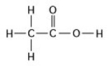 Two moles of the compound in the figure would weigh how many grams? (Note: The atomic masses, in daltons, are approximately 12 for carbon, 1 for hydrogen, and 16 for oxygen.)
 (Multiple Choice)
4.8/5 (74)
(74) Which of the following is considered to be a strong base (alkali)?
(Multiple Choice)
4.9/5 (85)
(85) One mole (mol)of glucose (molecular mass = 180 daltons)is ________.
(Multiple Choice)
4.8/5 (79)
(79) Melting of ice and thus reduced feeding opportunities for polar bears is occurring because of the ________.
(Multiple Choice)
4.9/5 (79)
(79) Water has many exceptional and useful properties. Which is the rarest property among compounds?
(Multiple Choice)
5.0/5 (75)
(75) Thermal energy of the water in a bathtub is ________ than in a freshly brewed coffee pot because of its ________.
(Multiple Choice)
4.8/5 (76)
(76) Which of the following statements is true about buffer solutions?
(Multiple Choice)
4.9/5 (84)
(84) Measurements show that the pH of a particular lake is 4.0. What is the hydrogen ion concentration of the lake?
(Multiple Choice)
4.8/5 (62)
(62) A slice of pizza has 500 kcal. If we could burn the pizza and use all the heat to warm a 50-L container of cold water, what would be the approximate increase in the temperature of the water? (Note: A liter of cold water weighs about 1 kg.)
(Multiple Choice)
4.9/5 (76)
(76) A dietary Calorie equals 1 kilocalorie. One kilocalorie equals ________.
(Multiple Choice)
4.7/5 (85)
(85) We can be sure that a mole of table sugar and a mole of vitamin C are equal in their
(Multiple Choice)
5.0/5 (88)
(88) Consider the following reaction at equilibrium: CO₂ + H₂O H₂CO₃. What would be the effect of adding additional H₂O?
(Multiple Choice)
4.9/5 (80)
(80) As the [H₃O⁺] of the solution decreases, the [OH⁻] ________.
(Multiple Choice)
4.8/5 (72)
(72) Assume that acid rain has lowered the pH of a particular lake to pH 5.0. What is the hydroxide ion concentration of this lake?
(Multiple Choice)
4.8/5 (85)
(85) One of the buffers that contribute to pH stability in human blood is carbonic acid (H₂CO₃). Carbonic acid is a weak acid that, when placed in an aqueous solution, dissociates into a bicarbonate ion (HCO₃⁻)and a hydrogen ion (H⁺). (See figure.)
If the pH of blood drops, one would expect ________.
(Multiple Choice)
4.8/5 (87)
(87) A 0.01 M solution of a substance has a pH of 2. What can you conclude about this substance?
(Multiple Choice)
4.9/5 (71)
(71) Increased atmospheric CO₂ concentrations might have what effect on seawater?
(Multiple Choice)
4.9/5 (72)
(72) 
Filters
- Essay(0)
- Multiple Choice(0)
- Short Answer(0)
- True False(0)
- Matching(0)