



 Chat with AI
Exam 12: Alkenes, Alkynes, and Aromatic Compounds

Exam 1: Matter, Energy, and Measurement143 Questions
Exam 2: Atoms134 Questions
Exam 3: Chemical Bonds142 Questions
Exam 4: Chemical Reactions138 Questions
Exam 5: Gases, Liquids, and Solids104 Questions
Exam 6: Solutions and Colloids157 Questions
Exam 7: Reaction Rates and Chemical Equilibrium104 Questions
Exam 8: Acids and Bases198 Questions
Exam 9: Nuclear Chemistry152 Questions
Exam 10: Organic Chemistry71 Questions
Exam 11: Alkanes142 Questions
Exam 12: Alkenes, Alkynes, and Aromatic Compounds184 Questions
Exam 13: Alcohols, Ethers, and Thiols118 Questions
Exam 14: Chirality: the Handedness of Molecules92 Questions
Exam 15: Amines89 Questions
Exam 16: Aldehydes and Ketones102 Questions
Exam 17: Carboxylic Acids115 Questions
Exam 18: Carboxylic Anhydrides, Esters, and Amides117 Questions
Exam 19: Carbohydrates103 Questions
Exam 20: Lipids132 Questions
Exam 21: Proteins128 Questions
Exam 22: Enzymes62 Questions
Exam 23: Chemical Communications: Neurotransmitters and Hormones89 Questions
Exam 24: Nucleotides, Nucleic Acids, and Heredity121 Questions
Exam 25: Gene Expression and Protein Synthesis129 Questions
Exam 26: Bioenergetics: How the Body Converts Food to Energy133 Questions
Exam 27: Specific Catabolic Pathways: Carbohydrate, Lipid, and Protein Metabolism104 Questions
Exam 28: Biosynthetic Pathways67 Questions
Exam 29: Nutrition73 Questions
Exam 30: Immunochemistry132 Questions
Exam 31: Body Fluids72 Questions
Select questions type


On what basis was the name aromatic originally given to some compounds?
(Multiple Choice)
4.8/5  (80)
(80) Consider the following structure. 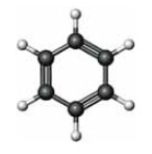 If one of the hydrogen atoms is replaced with an -NH2 group and another adjacent hydrogen with a -Br group, then what would be the IUPAC name of the compound?
 (Multiple Choice)
4.8/5 (81)
(81) Identify the product formed when p-nitrobenzoic acid reacts with hydrogen in the presence of Ni catalyst at a pressure of 3 atm.
(Multiple Choice)
4.8/5 (86)
(86) Which of these carbocations is generated as an intermediate in the following reaction? 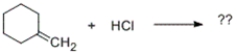
(Multiple Choice)
5.0/5 (86)
(86) Which compound derived from natural gas is a starting material for the production of ethylene?
(Multiple Choice)
4.8/5 (95)
(95) Propene reacts with hydrogen chloride to form mostly 2-chloropropane. This reaction does not lead to the formation of 1-chloropropane. Why?
(Multiple Choice)
4.7/5 (65)
(65) Which type of alcohol is formed by the acid-catalyzed hydration of 2-methyl-1-pentene?
(Multiple Choice)
5.0/5 (64)
(64) Which of the following is true of the IUPAC system of naming alkenes?
(Multiple Choice)
4.8/5 (88)
(88) How many valence electrons are associated with the positively charged carbon in a carbocation?
(Multiple Choice)
4.9/5 (85)
(85) Consider the given molecule. 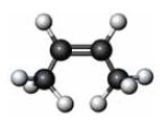 Which of the following is a characteristic of the given molecule?
 (Multiple Choice)
4.8/5 (77)
(77) 
Which of the following is the correct IUPAC name of the following compound? 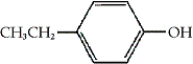
(Multiple Choice)
4.9/5 (70)
(70) In alkenes, there are four groups bonded to the carbons that constitute the carbon-carbon double bond. Which of the following situations produces cis-trans isomerism?
(Multiple Choice)
4.9/5 (62)
(62) By which of the following reactions is ubiquinol converted to ubiquinone?
(Multiple Choice)
4.7/5 (66)
(66) What are the products of an iron-catalyzed reaction between benzene and chlorine?
(Multiple Choice)
4.8/5 (83)
(83) Which of the following compounds have cis-trans isomers because they lack free rotation about their carbon-carbon bonds?
(Multiple Choice)
4.9/5 (75)
(75) Which of the following curved arrows correctly describes the first step of the reaction of propene with a hydrogen halide?
(Multiple Choice)
4.8/5 (64)
(64) 
Filters
- Essay(0)
- Multiple Choice(0)
- Short Answer(0)
- True False(0)
- Matching(0)