



 Chat with AI
Exam 12: Alkenes, Alkynes, and Aromatic Compounds

Exam 1: Matter, Energy, and Measurement143 Questions
Exam 2: Atoms134 Questions
Exam 3: Chemical Bonds142 Questions
Exam 4: Chemical Reactions138 Questions
Exam 5: Gases, Liquids, and Solids104 Questions
Exam 6: Solutions and Colloids157 Questions
Exam 7: Reaction Rates and Chemical Equilibrium104 Questions
Exam 8: Acids and Bases198 Questions
Exam 9: Nuclear Chemistry152 Questions
Exam 10: Organic Chemistry71 Questions
Exam 11: Alkanes142 Questions
Exam 12: Alkenes, Alkynes, and Aromatic Compounds184 Questions
Exam 13: Alcohols, Ethers, and Thiols118 Questions
Exam 14: Chirality: the Handedness of Molecules92 Questions
Exam 15: Amines89 Questions
Exam 16: Aldehydes and Ketones102 Questions
Exam 17: Carboxylic Acids115 Questions
Exam 18: Carboxylic Anhydrides, Esters, and Amides117 Questions
Exam 19: Carbohydrates103 Questions
Exam 20: Lipids132 Questions
Exam 21: Proteins128 Questions
Exam 22: Enzymes62 Questions
Exam 23: Chemical Communications: Neurotransmitters and Hormones89 Questions
Exam 24: Nucleotides, Nucleic Acids, and Heredity121 Questions
Exam 25: Gene Expression and Protein Synthesis129 Questions
Exam 26: Bioenergetics: How the Body Converts Food to Energy133 Questions
Exam 27: Specific Catabolic Pathways: Carbohydrate, Lipid, and Protein Metabolism104 Questions
Exam 28: Biosynthetic Pathways67 Questions
Exam 29: Nutrition73 Questions
Exam 30: Immunochemistry132 Questions
Exam 31: Body Fluids72 Questions
Select questions type


Which of the following products is obtained when phenol reacts with potassium dichromate in the presence of sulfuric acid?
(Multiple Choice)
4.9/5  (82)
(82) Markovnikov's rule is not useful for predicting the outcome of the reaction of hydrogen chloride with which of the following alkenes?
(Multiple Choice)
5.0/5 (82)
(82) Which of the following statements is true of the structure of benzene?
(Multiple Choice)
4.8/5 (92)
(92) A student wanted to use the branched groups, isobutyl, sec-butyl, and tert-butyl when naming alkenes but was told not to. What is the correct IUPAC name for the compound the student called isobutylethene?
(Multiple Choice)
4.8/5 (85)
(85) Which of the following is not a correct IUPAC name for an alkene?
(Multiple Choice)
4.9/5 (93)
(93) Which of the following correctly describes the two substituents of aromatic xylenes?
(Multiple Choice)
4.8/5 (71)
(71) Which of the listed products will be formed in the following reaction? 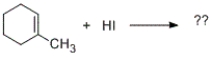
(Multiple Choice)
4.8/5 (72)
(72) Which of the following statements is true of an electrophile?
(Multiple Choice)
4.9/5 (91)
(91) 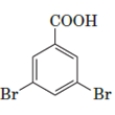
Which of the following is not a correct IUPAC name for an alkene?
(Multiple Choice)
5.0/5 (82)
(82) What is the name of the lightest hydrocarbon that has cis and trans isomers?
(Multiple Choice)
4.9/5 (73)
(73) Which of the following products is obtained by the reduction of p-quinone?
(Multiple Choice)
4.8/5 (80)
(80) Which of the following statements is true of the solubility of alkenes?
(Multiple Choice)
4.8/5 (84)
(84) 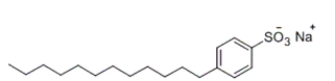
Four patterns can be noted for certain organic reactions: Pattern 1: Add a proton.
Pattern 2: Take a proton away.
Pattern 3: Reaction between an electrophile and nucleophile to form a new covalent bond.
Pattern 4: Reaction of a proton donor with a carbon-carbon double bond to form a new covalent bond.
To which pattern does the following reaction belong? 
(Multiple Choice)
4.9/5 (90)
(90) Which type of alcohol is formed by the acid-catalyzed hydration of 2-methyl-2-butene?
(Multiple Choice)
4.9/5 (75)
(75) 
Filters
- Essay(0)
- Multiple Choice(0)
- Short Answer(0)
- True False(0)
- Matching(0)