



 Chat with AI
Exam 43: The Immune System

Exam 1: Introduction: Themes in the Study of Life64 Questions
Exam 2: The Chemical Context of Life83 Questions
Exam 3: Water and Life70 Questions
Exam 4: Carbon and the Molecular Diversity of Life71 Questions
Exam 5: The Structure and Function of Large Biological Molecules109 Questions
Exam 6: A Tour of the Cell80 Questions
Exam 7: Membrane Structure and Function80 Questions
Exam 8: An Introduction to Metabolism80 Questions
Exam 9: Cellular Respiration and Fermentation107 Questions
Exam 10: Photosynthesis81 Questions
Exam 11: Cell Communication69 Questions
Exam 12: The Cell Cycle79 Questions
Exam 13: Meiosis and Sexual Life Cycles70 Questions
Exam 14: Mendel and the Gene Idea73 Questions
Exam 15: The Chromosomal Basis of Inheritance61 Questions
Exam 16: The Molecular Basis of Inheritance57 Questions
Exam 17: From Gene to Protein83 Questions
Exam 18: Regulation of Gene Expression99 Questions
Exam 19: Viruses47 Questions
Exam 20: Biotechnology72 Questions
Exam 21: Genomes and Their Evolution42 Questions
Exam 22: Descent with Modification: A Darwinian View of Life55 Questions
Exam 23: The Evolution of Populations78 Questions
Exam 24: The Origin of Species63 Questions
Exam 25: The History of Life on Earth75 Questions
Exam 26: Phylogeny and the Tree of Life73 Questions
Exam 27: Bacteria and Archaea78 Questions
Exam 28: Protists76 Questions
Exam 29: Plant Diversity I: How Plants Colonized Land74 Questions
Exam 30: Plant Diversity II: The Evolution of Seed Plants102 Questions
Exam 31: Fungi89 Questions
Exam 32: An Overview of Animal Diversity74 Questions
Exam 33: An Introduction to Invertebrates93 Questions
Exam 34: The Origin and Evolution of Vertebrates109 Questions
Exam 35: Plant Structure, Growth, and Development67 Questions
Exam 36: Resource Acquisition and Transport in Vascular Plants82 Questions
Exam 37: Soil and Plant Nutrition83 Questions
Exam 38: Angiosperm Reproduction and Biotechnology86 Questions
Exam 39: Plant Responses to Internal and External Signals108 Questions
Exam 40: Basic Principles of Animal Form and Function77 Questions
Exam 41: Animal Nutrition64 Questions
Exam 42: Circulation and Gas Exchange90 Questions
Exam 43: The Immune System100 Questions
Exam 44: Osmoregulation and Excretion69 Questions
Exam 45: Hormones and the Endocrine System72 Questions
Exam 46: Animal Reproduction94 Questions
Exam 47: Animal Development92 Questions
Exam 48: Neurons, Synapses, and Signaling73 Questions
Exam 49: Nervous Systems65 Questions
Exam 50: Sensory and Motor Mechanisms82 Questions
Exam 51: Animal Behavior69 Questions
Exam 52: An Introduction to Ecology and the Biosphere73 Questions
Exam 53: Population Ecology79 Questions
Exam 54: Community Ecology77 Questions
Exam 55: Ecosystems and Restoration Ecology81 Questions
Exam 56: Conservation Biology and Global Change67 Questions
Select questions type


For the successful development of a vaccine to be used against a pathogen, it is necessary that
(Multiple Choice)
5.0/5  (92)
(92) An immunoglobulin (Ig)molecule, of whatever class, with regions symbolized as C or V, H or L, has a light chain made up of
(Multiple Choice)
4.8/5 (82)
(82) Which of the following should be the same in identical twins?
(Multiple Choice)
4.9/5 (72)
(72) A bone marrow transplant may not be appropriate from a given donor (Jane)to a given recipient (Jane's cousin Bob), even though Jane has previously given blood for one of Bob's needed transfusions, because
(Multiple Choice)
4.9/5 (84)
(84) When antibodies bind antigens, the clumping of antigens results from
(Multiple Choice)
4.9/5 (85)
(85)  -According to the graph, naive memory cells will be produced
 (Multiple Choice)
4.8/5 (84)
(84) 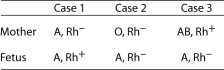 -After a long and cold winter, Jim was excited to start exploring the woods behind his new home. His first adventure included exposure to poison ivy without any reaction. A month later, though, a second walk through the woods was not so great, since two days later Jim had a terrible rash that lasted for weeks. The fact that the rash took two days to develop indicates that this immune response was an example of
 (Multiple Choice)
4.8/5 (86)
(86) Assume that a DGS-like phenotype was produced in a specific "gene-knockout" mouse, one lacking expression of HA3, a Hox gene known to be involved in developmental regulation in the mouse.
The phenotype of the HA3 knockout can be ascertained by
(Multiple Choice)
4.9/5 (85)
(85) Mammals have Toll-like receptors (TLRs)that can recognize a kind of macromolecule that is absent from vertebrates but present in/on certain groups of pathogens, including viral
(Multiple Choice)
4.9/5 (75)
(75) Use the following information as background for the next few questions.
Immunodeficiencies can be genetic in origin, and two examples are Bruton's agammaglobulinemia, an X-linked disorder, and DiGeorge syndrome, caused by a deletion from chromosome 22. Bruton's disorder results in underdeveloped B cells, whereas DiGeorge syndrome results in a missing or seriously underdeveloped thymus.
-Select the description that likely indicates a child with Bruton's disease.
(Multiple Choice)
4.7/5 (84)
(84) A diseased patient is exposed to an unknown agent while out of the country. The patient's blood is found to have a high proportion of lymphocytes with CD8 surface proteins in her blood, a likely result of
(Multiple Choice)
4.8/5 (72)
(72) The cell-mediated immunity that destroys virally infected cells involves
(Multiple Choice)
4.9/5 (85)
(85) Ancient peoples sought to identify the indicators of inflammation because
(Multiple Choice)
4.8/5 (82)
(82) The transfusion of type A blood to a person who has type O blood would result in
(Multiple Choice)
4.9/5 (75)
(75) Histamines trigger dilation of nearby blood vessels as well as an increase in their permeability, producing
(Multiple Choice)
4.9/5 (84)
(84) 
Filters
- Essay(0)
- Multiple Choice(0)
- Short Answer(0)
- True False(0)
- Matching(0)