



 Chat with AI
Exam 20: Income Inequality and Poverty

Exam 1: Ten Principles of Economics220 Questions
Exam 2: Thinking Like an Economist284 Questions
Exam 3: Interdependence and the Gains From Trade192 Questions
Exam 4: The Market Forces of Supply and Demand277 Questions
Exam 5: Elasticity and Its Application222 Questions
Exam 6: Supply, Demand, and Government Policies321 Questions
Exam 7: Consumers, Producers, and the Efficiency of Markets218 Questions
Exam 8: Applications: The Costs of Taxation203 Questions
Exam 9: Application: International Trade214 Questions
Exam 10: Externalities204 Questions
Exam 11: Public Goods and Common Resources182 Questions
Exam 12: The Design of the Tax System225 Questions
Exam 13: The Costs of Production261 Questions
Exam 14: Firms in Competitive Markets243 Questions
Exam 15: Monopoly231 Questions
Exam 16: Monopolistic Competition246 Questions
Exam 17: Oligopoly204 Questions
Exam 18: The Markets for the Factors of Production232 Questions
Exam 19: Earnings and Discrimination230 Questions
Exam 20: Income Inequality and Poverty194 Questions
Exam 21: The Theory of Consumer Choice209 Questions
Exam 22: Frontiers in Microeconomics185 Questions
Exam 23: Measuring a Nations Income231 Questions
Exam 24: Measuring the Cost of Living214 Questions
Exam 25: Production and Growth187 Questions
Exam 26: Saving, Investment, and the Financial System225 Questions
Exam 27: Tools of Finance198 Questions
Exam 28: Unemployment and Its Natural Rate361 Questions
Exam 29: The Monetary System210 Questions
Exam 30: Money Growth and Inflation201 Questions
Exam 31: Open-Economy Macroeconomics: Basic Concepts194 Questions
Exam 32: A Macroeconomic Theory of the Open Economy188 Questions
Exam 33: Aggregate Demand and Aggregate Supply189 Questions
Exam 34: The Influence of Monetary and Fiscal Policy on Aggregate Demand207 Questions
Exam 35: The Short-Run Tradeoff Between Inflation and Unemployment223 Questions
Exam 36: Six Debates Over Macroeconomic Policy154 Questions
Select questions type


What is meant by a perfectly equal distribution of income? Use a graph to depict such a situation.
(Short Answer)
4.7/5  (90)
(90) According to the maximin criterion, income should be transferred from the rich to the poor as long as it
(Multiple Choice)
4.9/5 (88)
(88) The Supplemental Security Income (SSI) program focuses on the poor who are sick or disabled.
(True/False)
4.8/5 (93)
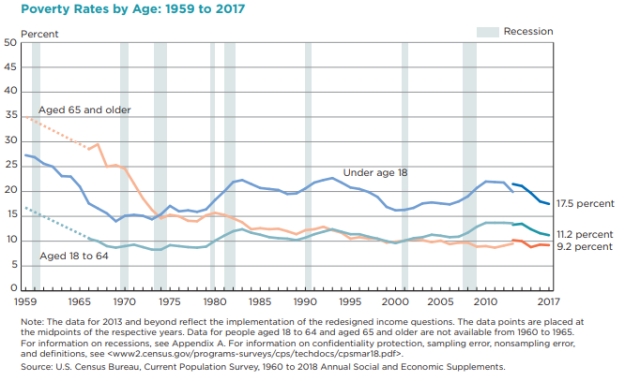
(93) The elderly represent the largest demographic group in poverty.
(True/False)
4.9/5 (84)
(84) A government policy aimed at protecting people against the risk of adverse events is called .
(Short Answer)
4.9/5 (71)
(71) Figure 20-3
-If the U.S. government determines that the cost of feeding an urban family of four is $7,500 per year, then the official poverty line for a family of that type is
-If the U.S. government determines that the cost of feeding an urban family of four is $7,500 per year, then the official poverty line for a family of that type is (Multiple Choice)
4.9/5 (87)
(87) What is the primary problem in comparing income inequality in the US with income inequality in other countries?
(Short Answer)
4.8/5 (83)
(83) Goods and services given to the poor such as food stamps, housing vouchers, and medical services are called
(Short Answer)
4.8/5 (74)
(74) Assume that the government proposes a negative income tax that calculates taxes owed by the following formula,
Taxes Owed = (1/3 × Income) - $10,000.
Compute the tax that would be owed given each level of income.
a.$120,000
b.$90,000
c.$60,000
d.$30,000
e.$0
(Essay)
4.9/5 (63)
(63) The poverty line is set by the government so that 10 percent of all families fall below that line and are thereby classified as "poor."
(True/False)
4.9/5 (82)
(82) Suppose the government used the following formula to compute a family's tax liability:
Taxes owed = 28% of income - $8,000. How much would a family that earned $18,000 owe?
(Essay)
4.8/5 (59)
(59) If in-kind transfers were included in income at their market value, what would happen to the number of families below the poverty line?
(Short Answer)
4.7/5 (80)
(80) The United States has more income inequality than Japan, Germany, and France.
(True/False)
4.8/5 (81)
(81) Table 20-8
Income Inequality in the United States
The values in the table reflect the percentages of pre-tax-and transfer income.
Source: US Census Bureau
Year Bottom Fifth Second Fifth Middle Fifth Fourth Fifth Top Fifth Top 5\% 3.3\% 8.5\% 14.6\% 23.4\% 50.2\% 21.3\% 3.4 8.6 14.6 23.0 50.4 22.2 3.6 8.9 14.8 23.0 49.8 22.1 3.7 9.1 15.2 23.3 48.7 21.0 3.8 9.6 15.9 24.0 46.6 18.5 3.9 9.8 16.2 24.4 45.6 17.6 4.2 10.2 16.8 24.7 44.1 16.5
-Refer to Table 20-8. In percentage terms, how much less income did the bottom 40% of families have in 2010 than in 1980?
(Short Answer)
4.8/5 (74)
(74) The economic life cycle describes how young people usually have higher savings rates than middle-aged people.
(True/False)
4.8/5 (92)
(92) Which philosopher claimed that the government should aim to maximize the well-being of the worst-off person in society?
(Short Answer)
4.9/5 (87)
(87) Aniella believes that the demand for unskilled labor is relatively inelastic. Carmella believes that the demand for unskilled labor is relatively elastic. Which believes that a minimum-wage law will result in significant unemployment?
(Short Answer)
4.9/5 (90)
(90) Which of the following statements accurately characterizes the effects of minimum-wage laws?
(Multiple Choice)
4.9/5 (78)
(78) A system in which anyone collecting antipoverty program benefits must accept a government-provided job is called .
(Short Answer)
4.8/5 (74)
(74) 
Filters
- Essay(0)
- Multiple Choice(0)
- Short Answer(0)
- True False(0)
- Matching(0)