



 Chat with AI
Exam 4: Three Major Classes of Chemical Reactions

Exam 1: Keys to the Study of Chemistry68 Questions
Exam 2: The Components of Matter104 Questions
Exam 3: Stoichiometry of Formulas and Equations96 Questions
Exam 4: Three Major Classes of Chemical Reactions105 Questions
Exam 5: Gases and the Kinetic-Molecular Theory103 Questions
Exam 6: Thermochemistry: Energy Flow and Chemical Change79 Questions
Exam 7: Quantum Theory and Atomic Structure74 Questions
Exam 8: Electron Configuration and Chemical Periodicity81 Questions
Exam 9: Models of Chemical Bonding73 Questions
Exam 10: The Shapes of Molecules108 Questions
Exam 11: Theories of Covalent Bonding56 Questions
Exam 12: Intermolecular Forces: Liquids, Solids, and Phase Changes97 Questions
Exam 13: The Properties of Mixtures: Solutions and Colloids98 Questions
Exam 14: Periodic Patterns in the Main-Group Elements111 Questions
Exam 15: Organic Compounds and the Atomic Properties of Carbon113 Questions
Exam 16: Kinetics: Rates and Mechanisms of Chemical Reactions89 Questions
Exam 17: Equilibrium: the Extent of Chemical Reactions102 Questions
Exam 18: Acid-Base Equilibria106 Questions
Exam 19: Ionic Equilibria in Aqueous Systems115 Questions
Exam 20: Thermodynamics: Entropy, Free Energy, and the Direction of Chemical Reactions85 Questions
Exam 21: Electrochemistry: Chemical Change and Electrical Work102 Questions
Exam 22: The Elements in Nature and Industry56 Questions
Exam 23: The Transition Elements and Their Coordination Compounds92 Questions
Exam 24: Nuclear Reactions and Their Applications90 Questions
Select questions type


Complete and balance the equation for the following acid-base reaction. 

Free
(Essay)
4.9/5  (81)
(81) Correct Answer: Verified
In both of the following reactions, a precipitate is formed. Complete and balance the equations, showing the phases of the products.
A)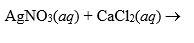 B)
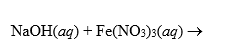
B)
Free
(Essay)
5.0/5 (71)
(71) Correct Answer:Verified
Verified a.
b.
Which of the statements below correctly describes the combustion of glucose, shown below? C6H12O6 + 6O2 6CO2 + 6H2O
Free
(Multiple Choice)
4.8/5 (74)
(74) Correct Answer:Verified
VerifiedE
Balance the following redox equation using the smallest integers possible and select the correct coefficient for the hydrogen sulfite ion, HSO3¯. MnO4¯(aq) + HSO3¯(aq) + H+(aq) Mn2+(aq) + SO42¯(aq) + H2O(l)
(Multiple Choice)
4.8/5 (65)
(65) How many moles of H+(aq) ions are present in 1.25 L of 0.75 M nitric acid?
(Multiple Choice)
4.9/5 (95)
(95) Potassium carbonate, K2CO3, sodium iodide, NaI, magnesium chloride, MgCl2, methanol, CH3OH, and ammonium chloride, NH4Cl, are soluble in water. Which produces the largest number of dissolved particles per mole of dissolved solute?
(Multiple Choice)
4.8/5 (85)
(85) Ammonia, NH3, produces hydroxide ions in aqueous solution by
(Multiple Choice)
4.8/5 (84)
(84) A 0.00100 mol sample of Ca(OH)2 requires 25.00 mL of aqueous HCl for neutralization according to the reaction below. What is the concentration of the HCl? Equation: Ca(OH)2(s) + 2HCl(aq) CaCl2(aq) + H2O(l)
(Multiple Choice)
4.9/5 (64)
(64) Vinegar is a solution of acetic acid, CH3COOH, dissolved in water. A 5.54-g sample of vinegar was neutralized by 30.10 mL of 0.100 M NaOH. What is the percent by weight of acetic acid in the vinegar?
(Multiple Choice)
4.9/5 (73)
(73) Select the classification for the following reaction: H2CO3(aq) H2O(l) + CO2(g)
(Multiple Choice)
4.8/5 (77)
(77) 
The oxidation numbers of P, S and Cl in H2PO2¯, H2S and KClO4 are, respectively
(Multiple Choice)
4.9/5 (79)
(79) Sodium tripolyphosphate is used in detergents to make them effective in hard water. Calculate the oxidation number of phosphorus in Na5P3O10.
(Multiple Choice)
4.8/5 (63)
(63) Select the classification for the following reaction. 2Na(s) + 2H2O(l) 2NaOH(aq) + H2(g)
(Multiple Choice)
4.8/5 (84)
(84) Balance the following redox equation using the smallest integers possible and select the correct coefficient for the chromate anion, CrO42¯. CrO42¯(aq) + CN¯(aq) + H2O(l) CNO¯(aq) + Cr(OH)4¯(aq) + OH¯(aq)
(Multiple Choice)
4.8/5 (80)
(80) 
Filters
- Essay(0)
- Multiple Choice(0)
- Short Answer(0)
- True False(0)
- Matching(0)