



 Chat with AI
Exam 10: Meiosis and Sexual Reproduction

Exam 1: Invitation to Biology75 Questions
Exam 2: Lifes Chemical Basis66 Questions
Exam 3: Molecules of Life85 Questions
Exam 4: Cell Structure and Function72 Questions
Exam 5: A Closer Look at Cell Membranes50 Questions
Exam 6: Ground Rules of Metabolism54 Questions
Exam 7: Where It Startsphotosynthesis69 Questions
Exam 8: Energy-Releasing Pathways86 Questions
Exam 9: How Cells Reproduce53 Questions
Exam 10: Meiosis and Sexual Reproduction50 Questions
Exam 11: Observing Patterns in Inherited Traits123 Questions
Exam 12: Chromosomes and Human Inheritance66 Questions
Exam 13: Dna Structure and Function42 Questions
Exam 14: From Dna to Protein63 Questions
Exam 15: Controls Over Genes47 Questions
Exam 16: Recombinant Dna and Genetic Engineering59 Questions
Exam 17: The Macroevolutionary Puzzle47 Questions
Exam 18: Emergence of Evolutionary Thought108 Questions
Exam 19: Organizing Information About Species30 Questions
Exam 20: The Origin and Evolution of Life52 Questions
Exam 21: Viruses and Prokaryotes66 Questions
Exam 22: Protists the Simplest Eukaryotes74 Questions
Exam 23: Plants67 Questions
Exam 24: Fungi52 Questions
Exam 25: Animals: the Invertebrates143 Questions
Exam 26: Animal Evolution the Chordates105 Questions
Exam 27: Human Evolution: a Case Study44 Questions
Exam 28: Plant Tissues90 Questions
Exam 29: Plant Nutrition and Transport71 Questions
Exam 30: Plant Reproduction67 Questions
Exam 31: Plant Growth and Development77 Questions
Exam 32: Animal Tissues and Organ Systems58 Questions
Exam 33: Neural Control123 Questions
Exam 34: Sensory Perception95 Questions
Exam 35: Endocrine Control100 Questions
Exam 36: Protection, Support, and Movement65 Questions
Exam 37: Circulation96 Questions
Exam 38: Immunity99 Questions
Exam 39: Respiration71 Questions
Exam 40: Digestion and Human Nutrition49 Questions
Exam 41: Maintaining the Internal Environment40 Questions
Exam 42: Animal Reproductive Systems37 Questions
Exam 43: Animal Development27 Questions
Exam 44: Animal Behavior35 Questions
Exam 45: Population Ecology62 Questions
Exam 46: Community Structure and Biodiversity52 Questions
Exam 47: Ecosystems33 Questions
Exam 48: The Biosphere51 Questions
Exam 49: Human Impacts on the Biosphere36 Questions
Select questions type


Which of the following does NOT occur in prophase I of meiosis?
(Multiple Choice)
4.9/5  (91)
(91) There are __________ molecules of DNA in a developing human sperm cell at the beginning of prophase I.
(Multiple Choice)
4.8/5 (79)
(79) In this generalized illustration of gametogenesis, the four cells in the right column should be labeled 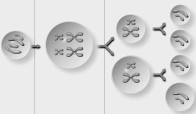
(Multiple Choice)
4.9/5 (79)
(79) If a diploid organism has a genome consisting of 4 pairs of chromosomes, it can produce __________ different combinations of maternal and paternal chromosomes (disregarding crossing over).
(Multiple Choice)
4.8/5 (85)
(85) During which phase of meiosis will the chromosomes appear as packets of four chromatids?
(Multiple Choice)
4.9/5 (83)
(83) 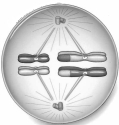
Chromosomes of a pair of homologous chromosomes may differ from other chromosomes in terms of
(Multiple Choice)
5.0/5 (72)
(72) Crossing over is one of the most important events in meiosis because
(Multiple Choice)
4.8/5 (84)
(84) If a child more strongly resembles one parent's physical traits than the other parent's, the explanation could be due to chromosome movements during
(Multiple Choice)
4.8/5 (71)
(71) 
Filters
- Essay(0)
- Multiple Choice(0)
- Short Answer(0)
- True False(0)
- Matching(0)