



 Chat with AI
Exam 14: Modern Macroeconomics and Monetary Policy

Exam 1: The Economic Approach164 Questions
Exam 2: Some Tools of the Economist200 Questions
Exam 3: Demand, Supply, and the Market Process336 Questions
Exam 4: Supply and Demand: Applications and Extensions254 Questions
Exam 5: Difficult Cases for the Market, and the Role of Government130 Questions
Exam 6: The Economics of Political Action154 Questions
Exam 7: Taking the Nations Economic Pulse214 Questions
Exam 8: Economic Fluctuations, Unemployment, and Inflation174 Questions
Exam 9: An Introduction to Basic Macroeconomic Markets219 Questions
Exam 10: Dynamic Change, Economic Fluctuations, and the Ad-As Model189 Questions
Exam 11: Fiscal Policy: the Keynesian View and the Historical Development of Macroeconomics109 Questions
Exam 12: Fiscal Policy, Incentives, and Secondary Effects146 Questions
Exam 13: Money and the Banking System209 Questions
Exam 14: Modern Macroeconomics and Monetary Policy192 Questions
Exam 15: Stabilization Policy, Output, and Employment148 Questions
Exam 16: Creating an Environment for Growth and Prosperity120 Questions
Exam 17: Institutions, Policies, and Cross-Country Differences in Income and Growth111 Questions
Exam 18: Gaining From International Trade170 Questions
Exam 19: International Finance and the Foreign Exchange Market148 Questions
Select questions type


According to the Austrian view of the business cycle, if expansionary monetary policy pushes the interest rate to an artificially low level, the result will be
(Multiple Choice)
4.8/5  (76)
(76) Use the figure below to answer the following question(s).
Figure 14-1 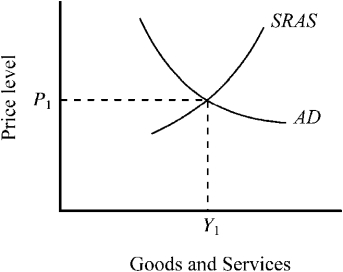 -In Figure 14-1, an unanticipated shift to a more expansionary monetary policy will shift
 (Multiple Choice)
4.7/5 (91)
(91) The "quantitative easing" policies of the Fed during, and following, the financial crisis of 2008-2009,
(Multiple Choice)
4.8/5 (84)
(84) Which of the following would be most indicative of a shift to a more restrictive monetary policy?
(Multiple Choice)
4.9/5 (61)
(61) In the long run, the primary effect of rapid monetary growth is
(Multiple Choice)
4.9/5 (77)
(77) During 2001-2004, the Fed injected additional reserves into the banking system, which reduced the federal funds rate and other short-term interest rates. Other things constant, what is the most likely short-run impact of this policy?
(Multiple Choice)
4.9/5 (92)
(92) "Every major contraction in the U.S. economy has either been created or greatly exacerbated by monetary instability. Every major inflation has been caused by monetary expansion." Which of the following economists made this statement?
(Multiple Choice)
4.9/5 (61)
(61) In an economy in which velocity is constant and real output grows at an average rate of 3 percent per year, a 5 percent average rate of growth in the money supply would result in a
(Multiple Choice)
4.7/5 (73)
(73) Beginning from full-employment equilibrium, illustrate graphically how each of the following would impact the economy.
a.the short-run impact of an unanticipated decrease in the money supply
b.the long-run impact of an unanticipated decrease in the money supply
(Essay)
4.9/5 (71)
(71) If the Federal Reserve wanted to expand the money supply in order to increase output, it should
(Multiple Choice)
4.9/5 (78)
(78) Figure 14-6  -In the situation shown in Figure 14-6, how could the Fed return the economy to potential output?
 (Multiple Choice)
4.9/5 (74)
(74) Which of the following reduced the demand stimulus effects of the Fed's low interest rate policy pursued during, and after, the financial crisis of 2008-2009?
(Multiple Choice)
4.8/5 (80)
(80) An unanticipated shift to a more expansionary monetary policy by the Fed will
(Multiple Choice)
4.7/5 (84)
(84) Why do individuals choose to hold part of their wealth in money rather than in other types of assets? Discuss the benefits and costs of holding money.
(Essay)
4.8/5 (85)
(85) Since 1980, changes in the nature of both the M1 and M2 money supply have
(Multiple Choice)
5.0/5 (84)
(84) In the aggregate demand-aggregate supply model, the short-run effects of an unanticipated decrease in the money supply will be
(Multiple Choice)
4.8/5 (77)
(77) 
Filters
- Essay(0)
- Multiple Choice(0)
- Short Answer(0)
- True False(0)
- Matching(0)