



 Chat with AI
Exam 24: Carbohydrate,lipid,and Protein Metabolism

Exam 1: Matter and Measurement87 Questions
Exam 2: Atoms and the Periodic Table95 Questions
Exam 3: Ionic Compounds100 Questions
Exam 4: Covalent Compounds101 Questions
Exam 5: Chemical Reactions98 Questions
Exam 6: Energy Changes,reaction Rates,and Equilibrium102 Questions
Exam 7: Gases,liquids,and Solids98 Questions
Exam 8: Solutions98 Questions
Exam 9: Acids and Bases108 Questions
Exam 10: Nuclear Chemistry93 Questions
Exam 11: Introduction to Organic Molecules and Functional Groups123 Questions
Exam 12: Alkanes104 Questions
Exam 13: Unsaturated Hydrocarbons104 Questions
Exam 14: Organic Compounds That Contain Oxygen,halogen,or Sulfur112 Questions
Exam 15: The Three-Dimensional Shape of Molecules101 Questions
Exam 16: Aldehydes and Ketones114 Questions
Exam 17: Carboxylic Acids,esters,and Amides107 Questions
Exam 18: Amines and Neurotransmitters115 Questions
Exam 19: Lipids115 Questions
Exam 20: Carbohydrates100 Questions
Exam 21: Amino Acids,proteins,and Enzymes98 Questions
Exam 22: Nucleic Acids and Protein Synthesis98 Questions
Exam 23: Metabolism and Energy Production102 Questions
Exam 24: Carbohydrate,lipid,and Protein Metabolism99 Questions
Select questions type


The phosphorylation of mannose to form mannose 6-phosphate requires energy from ATP.
(True/False)
4.8/5  (67)
(67) A kinase enzyme catalyzes the transfer of a phosphate group from one substrate to another.
(True/False)
4.8/5 (74)
(74) The first three steps of glycolysis add three phosphate groups to glucose.
(True/False)
5.0/5 (72)
(72) Many cancerous tumors depend largely on glycolysis to supply their energy needs.
(True/False)
4.8/5 (77)
(77) Glycolysis begins with the phosphorylation of glucose to form glucose 6-phosphate.
(True/False)
4.8/5 (72)
(72) Which is not one of the three major products formed in glycolysis?
(Multiple Choice)
4.9/5 (83)
(83) Gluconeogenesis is an anabolic process that synthesizes glucose from pyruvate.
(True/False)
4.9/5 (75)
(75) An abnormally high concentration of ketone bodies can lead to ketoacidosis-that is,an increase in the blood pH caused by the increased level of β-hydroxybutyrate and acetoacetate.
(True/False)
4.9/5 (84)
(84) Which class(es)of compounds generates pyruvate as it is metabolized to acetyl CoA?
(Multiple Choice)
4.8/5 (83)
(83) What are the four reactions involved in beta-oxidation in the correct order?
(Multiple Choice)
4.8/5 (83)
(83) β-Oxidation of a fatty acid requires how many steps to cleave a two carbon acetyl CoA unit from the starting acyl CoA?
(Multiple Choice)
4.8/5 (75)
(75) Step [9] in glycolysis,shown below,involves the dehydration of 2-phosphoglycerate. What is the structure of the dehydration product? 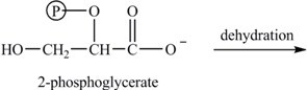
(Multiple Choice)
4.9/5 (75)
(75) 3-Phosphoglycerate and 2-phosphoglycerate,two intermediates in glycolysis,are related as stereoisomers. 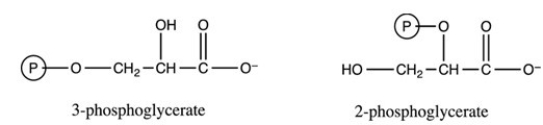
(True/False)
4.9/5 (82)
(82) How much ATP results from the transformation of two (2)molecules of acetyl CoA to four (4)molecules of CO2?
(Multiple Choice)
4.9/5 (75)
(75) Glycolysis occurs when the body has depleted its supplies of glucose and stored glycogen,and occurs during sustained physical exercise and fasting.
(True/False)
4.8/5 (71)
(71) 
Filters
- Essay(0)
- Multiple Choice(0)
- Short Answer(0)
- True False(0)
- Matching(0)