



 Chat with AI
Exam 13: Nuclear Magnetic Resonance Spectroscopy

Exam 1: Structure and Bonding127 Questions
Exam 2: Acids and Bases; Functional Groups136 Questions
Exam 3: Structure and Stereochemistry of Alkanes134 Questions
Exam 4: The Study of Chemical Reactions128 Questions
Exam 5: Stereochemistry132 Questions
Exam 6: Alkyl Halides; Nucleophilic Substitution137 Questions
Exam 7: Structure and Synthesis of Alkenes; Elimination131 Questions
Exam 8: Reactions of Alkenes134 Questions
Exam 10: Structure and Synthesis of Alcohols136 Questions
Exam 11: Reactions of Alcohols125 Questions
Exam 12: Infrared Spectroscopy and Mass Spectrometry121 Questions
Exam 13: Nuclear Magnetic Resonance Spectroscopy130 Questions
Exam 14: Ethers, Epoxides, and Thioethers127 Questions
Exam 15: Conjugated Systems, Orbital Symmetry, and Ultraviolet Spectroscopy130 Questions
Exam 16: Aromatic Compounds128 Questions
Exam 17: Reactions of Aromatic Compounds129 Questions
Exam 18: Ketones and Aldehydes131 Questions
Exam 19: Amines127 Questions
Exam 20: Carboxylic Acids125 Questions
Exam 21: Carboxylic Acid Derivatives130 Questions
Exam 22: Condensations and Alpha Substitutions of Carboxyl Compounds127 Questions
Exam 23: Carbohydrates and Nucleic Acids126 Questions
Exam 24: Amino Acids, Peptides, and Proteins127 Questions
Exam 25: Lipids127 Questions
Exam 26: Synthetic Polymers128 Questions
Select questions type


Which carbon signal is furthest down field in a proton spin decoupled 13C NMR spectrum? 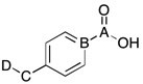
(Multiple Choice)
4.9/5  (75)
(75) Predict the number of signals expected (disregarding splitting) in the 1H NMR spectrum of the compound shown below. 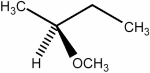
(Short Answer)
4.8/5 (93)
(93) Deduce the identity of the following compound from the 1H NMR data given.
C8H18O: δ 0.89 (6H, doublet), 1.87 (1H, multiplet), 3.17 (2H, doublet)(ppm)
(Essay)
4.9/5 (89)
(89) Predict the number of signals expected in the proton spin decoupled 13C spectrum of cyclopentane.
(Short Answer)
4.7/5 (79)
(79) The chair form of cyclohexane has protons in two distinct environments, axial and equatorial. When the proton NMR of cyclohexane is run on a 100-MHz instrument at 23°C, only one signal for the compound is observed. Explain this apparent contradiction.
(Essay)
4.8/5 (72)
(72) If a signal is observed in the 170 to 200 ppm range in a 13C NMR spectrum, what is the most likely type of functional group associated with that carbon atom?
(Multiple Choice)
4.8/5 (83)
(83) Using a 60 MHz spectrometer, the protons in dichloromethane appear at 5.30 ppm. When the same sample is placed in a 100 MHz instrument, where does the signal appear?
(Multiple Choice)
4.8/5 (74)
(74) Deduce the identity of the following compound from the 1H NMR data given.
C4H7BrO: δ 2.2 (3H, singlet), 3.5 (2H, triplet), 4.5 (2H, triplet) (ppm)
(Essay)
4.8/5 (66)
(66) Deduce the identity of the following compound from the 1H NMR data given.
C5H12O: δ 1.0 (3H, triplet), 1.2-1.8 (6H, multiplet), 3.0 (1H, broad singlet), 3.8 (2H, triplet) (ppm)
(Essay)
4.9/5 (77)
(77) Predict the number of signals expected (disregarding splitting) in the 1H spectrum of o-chlorophenol (2-chlorophenol).
(Short Answer)
4.8/5 (80)
(80) 
Deduce the identity of the following compound from the spectral data given.
C3H4BrN: 1H NMR, δ 2.98 (2H, triplet), 3.53 (2H, triplet); 13C NMR, δ 21.05 (triplet), 23.87 (triplet), 118.08 (singlet) (ppm); IR, 2963, 
(Short Answer)
4.9/5 (80)
(80) Provide a structure that is consistent with the data below.
C5H10O
IR (cm-1): 2950, 1720
1H NMR ( d): 2.6 (1H, septet), 2.1 (3H, s), 1.0 (6H, d)
13C NMR (d ): 195 (s), 42 (d), 18 (q), 11 (q)
(Essay)
4.8/5 (86)
(86) Predict the number of signals expected in the proton spin decoupled 13C spectrum of  (1,4-dibromobenzene).
 (Short Answer)
4.8/5 (79)
(79) Deduce the identity of the compound whose molecular formula is C8H14 from the spectral data provided: IR (cm-1): 2950, 2180; 1H NMR (δ): 0.9 (3H, t), 1.0 (9H, s), 2.3 (2H, q) (ppm).
(Short Answer)
4.7/5 (87)
(87) Provide a structure that is consistent with the data below.
C4H11N
IR (cm-1): 3370 (medium), 3300 (medium), 2950
1H NMR ( d): 2.8 (2H, t), 1.5 (2H, s), 1.4 (1H, m), 0.9 (6H, d)
13C NMR (d ): 50 (t), 31 (d), 20 (q)
MS (m/z): 30, 73
(Essay)
4.8/5 (72)
(72) Compound I has a molecular formula of C7H16. In 13C NMR, compound I gave 3 peaks and in 1H NMR it also gave 3 peaks, a doublet, a triplet and a multiplet. Provide a structure for compound I.
(Essay)
4.9/5 (61)
(61) Predict the number of signals expected in the proton spin decoupled 13C NMR spectrum of p-diethylbenzene (1,4-diethylbenzene).
(Short Answer)
5.0/5 (71)
(71) A peak split into a doublet of triplets gave the following measurements in its splitting pattern. State the coupling constants (J values) for both the doublet and the triplet. 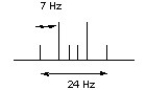
(Short Answer)
4.7/5 (75)
(75) What is the approximate chemical shift of an alkynyl carbon in 13C NMR spectroscopy?
(Multiple Choice)
4.9/5 (74)
(74) 
Filters
- Essay(0)
- Multiple Choice(0)
- Short Answer(0)
- True False(0)
- Matching(0)