



 Chat with AI
Exam 17: Reactions of Aromatic Compounds

Exam 1: Structure and Bonding127 Questions
Exam 2: Acids and Bases; Functional Groups136 Questions
Exam 3: Structure and Stereochemistry of Alkanes134 Questions
Exam 4: The Study of Chemical Reactions128 Questions
Exam 5: Stereochemistry132 Questions
Exam 6: Alkyl Halides; Nucleophilic Substitution137 Questions
Exam 7: Structure and Synthesis of Alkenes; Elimination131 Questions
Exam 8: Reactions of Alkenes134 Questions
Exam 10: Structure and Synthesis of Alcohols136 Questions
Exam 11: Reactions of Alcohols125 Questions
Exam 12: Infrared Spectroscopy and Mass Spectrometry121 Questions
Exam 13: Nuclear Magnetic Resonance Spectroscopy130 Questions
Exam 14: Ethers, Epoxides, and Thioethers127 Questions
Exam 15: Conjugated Systems, Orbital Symmetry, and Ultraviolet Spectroscopy130 Questions
Exam 16: Aromatic Compounds128 Questions
Exam 17: Reactions of Aromatic Compounds129 Questions
Exam 18: Ketones and Aldehydes131 Questions
Exam 19: Amines127 Questions
Exam 20: Carboxylic Acids125 Questions
Exam 21: Carboxylic Acid Derivatives130 Questions
Exam 22: Condensations and Alpha Substitutions of Carboxyl Compounds127 Questions
Exam 23: Carbohydrates and Nucleic Acids126 Questions
Exam 24: Amino Acids, Peptides, and Proteins127 Questions
Exam 25: Lipids127 Questions
Exam 26: Synthetic Polymers128 Questions
Select questions type


Provide the structure of the major organic product(s) in the following reaction. 

Free
(Essay)
4.9/5  (84)
(84) Correct Answer: Verified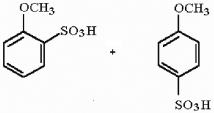
Which of the following compounds undergoes reaction with HNO3/H2SO4 at the fastest rate?
Free
(Multiple Choice)
4.7/5 (69)
(69) Correct Answer:Verified
VerifiedA
Which of the following compounds will undergo bromination most rapidly using Br2, FeBr3?
Free
(Multiple Choice)
4.7/5 (77)
(77) Correct Answer:Verified
VerifiedA
What type of reaction is shown below? (Org. Lett., 2013, 15 (15), 3950-3953) 
(Multiple Choice)
4.8/5 (79)
(79) Draw the major organic structure that results from the following sequence of reactions. 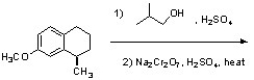
(Essay)
4.9/5 (88)
(88) Provide the major organic product that results when benzene is treated with the following sequence of reagents: 1. HNO3, H2SO4 2. Br2, FeBr3.
(Essay)
4.9/5 (70)
(70) 
Draw the three major resonance structures of the sigma complex intermediate in the reaction of acetophenone with HNO3/H2SO4 to yield o-nitroacetophenone. Circle the resonance form which is less stable than the other two.
(Essay)
4.9/5 (74)
(74) Provide a series of synthetic steps by which 3-bromoethylbenzene can be prepared from benzene.
(Essay)
4.8/5 (76)
(76) Provide a series of synthetic steps by which 2-bromo-4-nitrobenzoic acid can be prepared from toluene.
(Essay)
5.0/5 (100)
(100) Which of the following compounds would most likely be used in the preparation of isobutylbenzene from benzene?
(Multiple Choice)
4.9/5 (78)
(78) Provide the structure of the major monoitration product of the compound below. 
(Essay)
4.9/5 (73)
(73) Provide the major resonance structures of the intermediate sigma complex in the reaction of benzene with the generic electrophile E+.
(Essay)
4.7/5 (93)
(93) Provide the major organic product of the following reaction sequence. 
(Essay)
4.8/5 (72)
(72) 

Name the major organic product which results when 3-ethylbenzenesulfonic acid is heated in aqueous acid.
(Short Answer)
4.7/5 (80)
(80) In electrophilic aromatic substitution reactions the hydroxyl group is an o,p-director because ________.
(Multiple Choice)
4.9/5 (84)
(84) When 2,4-dinitrochlorobenzene is treated with sodium hydroxide at 100°C followed by protonation ________.
(Multiple Choice)
4.8/5 (87)
(87) Which of the following species is attacked by benzene in the electrophilic nitration reaction?
(Multiple Choice)
4.8/5 (73)
(73) 
Filters
- Essay(0)
- Multiple Choice(0)
- Short Answer(0)
- True False(0)
- Matching(0)