



 Chat with AI
Exam 17: Reactions of Aromatic Compounds

Exam 1: Structure and Bonding127 Questions
Exam 2: Acids and Bases; Functional Groups136 Questions
Exam 3: Structure and Stereochemistry of Alkanes134 Questions
Exam 4: The Study of Chemical Reactions128 Questions
Exam 5: Stereochemistry132 Questions
Exam 6: Alkyl Halides; Nucleophilic Substitution137 Questions
Exam 7: Structure and Synthesis of Alkenes; Elimination131 Questions
Exam 8: Reactions of Alkenes134 Questions
Exam 10: Structure and Synthesis of Alcohols136 Questions
Exam 11: Reactions of Alcohols125 Questions
Exam 12: Infrared Spectroscopy and Mass Spectrometry121 Questions
Exam 13: Nuclear Magnetic Resonance Spectroscopy130 Questions
Exam 14: Ethers, Epoxides, and Thioethers127 Questions
Exam 15: Conjugated Systems, Orbital Symmetry, and Ultraviolet Spectroscopy130 Questions
Exam 16: Aromatic Compounds128 Questions
Exam 17: Reactions of Aromatic Compounds129 Questions
Exam 18: Ketones and Aldehydes131 Questions
Exam 19: Amines127 Questions
Exam 20: Carboxylic Acids125 Questions
Exam 21: Carboxylic Acid Derivatives130 Questions
Exam 22: Condensations and Alpha Substitutions of Carboxyl Compounds127 Questions
Exam 23: Carbohydrates and Nucleic Acids126 Questions
Exam 24: Amino Acids, Peptides, and Proteins127 Questions
Exam 25: Lipids127 Questions
Exam 26: Synthetic Polymers128 Questions
Select questions type


Provide the structures of the major organic products of the following reaction. 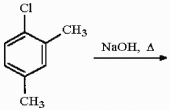
(Essay)
4.7/5  (91)
(91) Derivatives of the compound shown below are currently being examined for their effectiveness in treating drug addiction and metabolic syndrome (J. Med. Chem. 2006, 872). Which sequence ranks the following aromatic rings of this compound in order of increasing reactivity in an electrophilic aromatic substitution reaction (slowest to fastest reacting)? 
(Multiple Choice)
4.7/5 (75)
(75) In the addition of an electrophile to acetophenone, which of the following best describes the expected mode of reaction?
(Multiple Choice)
4.8/5 (81)
(81) Which of the following is the best choice of reagents to effect the electrophilic iodination of an aromatic ring?
(Multiple Choice)
4.9/5 (90)
(90) Electrophilic iodination of benzene requires which reagent in addition to I2?
(Short Answer)
4.9/5 (62)
(62) Provide a series of synthetic steps by which p-nitrobutylbenzene can be prepared from benzene.
(Essay)
4.8/5 (78)
(78) Complete the following reaction by filling in the necessary reagents. 
(Essay)
4.9/5 (88)
(88) What sequence of reagents is needed to convert benzene into m-bromoethylbenzene?
(Essay)
4.8/5 (75)
(75) Provide the structure of the major mononitration product(s) of the compound below. 
(Essay)
4.9/5 (72)
(72) Which step in an electrophilic aromatic substitution reaction is typically rate determining, formation of the sigma complex or loss of H+ by the sigma complex to form the product? Explain.
(Essay)
4.8/5 (89)
(89) 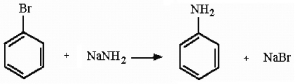
Provide the structures of the major organic products of the following reaction. 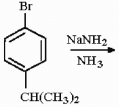
(Essay)
4.8/5 (77)
(77) Rank the following groups in order of increasing activating power in electrophilic aromatic substitution reactions: 

 -Br.
-Br. (Essay)
4.8/5 (84)
(84) Draw the four major resonance structures of the intermediate which results when  is treated with NaOH.
 (Essay)
5.0/5 (84)
(84) 
Provide the structure of the major organic product in the following reaction sequence. 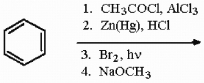
(Essay)
4.9/5 (79)
(79) Provide the structure of the major mononitration product of the compound below. 
(Essay)
4.7/5 (78)
(78) 
In electrophilic aromatic substitution reactions, the -CF3 group is ________.
(Multiple Choice)
4.7/5 (80)
(80) 
Filters
- Essay(0)
- Multiple Choice(0)
- Short Answer(0)
- True False(0)
- Matching(0)