



 Chat with AI
Exam 17: Reactions of Aromatic Compounds

Exam 1: Structure and Bonding127 Questions
Exam 2: Acids and Bases; Functional Groups136 Questions
Exam 3: Structure and Stereochemistry of Alkanes134 Questions
Exam 4: The Study of Chemical Reactions128 Questions
Exam 5: Stereochemistry132 Questions
Exam 6: Alkyl Halides; Nucleophilic Substitution137 Questions
Exam 7: Structure and Synthesis of Alkenes; Elimination131 Questions
Exam 8: Reactions of Alkenes134 Questions
Exam 10: Structure and Synthesis of Alcohols136 Questions
Exam 11: Reactions of Alcohols125 Questions
Exam 12: Infrared Spectroscopy and Mass Spectrometry121 Questions
Exam 13: Nuclear Magnetic Resonance Spectroscopy130 Questions
Exam 14: Ethers, Epoxides, and Thioethers127 Questions
Exam 15: Conjugated Systems, Orbital Symmetry, and Ultraviolet Spectroscopy130 Questions
Exam 16: Aromatic Compounds128 Questions
Exam 17: Reactions of Aromatic Compounds129 Questions
Exam 18: Ketones and Aldehydes131 Questions
Exam 19: Amines127 Questions
Exam 20: Carboxylic Acids125 Questions
Exam 21: Carboxylic Acid Derivatives130 Questions
Exam 22: Condensations and Alpha Substitutions of Carboxyl Compounds127 Questions
Exam 23: Carbohydrates and Nucleic Acids126 Questions
Exam 24: Amino Acids, Peptides, and Proteins127 Questions
Exam 25: Lipids127 Questions
Exam 26: Synthetic Polymers128 Questions
Select questions type


In electrophilic aromatic substitution reactions, a cyano substituent on the aromatic ring is ________.
(Multiple Choice)
4.8/5  (81)
(81) 

Provide the structure of the major organic product of the following reaction. 
(Essay)
4.9/5 (80)
(80) Draw the four major resonance structures of the sigma complex intermediate in the reaction of anisole with HNO3/H2SO4 to yield p-nitroanisole.
(Essay)
4.7/5 (63)
(63) 

Provide the structure of the major organic product in the following reaction 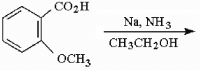
(Essay)
4.7/5 (86)
(86) What aryl halide would you use in the Suzuki reaction to make the following product? 
(Essay)
4.9/5 (76)
(76) Which of the following is an intermediate when 1,2-dibromo-4-nitrobenzene is heated with NaOH in a nucleophilic aromatic substitution reaction?
(Multiple Choice)
4.7/5 (84)
(84) In electrophilic aromatic substitution reactions a bromine substituent ________.
(Multiple Choice)
4.9/5 (79)
(79) 
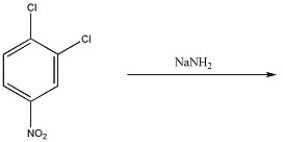
Provide the structure of the major organic product in the following reaction. 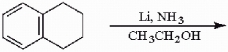
(Essay)
4.9/5 (85)
(85) Provide the structure of the major mononitration product of the compound below. 
(Essay)
4.9/5 (65)
(65) Provide the structure of the major organic product(s) in the following reaction. 
(Essay)
4.8/5 (71)
(71) Which sequence correctly ranks the following aromatic rings in order of increasing rate of reactivity with chlorine and aluminum chloride? 
(Multiple Choice)
4.9/5 (103)
(103) 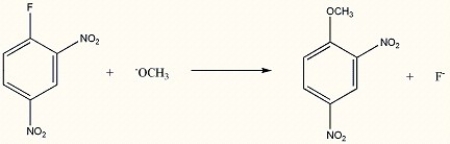
Why are Friedel-Crafts acylation reactions not prone to polyacylation?
(Essay)
4.9/5 (71)
(71) 
Filters
- Essay(0)
- Multiple Choice(0)
- Short Answer(0)
- True False(0)
- Matching(0)