



 Chat with AI
Exam 6: Alkyl Halides; Nucleophilic Substitution

Exam 1: Structure and Bonding127 Questions
Exam 2: Acids and Bases; Functional Groups136 Questions
Exam 3: Structure and Stereochemistry of Alkanes134 Questions
Exam 4: The Study of Chemical Reactions128 Questions
Exam 5: Stereochemistry132 Questions
Exam 6: Alkyl Halides; Nucleophilic Substitution137 Questions
Exam 7: Structure and Synthesis of Alkenes; Elimination131 Questions
Exam 8: Reactions of Alkenes134 Questions
Exam 10: Structure and Synthesis of Alcohols136 Questions
Exam 11: Reactions of Alcohols125 Questions
Exam 12: Infrared Spectroscopy and Mass Spectrometry121 Questions
Exam 13: Nuclear Magnetic Resonance Spectroscopy130 Questions
Exam 14: Ethers, Epoxides, and Thioethers127 Questions
Exam 15: Conjugated Systems, Orbital Symmetry, and Ultraviolet Spectroscopy130 Questions
Exam 16: Aromatic Compounds128 Questions
Exam 17: Reactions of Aromatic Compounds129 Questions
Exam 18: Ketones and Aldehydes131 Questions
Exam 19: Amines127 Questions
Exam 20: Carboxylic Acids125 Questions
Exam 21: Carboxylic Acid Derivatives130 Questions
Exam 22: Condensations and Alpha Substitutions of Carboxyl Compounds127 Questions
Exam 23: Carbohydrates and Nucleic Acids126 Questions
Exam 24: Amino Acids, Peptides, and Proteins127 Questions
Exam 25: Lipids127 Questions
Exam 26: Synthetic Polymers128 Questions
Select questions type


Dehydration of 1-butanol with concentrated sulfuric acid at 140∘C results in the formation of mainly trans-2-butene. According to these results, which of the following conclusions might be valid?
(Multiple Choice)
4.9/5  (72)
(72) Which of the following alkyl chlorides will undergo SN2 reaction most readily?
(Multiple Choice)
4.9/5 (83)
(83) Which of the following alkyl halides is most likely to undergo rearrangement in an SN1 reaction?
(Multiple Choice)
4.9/5 (61)
(61) Provide the structure of the major organic product which results in the following reaction. 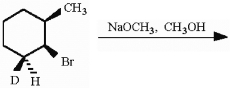
(Essay)
4.7/5 (76)
(76) When t-butyl chloride undergoes solvolysis in a solvent mixture composed of 70% water/30% acetone, the reaction rate is slower than when the same compound is solvolyzed in 80% water/20% acetone. Explain.
(Essay)
4.9/5 (76)
(76) Among the following alkyl halides, choose the one with the lowest boiling point.
(Multiple Choice)
4.9/5 (78)
(78) List the following bromides in order of their increasing reactivity as substrates in SN1 reactions: 2-chlorobutane, 2-iodobutane, and 1-iodobutane.
(Essay)
4.9/5 (75)
(75) One product which results when 2-chloro-2-methylpentane is heated in ethanol is an ether. From which mechanistic pathway does this ether arise?
(Multiple Choice)
4.8/5 (74)
(74) In which of the following mechanisms (SN1, SN2, E1, E2) are alkenes the major reaction products?
(Multiple Choice)
4.8/5 (86)
(86) Provide the structure of the major organic product in the following reaction. 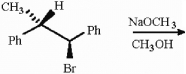
(Essay)
4.9/5 (78)
(78) Provide a step-by-step mechanism for the reaction below. Include all intermediates, formal charges and correct arrow pushing of electrons. 
(Essay)
4.9/5 (88)
(88) Provide the major organic product of the reaction below and a detailed, stepwise mechanism which accounts for its formation. 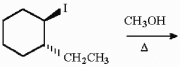
(Essay)
5.0/5 (83)
(83) List the following alkyl halides in order of their increasing reactivity as substrates in SN2 reactions: 2-chlorobutane, 2-iodobutane, and 1-iodobutane.
(Essay)
4.8/5 (58)
(58) Which of the following alkyl chlorides is least likely to undergo rearrangement during a solvolysis reaction?
(Multiple Choice)
4.8/5 (72)
(72) Consider the substitution reaction shown below. By what mechanism will the reaction proceed? 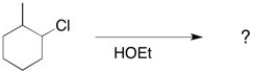
(Multiple Choice)
4.9/5 (76)
(76) Which of the following factors is favorable for nucleophilicity but not basicity?
(Multiple Choice)
5.0/5 (80)
(80) Which of the following statements describe a favorable attribute of a leaving group? (More than one answer is possible.)
(Multiple Choice)
4.8/5 (77)
(77) 
Filters
- Essay(0)
- Multiple Choice(0)
- Short Answer(0)
- True False(0)
- Matching(0)