



 Chat with AI
Exam 8: Reactions of Alkenes

Exam 1: Structure and Bonding127 Questions
Exam 2: Acids and Bases; Functional Groups136 Questions
Exam 3: Structure and Stereochemistry of Alkanes134 Questions
Exam 4: The Study of Chemical Reactions128 Questions
Exam 5: Stereochemistry132 Questions
Exam 6: Alkyl Halides; Nucleophilic Substitution137 Questions
Exam 7: Structure and Synthesis of Alkenes; Elimination131 Questions
Exam 8: Reactions of Alkenes134 Questions
Exam 10: Structure and Synthesis of Alcohols136 Questions
Exam 11: Reactions of Alcohols125 Questions
Exam 12: Infrared Spectroscopy and Mass Spectrometry121 Questions
Exam 13: Nuclear Magnetic Resonance Spectroscopy130 Questions
Exam 14: Ethers, Epoxides, and Thioethers127 Questions
Exam 15: Conjugated Systems, Orbital Symmetry, and Ultraviolet Spectroscopy130 Questions
Exam 16: Aromatic Compounds128 Questions
Exam 17: Reactions of Aromatic Compounds129 Questions
Exam 18: Ketones and Aldehydes131 Questions
Exam 19: Amines127 Questions
Exam 20: Carboxylic Acids125 Questions
Exam 21: Carboxylic Acid Derivatives130 Questions
Exam 22: Condensations and Alpha Substitutions of Carboxyl Compounds127 Questions
Exam 23: Carbohydrates and Nucleic Acids126 Questions
Exam 24: Amino Acids, Peptides, and Proteins127 Questions
Exam 25: Lipids127 Questions
Exam 26: Synthetic Polymers128 Questions
Select questions type


Provide the reagents necessary to complete the following transformation. 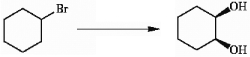
(Essay)
4.8/5  (85)
(85) Provide the structure of the major organic product of the reaction below. 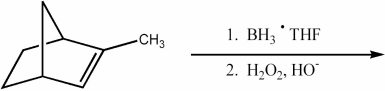
(Essay)
4.8/5 (94)
(94) Provide the reagents necessary to complete the following transformation. 
(Multiple Choice)
4.8/5 (76)
(76) Draw the major organic product generated in the reaction below. Pay particular attention to regio- and stereochemical detail. 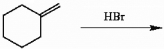
(Essay)
4.8/5 (73)
(73) Provide the structure of the major organic product of the reaction below. 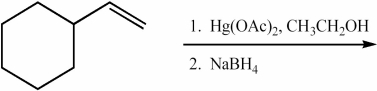
(Essay)
4.9/5 (77)
(77) Provide the reagents necessary to complete the following transformation. 
(Essay)
4.9/5 (90)
(90) Which of the following compounds is (are) appropriate to promote the cationic polymerization of isobutylene?
(Multiple Choice)
4.9/5 (95)
(95) Draw the major organic product generated in the reaction below. Pay particular attention to regio- and stereochemical detail. 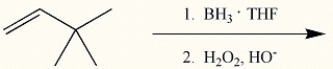
(Essay)
4.8/5 (86)
(86) Why can methyl acrylate (H2C  CHCO2CH3) be polymerized through anionic polymerization?
 (Essay)
4.8/5 (82)
(82) How many moles of BH3 need to be added to completely react with 1 mole of hex-1-ene?
(Multiple Choice)
4.9/5 (85)
(85) Draw the major organic product generated in the reaction below. Pay particular attention to regio- and stereochemical detail. 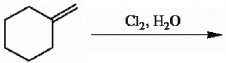
(Essay)
4.9/5 (93)
(93) Draw the major organic product generated in the reaction below. Pay particular attention to regio- and stereochemical detail. 
(Essay)
4.9/5 (81)
(81) Treatment of 2-methylpropene with which of the following reaction conditions results in an anti-Markovnikov addition product?
(Multiple Choice)
4.8/5 (94)
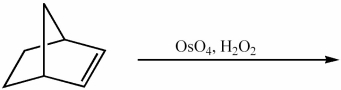
(94) 

HBr can be added to an alkene in the presence of peroxides (ROOR). What function does the peroxide serve in this reaction?
(Multiple Choice)
4.9/5 (90)
(90) A reaction of an unknown alkene with MCPBA in dichloromethane followed by work-up with H2O/H+ yielded, as the major product, a racemic mixture of (2S,3S) and (2R,3R)-3-methylpentan-2,3-diol. What is the specific structure of the alkene used in the reaction?
(Multiple Choice)
4.9/5 (93)
(93) Draw the major organic product generated in the reaction below. Pay particular attention to regio- and stereochemical detail. 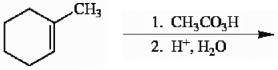
(Essay)
5.0/5 (78)
(78) Name the major product which results when HBr is added to 3-ethyl-3-hexene.
(Short Answer)
5.0/5 (90)
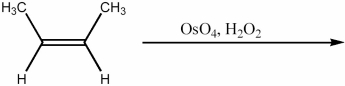
(90) 

Filters
- Essay(0)
- Multiple Choice(0)
- Short Answer(0)
- True False(0)
- Matching(0)