



 Chat with AI
Exam 8: Reactions of Alkenes

Exam 1: Structure and Bonding127 Questions
Exam 2: Acids and Bases; Functional Groups136 Questions
Exam 3: Structure and Stereochemistry of Alkanes134 Questions
Exam 4: The Study of Chemical Reactions128 Questions
Exam 5: Stereochemistry132 Questions
Exam 6: Alkyl Halides; Nucleophilic Substitution137 Questions
Exam 7: Structure and Synthesis of Alkenes; Elimination131 Questions
Exam 8: Reactions of Alkenes134 Questions
Exam 10: Structure and Synthesis of Alcohols136 Questions
Exam 11: Reactions of Alcohols125 Questions
Exam 12: Infrared Spectroscopy and Mass Spectrometry121 Questions
Exam 13: Nuclear Magnetic Resonance Spectroscopy130 Questions
Exam 14: Ethers, Epoxides, and Thioethers127 Questions
Exam 15: Conjugated Systems, Orbital Symmetry, and Ultraviolet Spectroscopy130 Questions
Exam 16: Aromatic Compounds128 Questions
Exam 17: Reactions of Aromatic Compounds129 Questions
Exam 18: Ketones and Aldehydes131 Questions
Exam 19: Amines127 Questions
Exam 20: Carboxylic Acids125 Questions
Exam 21: Carboxylic Acid Derivatives130 Questions
Exam 22: Condensations and Alpha Substitutions of Carboxyl Compounds127 Questions
Exam 23: Carbohydrates and Nucleic Acids126 Questions
Exam 24: Amino Acids, Peptides, and Proteins127 Questions
Exam 25: Lipids127 Questions
Exam 26: Synthetic Polymers128 Questions
Select questions type


Draw the major organic product generated in the reaction below. Pay particular attention to regio- and stereochemical detail. 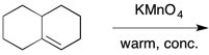
(Essay)
4.7/5  (86)
(86) Draw the major organic product generated in the reaction below. Pay particular attention to regio- and stereochemical detail. 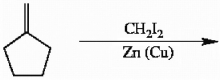
(Essay)
4.7/5 (75)
(75) Draw the major organic product generated in the reaction below. Pay particular attention to regio- and stereochemical detail. 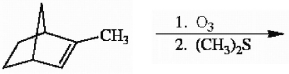
(Essay)
4.9/5 (74)
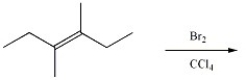
(74) Predict the product of the following reaction. Include any relevant stereochemistry. 
(Essay)
5.0/5 (74)
(74) 
Both (E)- and (Z)-hex-3-ene can be treated with D2 in the presence of a platinum catalyst. How are the products from these two reactions related to each other?
(Multiple Choice)
4.8/5 (76)
(76) Treatment of an alkene with an alcohol in the presence of an acid catalyst produces an ether as the major organic product. Provide a mechanism that shown how this product is formed. 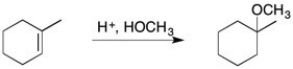
(Essay)
4.8/5 (84)
(84) Provide the reagents necessary to complete the following transformation. 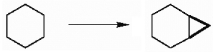
(Essay)
5.0/5 (84)
(84) Using any alkene as a starting material, how would you make the compound shown below? 
(Essay)
4.9/5 (81)
(81) When 3,6-dimethylcyclohexene is reacted with dry gaseous HBr, one of the products is 1-bromo-1,4-dimethylcyclohexane. Provide a detailed step-by-step mechanism to explain the formation of this product.
(Essay)
4.8/5 (85)
(85) Explain the regioselectivity observed in the radical addition of HBr to 2-methylpropene.
(Essay)
4.9/5 (71)
(71) Draw the major organic product generated in the reaction below. Pay particular attention to regio- and stereochemical detail. 
(Essay)
4.8/5 (78)
(78) Draw the major organic product generated in the reaction below. Pay particular attention to regio- and stereochemical detail. 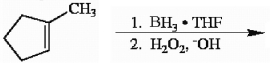
(Essay)
4.8/5 (69)
(69) What cyclic products results when 1,8-nonadiene is treated with Grubbs catalyst?
(Short Answer)
4.9/5 (81)
(81) Which of the following intermediates is thought to occur in the mechanism by which alkenes are hydrated in the presence of acid?
(Multiple Choice)
4.8/5 (75)
(75) Complete the following reaction by filling in the necessary reagents. 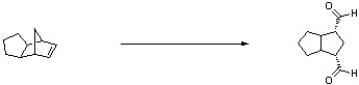
(Short Answer)
4.9/5 (82)
(82) Draw the major organic product generated in the reaction below. Pay particular attention to regio- and stereochemical detail. 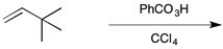
(Essay)
4.9/5 (58)
(58) Draw the major organic product(s) generated in the reaction below. Pay particular attention to regio- and stereochemical detail. 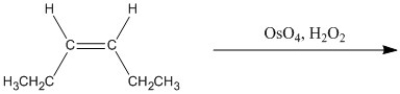
(Essay)
4.9/5 (89)
(89) Draw the major organic product generated in the reaction below. Pay particular attention to regio- and stereochemical detail. 
(Essay)
4.9/5 (73)
(73) 
Filters
- Essay(0)
- Multiple Choice(0)
- Short Answer(0)
- True False(0)
- Matching(0)