



 Chat with AI
Exam 8: Reactions of Alkenes

Exam 1: Structure and Bonding127 Questions
Exam 2: Acids and Bases; Functional Groups136 Questions
Exam 3: Structure and Stereochemistry of Alkanes134 Questions
Exam 4: The Study of Chemical Reactions128 Questions
Exam 5: Stereochemistry132 Questions
Exam 6: Alkyl Halides; Nucleophilic Substitution137 Questions
Exam 7: Structure and Synthesis of Alkenes; Elimination131 Questions
Exam 8: Reactions of Alkenes134 Questions
Exam 10: Structure and Synthesis of Alcohols136 Questions
Exam 11: Reactions of Alcohols125 Questions
Exam 12: Infrared Spectroscopy and Mass Spectrometry121 Questions
Exam 13: Nuclear Magnetic Resonance Spectroscopy130 Questions
Exam 14: Ethers, Epoxides, and Thioethers127 Questions
Exam 15: Conjugated Systems, Orbital Symmetry, and Ultraviolet Spectroscopy130 Questions
Exam 16: Aromatic Compounds128 Questions
Exam 17: Reactions of Aromatic Compounds129 Questions
Exam 18: Ketones and Aldehydes131 Questions
Exam 19: Amines127 Questions
Exam 20: Carboxylic Acids125 Questions
Exam 21: Carboxylic Acid Derivatives130 Questions
Exam 22: Condensations and Alpha Substitutions of Carboxyl Compounds127 Questions
Exam 23: Carbohydrates and Nucleic Acids126 Questions
Exam 24: Amino Acids, Peptides, and Proteins127 Questions
Exam 25: Lipids127 Questions
Exam 26: Synthetic Polymers128 Questions
Select questions type


Provide the structure of the major organic product of the reaction below. 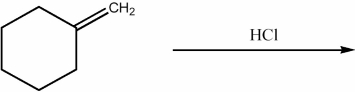
(Essay)
4.8/5  (60)
(60) Provide the structure of the major organic product of the reaction below. 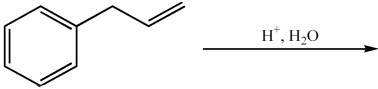
(Essay)
4.9/5 (75)
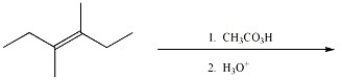
(75) 
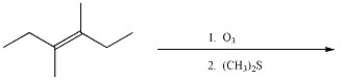
Provide the structure of the product which results when the alkene below is treated with O3 followed by (CH3)2S. 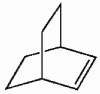
(Essay)
4.9/5 (86)
(86) Which one of these alkene would be likely to experience a carbocation rearrangement when treated with Hg(OAc)2 in water, followed by reaction with sodium borohydride?
(Multiple Choice)
4.8/5 (82)
(82) Draw the major organic product generated in the reaction below. Pay particular attention to regio- and stereochemical detail. 
(Essay)
4.8/5 (83)
(83) Which of the following additions to alkenes occur(s) specifically in an syn fashion?
(Multiple Choice)
4.8/5 (75)
(75) 
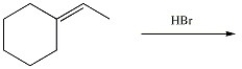
Use a transition state to explain the regiochemistry of the reaction below. Make sure to include correct partial charges. 
(Essay)
4.7/5 (84)
(84) 
Draw the major organic product generated in the reaction below. Pay particular attention to regio- and stereochemical detail. 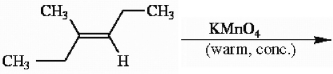
(Essay)
4.8/5 (94)
(94) 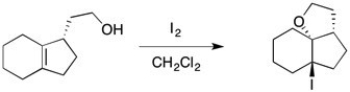
Provide the structure of the major organic product of the reaction below. 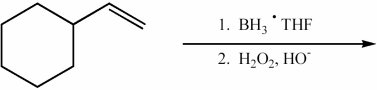
(Essay)
4.7/5 (81)
(81) Provide the structure of the major organic product of the reaction below. 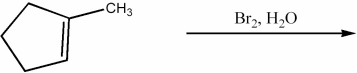
(Essay)
5.0/5 (71)
(71) When isobutylene [CH2
 C(CH3)2] is treated with BF3, polyisobutylene is formed. Provide a step-by-step mechanism for this polymerization reaction.
 (Essay)
4.7/5 (62)
(62) Draw the major organic product generated in the reaction below. Pay particular attention to regio- and stereochemical detail. 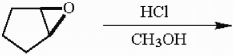
(Essay)
4.8/5 (86)
(86) What synthetic goal is achieved by subjecting an alkene to an oxymercuration-demercuration sequence?
(Multiple Choice)
4.7/5 (91)
(91) β-Ocimene is a natural product with a pleasant odor. Based on the information below, deduce the structure of β-ocimene. 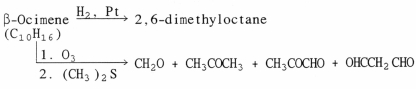
(Essay)
4.8/5 (78)
(78) What alkene, which contains no oxygen atoms and a single C  C, will give CH3CO(CH2)4CHO upon treatment with OsO4 followed by cleavage with periodic acid?
 (Short Answer)
4.9/5 (67)
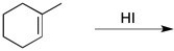
(67) 

Filters
- Essay(0)
- Multiple Choice(0)
- Short Answer(0)
- True False(0)
- Matching(0)