



 Chat with AI
Exam 8: Reactions of Alkenes

Exam 1: Structure and Bonding127 Questions
Exam 2: Acids and Bases; Functional Groups136 Questions
Exam 3: Structure and Stereochemistry of Alkanes134 Questions
Exam 4: The Study of Chemical Reactions128 Questions
Exam 5: Stereochemistry132 Questions
Exam 6: Alkyl Halides; Nucleophilic Substitution137 Questions
Exam 7: Structure and Synthesis of Alkenes; Elimination131 Questions
Exam 8: Reactions of Alkenes134 Questions
Exam 10: Structure and Synthesis of Alcohols136 Questions
Exam 11: Reactions of Alcohols125 Questions
Exam 12: Infrared Spectroscopy and Mass Spectrometry121 Questions
Exam 13: Nuclear Magnetic Resonance Spectroscopy130 Questions
Exam 14: Ethers, Epoxides, and Thioethers127 Questions
Exam 15: Conjugated Systems, Orbital Symmetry, and Ultraviolet Spectroscopy130 Questions
Exam 16: Aromatic Compounds128 Questions
Exam 17: Reactions of Aromatic Compounds129 Questions
Exam 18: Ketones and Aldehydes131 Questions
Exam 19: Amines127 Questions
Exam 20: Carboxylic Acids125 Questions
Exam 21: Carboxylic Acid Derivatives130 Questions
Exam 22: Condensations and Alpha Substitutions of Carboxyl Compounds127 Questions
Exam 23: Carbohydrates and Nucleic Acids126 Questions
Exam 24: Amino Acids, Peptides, and Proteins127 Questions
Exam 25: Lipids127 Questions
Exam 26: Synthetic Polymers128 Questions
Select questions type


Draw the major organic product generated in the reaction below. Pay particular attention to regio- and stereochemical detail. 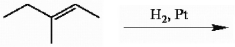
(Essay)
4.8/5  (66)
(66) Complete the following reaction and provide a detailed, step-by-step mechanism for the process. 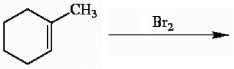
(Essay)
4.7/5 (81)
(81) Draw the major organic product generated in the reaction below. Pay particular attention to regio- and stereochemical detail. 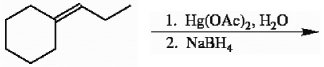
(Essay)
4.8/5 (67)
(67) Draw the major organic product(s) generated in the reaction below. Pay particular attention to regio- and stereochemical detail. 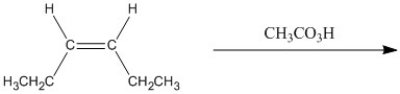
(Essay)
4.9/5 (70)
(70) 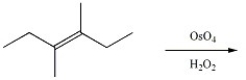
Draw the major organic product generated in the reaction below. Pay particular attention to regio- and stereochemical detail. 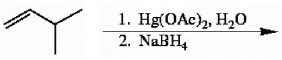
(Essay)
4.7/5 (79)
(79) Draw the major organic product generated in the reaction below. Pay particular attention to regio- and stereochemical detail. 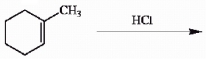
(Essay)
4.8/5 (72)
(72) Name the major alcohol product which results when 3,3-dimethylbut-1-ene is treated with dilute acid.
(Short Answer)
4.9/5 (96)
(96) Provide a detailed, step-by-step mechanism for the reaction shown below. 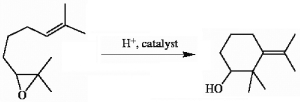
(Essay)
4.7/5 (85)
(85) Predict the structure of the products resulting from the reaction between limonene, a natural terpene found in citrus fruit, and ozone, followed by work up with dimethyl sulfide. 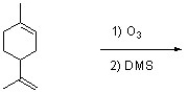
(Essay)
4.8/5 (76)
(76) Draw the major organic product generated in the reaction below. Pay particular attention to regio- and stereochemical detail. 
(Essay)
4.9/5 (75)
(75) Which of the following additions to alkenes occur(s) specifically in an anti fashion?
(Multiple Choice)
4.9/5 (78)
(78) Complete the following reaction and provide a detailed, step-by-step mechanism for the process. 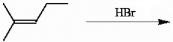
(Essay)
5.0/5 (72)
(72) Provide the reagents necessary to convert 3-methyl-2-butanol to 2-methyl-2-butanol.
(Essay)
4.9/5 (86)
(86) Draw the major organic product(s) generated in the reaction below. Pay particular attention to regio- and stereochemical detail. 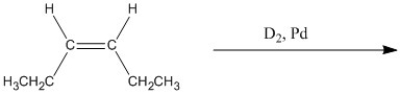
(Essay)
4.9/5 (92)
(92) Draw the major organic product generated in the reaction below. Pay particular attention to regio- and stereochemical detail. 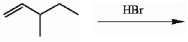
(Essay)
4.8/5 (74)
(74) Complete the following reaction and provide a detailed, step-by-step mechanism for the process. 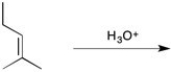
(Essay)
5.0/5 (87)
(87) Draw the major organic product(s) generated in the reaction below. Pay particular attention to regio- and stereochemical detail. 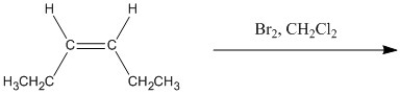
(Essay)
4.9/5 (72)
(72) What alkene, which contains no oxygen atoms and a single C  C, will give benzophenone (shown below) as the only product upon treatment with O3 followed by reaction with dimethyl sulfide.

C, will give benzophenone (shown below) as the only product upon treatment with O3 followed by reaction with dimethyl sulfide. (Essay)
4.8/5 (72)
(72) 
Filters
- Essay(0)
- Multiple Choice(0)
- Short Answer(0)
- True False(0)
- Matching(0)