Multiple Choice
Passage
Research suggests that cognitive changes occur with age. Though dementia is common, occurring in about 14% of individuals age 71 and older and in almost 34% of individuals 90 and older, a majority of older adults exhibit some degree of "normal" cognitive decline. The following studies were conducted on 605 older adults (mean age = 78.2) who did not show any signs of dementia and 590 younger adult participants (mean age = 28.8) .Cognition studiesParticipants were asked to solve five puzzles designed to test their ability to apply new information, reason inductively and deductively, and use logic. Participants were also asked to complete a 20-item vocabulary and grammar test. The older adults performed significantly worse than the younger adults on the puzzles, but there was no significant difference between the groups on the vocabulary/grammar test.Focus studiesWhen asked to read a short story and then answer a series of questions assessing comprehension (focused condition) , older adults performed equally well as the younger adults. However, when asked to read a similar story while wearing headphones playing another story that was to be ignored (distraction condition) , older adults performed worse than younger adults when answering questions assessing comprehension of the story they read.Memory studiesWhen asked to memorize 30 neutral items (eg, a key, a pencil, a book) , the images of which were presented serially, younger adults performed significantly better when asked to list the items immediately after seeing them and when asked to list the items after performing a distraction task. In a second trial, both groups were serially presented with 30 pictures of faces showing positive, negative, or neutral expressions. The groups were later asked to identify these faces among a set of 100. Results are shown in Figure 1.
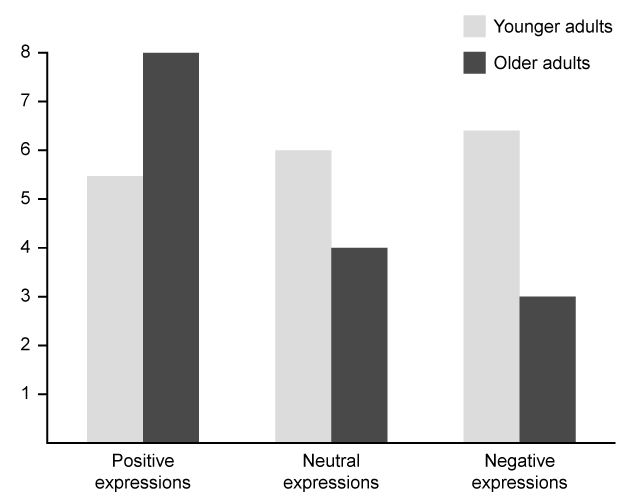 Figure 1 Average number of correctly identified faces for older and younger adult groups
-Which of the following conflicts corresponds to the stage of psychosocial development most appropriate for the age of the older adult study participants?
A) Autonomy vs. shame
B) Industry vs. inferiority
C) Integrity vs. despair
D) Intimacy vs. isolation
Correct Answer:

Verified
Correct Answer:
Verified
Q273: Passage<br>Studies suggest that health outcomes for preventable
Q274: Passage<br>A common misconception in medicine is that
Q275: Passage<br>Almost 70% of Americans today are either
Q276: Passage<br>The term "health disparities" describes a systematic
Q277: Passage<br>Numerous studies suggest that physicians make both
Q279: Passage<br>Trait theorists believe that all people have
Q280: Which of the following population pyramids depicts
Q281: According to world systems theory, which of
Q282: Passage<br>Research suggests that cognitive changes occur with
Q283: Passage<br>Physical modifications important for consolidating memory are