



 Chat with AI
Exam 24: The Immune System

Exam 1: Biology: Exploring Life47 Questions
Exam 2: The Chemical Basis of Life73 Questions
Exam 3: The Molecules of Cells89 Questions
Exam 4: A Tour of the Cell93 Questions
Exam 5: The Working Cell81 Questions
Exam 6: How Cells Harvest Chemical Energy82 Questions
Exam 7: Photosynthesis: Using Light to Make Food83 Questions
Exam 8: The Cellular Basis of Reproduction and Inheritance81 Questions
Exam 9: Patterns of Inheritance76 Questions
Exam 10: Molecular Biology of the Gene85 Questions
Exam 11: How Genes Are Controlled84 Questions
Exam 12: DNA Technology and Genomics80 Questions
Exam 13: How Populations Evolve67 Questions
Exam 14: The Origin of Species59 Questions
Exam 15: Tracing Evolutionary History88 Questions
Exam 16: Microbial Life: Prokaryotes and Protists80 Questions
Exam 17: The Evolution of Plant and Fungal Diversity85 Questions
Exam 18: The Evolution of Invertebrate Diversity81 Questions
Exam 19: The Evolution of Vertebrate Diversity77 Questions
Exam 20: Unifying Concepts of Animal Structure and Function68 Questions
Exam 21: Nutrition and Digestion96 Questions
Exam 22: Gas Exchange68 Questions
Exam 23: Circulation81 Questions
Exam 24: The Immune System76 Questions
Exam 25: Control of Body Temperature and Water Balance67 Questions
Exam 26: Hormones and the Endocrine System66 Questions
Exam 27: Reproduction and Embryonic Development88 Questions
Exam 28: Nervous Systems75 Questions
Exam 29: The Senses62 Questions
Exam 30: How Animals Move72 Questions
Exam 31: Plant Structure, Growth, and Reproduction81 Questions
Exam 32: Plant Nutrition and Transport69 Questions
Exam 33: Control Systems in Plants61 Questions
Exam 34: The Biosphere: an Introduction to Earths Diverse Environments61 Questions
Exam 35: Behavioral Adaptations to the Environment54 Questions
Exam 36: Population Ecology57 Questions
Exam 37: Communities and Ecosystems62 Questions
Exam 38: Conservation Biology61 Questions
Select questions type


A physician diagnoses a patient with a bacterial infection and determines that the patient is not immune to the bacteria. He delivers a shot of blood plasma that contains antibodies to his patient. The physician is transferring
(Multiple Choice)
4.8/5  (75)
(75) A physician is trying to determine if a patient has functioning helper T cells. Which of the following events would provide evidence that helper T cells are acting normally?
(Multiple Choice)
4.9/5 (84)
(84) Most ________ are located at specific areas where bacteria microbes tend to attack so that they can readily engulf and destroy the invading bacteria.
(Multiple Choice)
4.9/5 (73)
(73) A primary immune response is the immune response elicited by the
(Multiple Choice)
4.7/5 (66)
(66) When a B cell first interacts with its particular antigen, the B cell
(Multiple Choice)
5.0/5 (77)
(77) A researcher who detects a higher-than-normal amount of interferon in a laboratory rat would correctly conclude that
(Multiple Choice)
4.9/5 (83)
(83) Which of the following diseases cannot currently be prevented by vaccination?
(Multiple Choice)
4.9/5 (66)
(66) The transfer of antibodies in breast milk to an infant is an example of ________ immunity.
(Multiple Choice)
5.0/5 (93)
(93) Bronchitis can be easily acquired by individuals with immunodeficiency disorders. In these situations, bronchitis is an example of
(Multiple Choice)
4.9/5 (69)
(69) What event could have led to the situation shown in the accompanying figure? 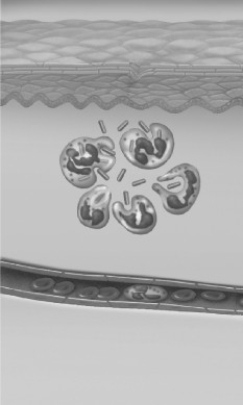
(Multiple Choice)
4.9/5 (89)
(89) Which of the following types of cells does HIV preferentially infect?
(Multiple Choice)
4.8/5 (74)
(74) When you cut yourself, the damaged cells immediately release chemical alarm signals, such as
(Multiple Choice)
4.8/5 (81)
(81) Which of the following are found in the interstitial fluid and consume any bacteria and virus-infected cells they encounter?
(Multiple Choice)
4.8/5 (81)
(81) Suppose that a person encountered two different antigens at about the same time which initiated two different immune responses (shown in the accompanying figure). What can you conclude from these data? 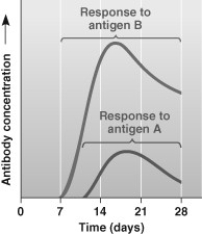
(Multiple Choice)
4.9/5 (80)
(80) 
Filters
- Essay(0)
- Multiple Choice(0)
- Short Answer(0)
- True False(0)
- Matching(0)