



 Chat with AI
Exam 30: How Animals Move

Exam 1: Biology: Exploring Life47 Questions
Exam 2: The Chemical Basis of Life73 Questions
Exam 3: The Molecules of Cells89 Questions
Exam 4: A Tour of the Cell93 Questions
Exam 5: The Working Cell81 Questions
Exam 6: How Cells Harvest Chemical Energy82 Questions
Exam 7: Photosynthesis: Using Light to Make Food83 Questions
Exam 8: The Cellular Basis of Reproduction and Inheritance81 Questions
Exam 9: Patterns of Inheritance76 Questions
Exam 10: Molecular Biology of the Gene85 Questions
Exam 11: How Genes Are Controlled84 Questions
Exam 12: DNA Technology and Genomics80 Questions
Exam 13: How Populations Evolve67 Questions
Exam 14: The Origin of Species59 Questions
Exam 15: Tracing Evolutionary History88 Questions
Exam 16: Microbial Life: Prokaryotes and Protists80 Questions
Exam 17: The Evolution of Plant and Fungal Diversity85 Questions
Exam 18: The Evolution of Invertebrate Diversity81 Questions
Exam 19: The Evolution of Vertebrate Diversity77 Questions
Exam 20: Unifying Concepts of Animal Structure and Function68 Questions
Exam 21: Nutrition and Digestion96 Questions
Exam 22: Gas Exchange68 Questions
Exam 23: Circulation81 Questions
Exam 24: The Immune System76 Questions
Exam 25: Control of Body Temperature and Water Balance67 Questions
Exam 26: Hormones and the Endocrine System66 Questions
Exam 27: Reproduction and Embryonic Development88 Questions
Exam 28: Nervous Systems75 Questions
Exam 29: The Senses62 Questions
Exam 30: How Animals Move72 Questions
Exam 31: Plant Structure, Growth, and Reproduction81 Questions
Exam 32: Plant Nutrition and Transport69 Questions
Exam 33: Control Systems in Plants61 Questions
Exam 34: The Biosphere: an Introduction to Earths Diverse Environments61 Questions
Exam 35: Behavioral Adaptations to the Environment54 Questions
Exam 36: Population Ecology57 Questions
Exam 37: Communities and Ecosystems62 Questions
Exam 38: Conservation Biology61 Questions
Select questions type


Suppose that the circular muscles in an earthworm have become selectively paralyzed such that they are not able to contract. How will this affect the earthworm's locomotion?
(Multiple Choice)
4.9/5  (73)
(73) According to the sliding filament model of muscle contraction, a sarcomere contracts when its
(Multiple Choice)
4.8/5 (84)
(84) One change that occurs within a sarcomere during muscle contraction is that the
(Multiple Choice)
4.7/5 (85)
(85) The neurotransmitter found at the synapse between nerves and human skeletal muscle cells is
(Multiple Choice)
4.8/5 (78)
(78) The "Ironman" is a version of the triathlon, a race that includes three events: swimming, bicycling, and running. In an Ironman, an athlete must swim 2.4 miles, bike 112 miles, and run 26.2 miles, in that order, without a break. The annual Ironman World Championship is held in Hawaii every year. The men's course record was set in 2011 by Australia's Craig Alexander with a time of 8 hours, 18 minutes, and 37 seconds, and the women's course record was set in 2009 by England's Chrissie Wellington with a time of 8 hours, 54 minutes, and 2 seconds.
-What type of energy would the leg muscles of athletes that enter this race use during the final 26.2-mile foot race?
(Multiple Choice)
4.7/5 (76)
(76) Which animal has an endoskeleton made entirely of cartilage and reinforced with cartilage?
(Multiple Choice)
4.8/5 (84)
(84) Which statement best describes the molecular basis of muscle shortening?
(Multiple Choice)
4.9/5 (82)
(82) Which of the following statements best describes the power stroke of muscle contraction?
(Multiple Choice)
4.9/5 (91)
(91) 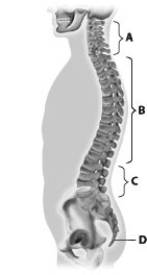
In the year 2000, it was estimated that the number of new osteoporotic fractures in men and women ages 50 and older was 9.0 million: 1.6 million were at the hip, 1.7 million were at the forearm, and 1.4 million were from the spine and humerus. Consider the following data and answer the questions that follow.
Estimated Number of Fractures (in Thousands) Worldwide at the Sites Shown in Men and Women in the Year 2000
Percentage of Site of Fracture Fractures Men Women Total Hip 18.2 490 1,137 1,627 Forearm 18.5 332 1,328 1,660 Spine 15.8 554 862 1,416 Humerus 7.9 178 528 706 Other sites 39.6 1,909 1,641 3,550 Total 100 3,463 5,496 8,959 Source: Adapted from Johnell, O., & Kanis, J.A. (2006). Osteoporosis International, 17(12): 1726. doi:10.1007/s00198-006-0172-4.
-Combined fractures in the hip, forearm, spine, and humerus were
(Multiple Choice)
5.0/5 (71)
(71) 
Filters
- Essay(0)
- Multiple Choice(0)
- Short Answer(0)
- True False(0)
- Matching(0)