



 Chat with AI
Exam 10: Infinite Series

Exam 1: Preliminaries101 Questions
Exam 2: Limits and Continuity105 Questions
Exam 3: Differentiation116 Questions
Exam 4: Applications of the Derivative118 Questions
Exam 5: Integration129 Questions
Exam 6: Applications of the Definite Integral85 Questions
Exam 7: Exponentials, Logarithms and Other Transcendental Functions66 Questions
Exam 8: Integration Techniques123 Questions
Exam 9: First-Order Differential Equations72 Questions
Exam 10: Infinite Series111 Questions
Exam 11: Parametric Equations and Polar Coordinates129 Questions
Exam 12: Vectors and the Geometry of Space107 Questions
Exam 13: Vector-Valued Functions103 Questions
Exam 14: Functions of Several Variables and Partial Differentiation112 Questions
Exam 15: Multiple Integrals92 Questions
Exam 16: Vector Calculus67 Questions
Exam 17: Second Order Differential Equations38 Questions
Select questions type


 .

Use a known Taylor polynomial at  with 4 non-zero terms to estimate the value of
 .
with 4 non-zero terms to estimate the value of . (Multiple Choice)
5.0/5  (76)
(76) 
 converges.

Estimate the error in the approximation of  as a Taylor polynomial of degree 3 about c = 1. Show all your work.
 (Essay)
4.8/5 (81)
(81) Find the interval of convergence and function f(x) to which  converges.
 (Multiple Choice)
4.8/5 (86)
(86) Use an appropriate Taylor series to approximate  accurate to within 10-8.
 (Multiple Choice)
5.0/5 (79)
(79)  .
 .
Show all your work.
 .
Show all your work.


Find a power series representation and radius of convergence for  by integrating or differentiating a series.
 (Multiple Choice)
4.8/5 (64)
(64)  is increasing, decreasing or neither.
Graph  about c = 1 and the Taylor polynomials for n = 3 and n = 5.
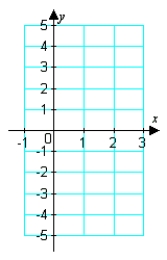
about c = 1 and the Taylor polynomials for n = 3 and n = 5. (Multiple Choice)
4.9/5 (84)
(84)  .
Write a formula that produces the given terms of the sequence. 
 ,
 ,
 ,

, , , (Multiple Choice)
4.7/5 (92)
(92)  converges or diverges. Show all your work.
Determine the number of terms needed to obtain the sum of  to within 10-6.
 (Multiple Choice)
4.7/5 (70)
(70) 
Filters
- Essay(0)
- Multiple Choice(0)
- Short Answer(0)
- True False(0)
- Matching(0)