



 Chat with AI
Exam 10: Infinite Series

Exam 1: Preliminaries101 Questions
Exam 2: Limits and Continuity105 Questions
Exam 3: Differentiation116 Questions
Exam 4: Applications of the Derivative118 Questions
Exam 5: Integration129 Questions
Exam 6: Applications of the Definite Integral85 Questions
Exam 7: Exponentials, Logarithms and Other Transcendental Functions66 Questions
Exam 8: Integration Techniques123 Questions
Exam 9: First-Order Differential Equations72 Questions
Exam 10: Infinite Series111 Questions
Exam 11: Parametric Equations and Polar Coordinates129 Questions
Exam 12: Vectors and the Geometry of Space107 Questions
Exam 13: Vector-Valued Functions103 Questions
Exam 14: Functions of Several Variables and Partial Differentiation112 Questions
Exam 15: Multiple Integrals92 Questions
Exam 16: Vector Calculus67 Questions
Exam 17: Second Order Differential Equations38 Questions
Select questions type


Determine how many terms are needed to estimate  to within 0.0001.
 (Multiple Choice)
4.7/5  (100)
(100) Use an appropriate Taylor series to approximate  accurate to within 10-8.
 (Multiple Choice)
4.8/5 (86)
(86)  .
 of the given sequence.

Use a known Taylor series to find the Taylor series about c = 0 for 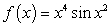 and find its radius of convergence.
 (Multiple Choice)
4.8/5 (70)
(70) 
Estimate the error in the approximation of  as a Taylor polynomial of degree 4 about c = 1. Show all your work.
 (Essay)
4.9/5 (88)
(88) Use a Taylor Polynomial of degree 3 to approximate  about c = 1.
 (Multiple Choice)
4.8/5 (75)
(75) Use graphical and numerical evidence to conjecture whether the series  converges or diverges.


converges or diverges. (Multiple Choice)
4.9/5 (85)
(85)  converges or diverges. Show your work.
 .
Determine if  converges or diverges. If convergent, find the sum of the series.
 (Multiple Choice)
4.8/5 (88)
(88)  .
 on the interval
 .
 is bounded. Show all your work.
Find the interval of convergence and function f(x) to which  converges.
 (Multiple Choice)
4.7/5 (90)
(90)  converges or diverges. Show all your work.
 .
Show all your work.
Find the power series representation (about c = 0), the radius of convergence, and the interval of convergence. 
(Multiple Choice)
4.8/5 (83)
(83)  is increasing, decreasing or neither.

Filters
- Essay(0)
- Multiple Choice(0)
- Short Answer(0)
- True False(0)
- Matching(0)