



 Chat with AI
Exam 10: Infinite Series

Exam 1: Preliminaries101 Questions
Exam 2: Limits and Continuity105 Questions
Exam 3: Differentiation116 Questions
Exam 4: Applications of the Derivative118 Questions
Exam 5: Integration129 Questions
Exam 6: Applications of the Definite Integral85 Questions
Exam 7: Exponentials, Logarithms and Other Transcendental Functions66 Questions
Exam 8: Integration Techniques123 Questions
Exam 9: First-Order Differential Equations72 Questions
Exam 10: Infinite Series111 Questions
Exam 11: Parametric Equations and Polar Coordinates129 Questions
Exam 12: Vectors and the Geometry of Space107 Questions
Exam 13: Vector-Valued Functions103 Questions
Exam 14: Functions of Several Variables and Partial Differentiation112 Questions
Exam 15: Multiple Integrals92 Questions
Exam 16: Vector Calculus67 Questions
Exam 17: Second Order Differential Equations38 Questions
Select questions type


Determine the interval of convergence and the function to which the power series converges. 
(Essay)
4.9/5  (77)
(77) Determine the number of terms needed to obtain the sum of  to within 10-6.
 (Multiple Choice)
4.7/5 (96)
(96) Find the interval of convergence of the (non-power) series and the corresponding series of derivatives. 
(Multiple Choice)
4.9/5 (71)
(71) For  , estimate the number of terms needed in a Taylor polynomial with c = 1 to guarantee an accuracy of
 . Show all your work.
, estimate the number of terms needed in a Taylor polynomial with c = 1 to guarantee an accuracy of . Show all your work. (Essay)
4.8/5 (67)
(67) Use a known Taylor polynomial at c = 0 with 5 non-zero terms to estimate the value of  .
. (Multiple Choice)
4.9/5 (89)
(89) Determine whether the series converges or diverges. If it converges, find its sum. 
(Multiple Choice)
4.9/5 (83)
(83) 
Find a power series representation of  about
 Determine the interval of convergence for the power series.
about Determine the interval of convergence for the power series. (Multiple Choice)
5.0/5 (85)
(85) Find the Taylor series about c = 5 and its interval of convergence. 
(Multiple Choice)
4.8/5 (76)
(76) 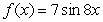 on the interval
 .
 converges or diverges. Show your work.
 converges.
Determine if  converges or diverges. If convergent, find the sum of the series.
 (Multiple Choice)
4.7/5 (88)
(88) 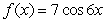
Determine if  is absolutely convergent, conditionally convergent or divergent.
 (Multiple Choice)
4.8/5 (70)
(70)  is bounded. Show all your work.
 to within 0.01.


Determine if  is absolutely convergent, conditionally convergent or divergent.
 (Multiple Choice)
4.9/5 (87)
(87) 
Filters
- Essay(0)
- Multiple Choice(0)
- Short Answer(0)
- True False(0)
- Matching(0)