



 Chat with AI
Exam 17: Carbohydrates

Exam 1: Matter, measurements, and Calculations92 Questions
Exam 2: Atoms and Molecules89 Questions
Exam 3: Electronic Structure and the Periodic Law86 Questions
Exam 4: Forces Between Particles89 Questions
Exam 5: Chemical Reactions88 Questions
Exam 6: The States of Matter88 Questions
Exam 7: Solutions and Colloids87 Questions
Exam 8: Reaction Rates and Equilibrium86 Questions
Exam 9: Acids, bases, and Salts86 Questions
Exam 10: Radioactivity and Nuclear Processes86 Questions
Exam 11: Organic Compounds: Alkanes87 Questions
Exam 12: Unsaturated Hydrocarbons88 Questions
Exam 13: Alcohols, phenols, and Ethers86 Questions
Exam 14: Aldehydes and Ketones86 Questions
Exam 15: Carboxylic Acids and Esters86 Questions
Exam 16: Amines and Amides85 Questions
Exam 17: Carbohydrates88 Questions
Exam 18: Lipids91 Questions
Exam 19: Proteins89 Questions
Exam 20: Enzymes88 Questions
Exam 21: Nucleic Acids and Protein Synthesis90 Questions
Exam 22: Nutrition and Energy for Life89 Questions
Exam 23: Carbohydrate Metabolism90 Questions
Exam 24: Lipid and Amino Acid Metabolism94 Questions
Exam 25: Body Fluids86 Questions
Select questions type




Glyceraldehyde is the simplest member of the carbohydrates and is shown below.What is the total number of functional groups that this molecule contain? 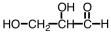
(Multiple Choice)
4.7/5  (85)
(85) 
Carbohydrates have their name because the ratio of carbon to water is always 1:1.
(True/False)
4.7/5 (79)
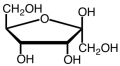
(79) How many chiral carbons are contained in the following structure? 
(Multiple Choice)
4.9/5 (65)
(65) 
Filters
- Essay(0)
- Multiple Choice(0)
- Short Answer(0)
- True False(0)
- Matching(0)