



 Chat with AI
Exam 16: Ears, Nose, Mouth, and Throat

Exam 1: Health Assessment29 Questions
Exam 2: Human Development Across the Lifespan29 Questions
Exam 3: Wellness and Health Promotion29 Questions
Exam 4: Cultural Considerations29 Questions
Exam 5: Psychosocial Assessment29 Questions
Exam 6: Assessment of Vulnerable Populations30 Questions
Exam 7: Interviewing and Communication Techniques30 Questions
Exam 8: The Health History28 Questions
Exam 9: Techniques and Equipment29 Questions
Exam 10: General Survey32 Questions
Exam 11: Pain Assessment29 Questions
Exam 12: Nutritional Assessment31 Questions
Exam 13: Skin, Hair, Nails29 Questions
Exam 14: Head, Neck, and Related Lymphatics34 Questions
Exam 15: Eye34 Questions
Exam 16: Ears, Nose, Mouth, and Throat34 Questions
Exam 17: Respiratory System31 Questions
Exam 18: Breasts and Axillae31 Questions
Exam 19: Cardiovascular System28 Questions
Exam 20: Peripheral Vascular System28 Questions
Exam 21: Abdomen29 Questions
Exam 22: Urinary System33 Questions
Exam 23: Male Reproduction System29 Questions
Exam 24: Female Reproduction System30 Questions
Exam 25: Musculoskeletal System32 Questions
Exam 26: Neurologic System34 Questions
Exam 27: Pregnant Females26 Questions
Exam 28: Hospitalized Patient25 Questions
Exam 29: Complete Health Assessment26 Questions
Select questions type


The nurse is triaging a client and notes pallor and cyanosis of the oral cavity and lips. Which action by the nurse is the priority based on the assessment data?
(Multiple Choice)
4.9/5  (85)
(85) The client has developed anosmia. The nurse educates the client about the possible causes of this condition. Which topics are appropriate for the nurse to include in the teaching session with the client?
(Multiple Choice)
4.9/5 (84)
(84) The emergency department triage nurse is assessing a child who has a history of a cough and nasal congestion for the last three days. When assessing patency of the nares, the nurse notes that the child is unable to breathe through the right nostril. Which interpretation of the assessment data by the nurse is the most appropriate?
(Multiple Choice)
4.8/5 (76)
(76) The nurse is discharging an infant who was brought to the emergency department for the treatment of an ear infection and fever. Which statements will the nurse include in the discharge teaching?
(Multiple Choice)
4.8/5 (64)
(64) During the focused interview, the client confides in the nurse issues with anxiety. During the physical assessment, which findings support the presence of anxiety?
(Multiple Choice)
4.8/5 (87)
(87) A client who is having difficulty maintaining equilibrium is unable to ambulate without pushing a wheelchair or using a walker. Which part of the ear is not functioning completely based on this assessment data? 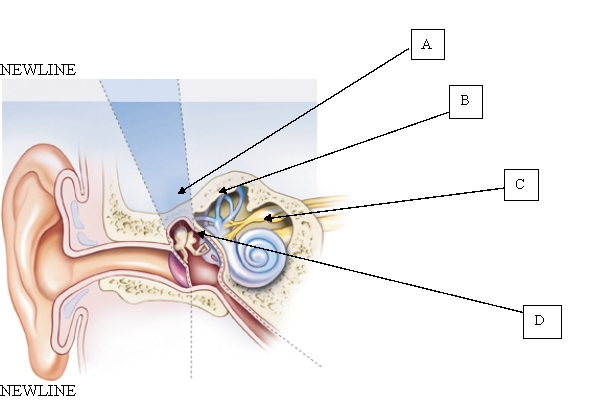
(Multiple Choice)
4.9/5 (75)
(75) A young mother brings an infant to the pediatric clinic. The infant has had a fever and is pulling at the left ear. Based on this data, which disorder does the nurse suspect?
(Multiple Choice)
4.8/5 (78)
(78) A client presents in the healthcare provider's office with complaints of headache and malaise. During the assessment, the nurse notes the client is experiencing severe pain when palpating behind the ears. Based on this data, which diagnosis does the nurse anticipate?
(Multiple Choice)
4.8/5 (88)
(88) The nurse is assessing the oral mucosa of a pregnant female and notes enlargement of the gums. The client states that regular oral hygiene is performed and that she does not understand why this has occurred. Which response by the nurse is the most appropriate?
(Multiple Choice)
4.9/5 (81)
(81) The client admits to cleaning his ears with a cotton-tipped applicator. As a consequence, the client has developed impacted cerumen and unilateral hearing loss. As the nurse prepares the client's plan of care, which nursing diagnosis is most applicable?
(Multiple Choice)
5.0/5 (81)
(81) The nurse is caring for a client who was admitted to the medical unit. The healthcare provider states that the client's Romberg test is positive. In order to meet this client's elimination needs, which interventions will the nurse implement?
(Multiple Choice)
5.0/5 (91)
(91) The client has been brought via ambulance to the emergency department (ED) following a motor vehicle accident. The nurse notes that the client's ear is draining clear fluid. Which is the priority nursing action?
(Multiple Choice)
4.9/5 (86)
(86) The nurse is assessing the tympanic membrane of a client and notes the presence of a darkened area. Based on this assessment data, which does the nurse suspect?
(Multiple Choice)
4.8/5 (75)
(75) The nursing is performing an otoscopic examination on an adult client and is unable to visualize the tympanic membrane. Which action by the nurse is appropriate in this situation?
(Multiple Choice)
4.8/5 (85)
(85) 
Filters
- Essay(0)
- Multiple Choice(0)
- Short Answer(0)
- True False(0)
- Matching(0)