



 Chat with AI
Exam 27: Pregnant Females

Exam 1: Health Assessment29 Questions
Exam 2: Human Development Across the Lifespan29 Questions
Exam 3: Wellness and Health Promotion29 Questions
Exam 4: Cultural Considerations29 Questions
Exam 5: Psychosocial Assessment29 Questions
Exam 6: Assessment of Vulnerable Populations30 Questions
Exam 7: Interviewing and Communication Techniques30 Questions
Exam 8: The Health History28 Questions
Exam 9: Techniques and Equipment29 Questions
Exam 10: General Survey32 Questions
Exam 11: Pain Assessment29 Questions
Exam 12: Nutritional Assessment31 Questions
Exam 13: Skin, Hair, Nails29 Questions
Exam 14: Head, Neck, and Related Lymphatics34 Questions
Exam 15: Eye34 Questions
Exam 16: Ears, Nose, Mouth, and Throat34 Questions
Exam 17: Respiratory System31 Questions
Exam 18: Breasts and Axillae31 Questions
Exam 19: Cardiovascular System28 Questions
Exam 20: Peripheral Vascular System28 Questions
Exam 21: Abdomen29 Questions
Exam 22: Urinary System33 Questions
Exam 23: Male Reproduction System29 Questions
Exam 24: Female Reproduction System30 Questions
Exam 25: Musculoskeletal System32 Questions
Exam 26: Neurologic System34 Questions
Exam 27: Pregnant Females26 Questions
Exam 28: Hospitalized Patient25 Questions
Exam 29: Complete Health Assessment26 Questions
Select questions type


A client at 33 weeks' gestation has a complete blood cell count (CBC) drawn. When the client hears that her hemoglobin level was higher before her pregnancy, she asks if this will increase the risk to her unborn baby. What information should be provided to the client?

Free
(Multiple Choice)
4.7/5  (87)
(87) Correct Answer: Verified
B
The nurse is monitoring a pregnant client in labor and palpates the abdomen until the end of the contraction. During end of shift report, the nurse states, "Uterus rigidity is comparable to a nose. This client may require an oxytocin drop." Based on this comment, which feature of the contract is the nurse describing?
Free
(Multiple Choice)
4.9/5 (73)
(73) Correct Answer:Verified
VerifiedA
The nurse is discussing dietary recommendations with a client who has been experiencing a larger than recommended weight gain during her pregnancy. The client reports reducing the amount of empty calories and of red meat consumed while significantly increasing intake of fish, poultry, fresh fruits, and vegetables. Based on this data, which response by the nurse is the most appropriate?
Free
(Multiple Choice)
4.8/5 (89)
(89) Correct Answer:Verified
VerifiedC
The healthcare provider is using Leopold maneuvers to assess fetal positioning. Which maneuver is being used in the image? 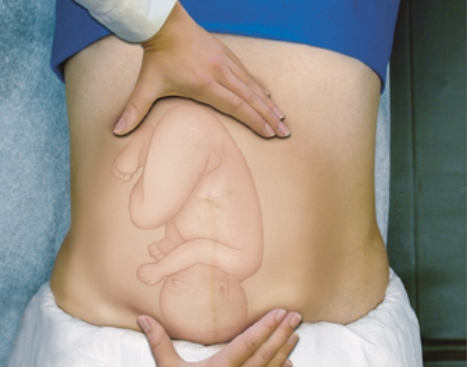
(Multiple Choice)
4.8/5 (79)
(79) The healthcare provider is performing an assessment on a pregnant client. The examiner notes a softening in the area being assessed. Which probable sign of pregnancy is being assessed? 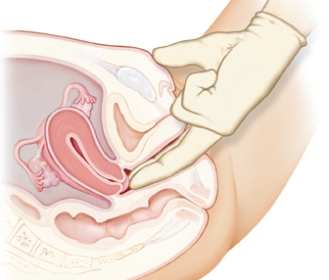
(Multiple Choice)
4.7/5 (83)
(83) A client is diagnosed with Group B Streptococcus at 33 weeks' gestation. The client becomes tearful when the diagnosis is discussed. She asks what will be done next. Which information should the nurse provide to the client?
(Multiple Choice)
4.9/5 (76)
(76) While performing data collection for a client who has recently had her pregnancy confirmed, the client reports taking daily herbal supplements. What action by the nurse is of the highest priority?
(Multiple Choice)
4.8/5 (76)
(76) A client at 15 weeks' gestation has just been advised she has tested positive for syphilis. The client is tearful and inquires about the risk to her infant. Which of the elements will be included in the management of the condition?
(Multiple Choice)
4.9/5 (75)
(75) During a prenatal counseling session a client indicates concern about her potential HIV positive status. The client states she does not want to "jinx" the pregnancy by getting tested because if she is positive, so is the baby. Which statement by the nurse is indicated?
(Multiple Choice)
4.8/5 (76)
(76) The nurse is interviewing a female client who reports no menstrual periods for 2 months and breast soreness. The nurse would document this data as which classification of signs of pregnancy?
(Multiple Choice)
4.9/5 (95)
(95) The nurse is interviewing a primigravida client who is 17 weeks pregnant. During the data collection the client reports she has not felt the baby move yet. Which response by the nurse is the most appropriate?
(Multiple Choice)
4.9/5 (85)
(85) A pregnant client reports concern about the development of reddish marks on her abdomen and breasts. The client asks about having a cream prescribed to help them disappear. Which information will the nurse include when providing education to the client regarding this inquiry?
(Multiple Choice)
4.7/5 (67)
(67) A client at 33 weeks' gestation calls the healthcare provider's office and reports she was attempting to nap when she became dizzy and felt faint. Which assessment data is the priority in this situation?
(Multiple Choice)
4.8/5 (81)
(81) The client who is at 5 weeks' gestation presents in the emergency department (ED) with complaints of severe abdominal and pelvic pain. A vaginal examination reveals tenderness and a palpable mass near the uterus. Based upon your knowledge, which can the nurse anticipate will take place first?
(Multiple Choice)
4.9/5 (78)
(78) The nurse is performing a pelvic examination on a client who is 20 weeks pregnant and notes a white, odorless discharge from the vagina. Based on this data, which action by the nurse is the most appropriate?
(Multiple Choice)
4.9/5 (61)
(61) The nurse is examining a client in the third trimester of pregnancy. Which finding would require immediate intervention by the nurse?
(Multiple Choice)
4.9/5 (85)
(85) The nurse is planning a prenatal education class for a group of women who are in their second trimester of pregnancy. Regarding the gestation of the pregnancy, which topics are considered most appropriate?
(Multiple Choice)
4.9/5 (74)
(74) The nurse is interviewing a client who is 36 weeks pregnant. Which client statement would require immediate intervention by the nurse?
(Multiple Choice)
4.9/5 (73)
(73) A client who is 38 weeks pregnant reports increased urinary frequency. Based on this data, which response by the nurse is indicated?
(Multiple Choice)
5.0/5 (76)
(76) The nurse is assessing a postpartum client and notes the peri-pad has whitish-yellow discharge. Which term will the nurse use when documenting this finding in the medical record?
(Multiple Choice)
4.9/5 (74)
(74) 
Filters
- Essay(0)
- Multiple Choice(0)
- Short Answer(0)
- True False(0)
- Matching(0)