



 Chat with AI
Exam 19: Cardiovascular System

Exam 1: Health Assessment29 Questions
Exam 2: Human Development Across the Lifespan29 Questions
Exam 3: Wellness and Health Promotion29 Questions
Exam 4: Cultural Considerations29 Questions
Exam 5: Psychosocial Assessment29 Questions
Exam 6: Assessment of Vulnerable Populations30 Questions
Exam 7: Interviewing and Communication Techniques30 Questions
Exam 8: The Health History28 Questions
Exam 9: Techniques and Equipment29 Questions
Exam 10: General Survey32 Questions
Exam 11: Pain Assessment29 Questions
Exam 12: Nutritional Assessment31 Questions
Exam 13: Skin, Hair, Nails29 Questions
Exam 14: Head, Neck, and Related Lymphatics34 Questions
Exam 15: Eye34 Questions
Exam 16: Ears, Nose, Mouth, and Throat34 Questions
Exam 17: Respiratory System31 Questions
Exam 18: Breasts and Axillae31 Questions
Exam 19: Cardiovascular System28 Questions
Exam 20: Peripheral Vascular System28 Questions
Exam 21: Abdomen29 Questions
Exam 22: Urinary System33 Questions
Exam 23: Male Reproduction System29 Questions
Exam 24: Female Reproduction System30 Questions
Exam 25: Musculoskeletal System32 Questions
Exam 26: Neurologic System34 Questions
Exam 27: Pregnant Females26 Questions
Exam 28: Hospitalized Patient25 Questions
Exam 29: Complete Health Assessment26 Questions
Select questions type


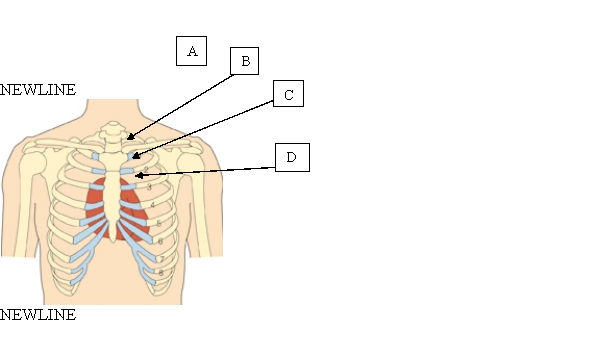
The nurse is reviewing the client's medical record and notes a consistently elevated blood pressure over the last eight years. The client has been noncompliant with lifestyle changes and medication use designed to reduce the client's blood pressure. Today, the nurse is able to palpate a heave on the client's chest. Where is the heavelocated? 

Free
(Multiple Choice)
4.9/5  (95)
(95) Correct Answer: Verified
A
The nurse is assessing a client and notes a loud, blowing sound over the right carotid artery. Based on this data, which diagnosis does the nurse anticipate?
Free
(Multiple Choice)
4.9/5 (94)
(94) Correct Answer:Verified
VerifiedD
An adult client is admitted to the hospital with complaints of increasing fatigue. The client's history is remarkable for rheumatic fever as a child. The nurse hears a diastolic murmur at the apex when the client is in the left lateral position. The murmur is described as a rumble without radiation. Which diagnosis does the nurse anticipate based on this data?
Free
(Multiple Choice)
4.8/5 (82)
(82) Correct Answer:Verified
VerifiedC
The nurse is assessing a young adult client and notes the presence of bilateral earlobe creases. Which actions by the nurse are appropriate based on this data?
(Multiple Choice)
4.8/5 (74)
(74) The nurse notes the pregnant client's blood pressure has dropped from 122/70 mmHg taken during her second month of pregnancy to 118/64 mmHg during her fifth month of pregnancy. Which action by the nurse is most appropriate based on this data?
(Multiple Choice)
5.0/5 (92)
(92) The intensive care nurse is performing a cardiac assessment on a newly admitted older adult client and notes the following findings: peripheral edema, jugular venous distention of 5 cm above the sternal angle when the client is at a 45-degree angle, and an enlarged liver. Based on this data, which diagnosis does the nurse suspect?
(Multiple Choice)
4.9/5 (60)
(60) The nurse is assessing a client who is 7 months pregnant. Which assessment finding will the nurse document as a normal finding for this client?
(Multiple Choice)
4.7/5 (73)
(73) During the cardiac assessment of a client, the nurse hears a loud rumbling during diastole that increases toward the end of the sound. This sound is heard with the bell of the stethoscope over the lower left sternal border. Based on this data, which diagnosis does the nurse anticipate?
(Multiple Choice)
4.9/5 (60)
(60) The nurse is performing a cardiac assessment on a healthy older adult client. Which findings may be expected when compared to when the client was middle-aged?
(Multiple Choice)
4.7/5 (81)
(81) The nurse is preparing to perform a cardiac assessment on a client. Rank the assessment steps in the order in which they will occur. Standard Text: Click on the down arrow for each response in the right column and select the correct choice from the list.
Response
A) Auscultation of the client's heart, apical pulse, and carotid arteries. Response
B) Inspection of the client's head and neck, chest, abdomen, and extremities. Response
C) Percussion of the client's chest. Response
D) Palpation of the precordium and pulses.
(Short Answer)
4.7/5 (84)
(84) The nurse is performing a cardiac assessment on an older adult client admitted with hypertension. The nurse determines that the apical impulse can be palpated in an area 2 cm in diameter at the point of maximal impulse. Which conclusion by the nurse is appropriate based on this data?
(Multiple Choice)
4.9/5 (75)
(75) The nurse is performing a cardiac assessment and prepares to palpate the client's heartbeat on the client's chest. Which is the correct location for the nurse to use when conducting this assessment? 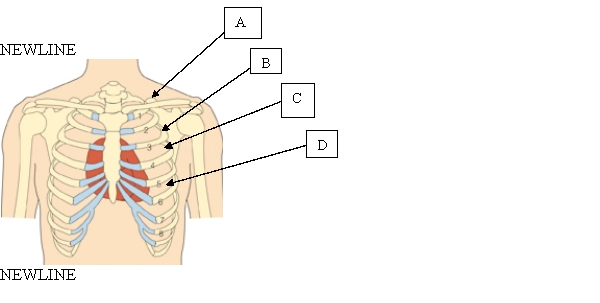
(Multiple Choice)
4.8/5 (87)
(87) The client is 3 months pregnant and receives education regarding maintaining a healthy pregnancy. The nurse based the education on the objectives of Healthy People 2020 regarding pregnant women. Which client statements indicate appropriate understanding of the teaching session?
(Multiple Choice)
4.9/5 (72)
(72) During the focused interview, the client answers the nurse's questions. Which statements by the client suggest that the client has an increased risk of developing cardiovascular disease? Standard
(Multiple Choice)
4.9/5 (84)
(84) The client's healthcare provider determines that the client's left ventricle is functioning adequately. When teaching the client about the left ventricle, which location will the nurse include in the educational session? 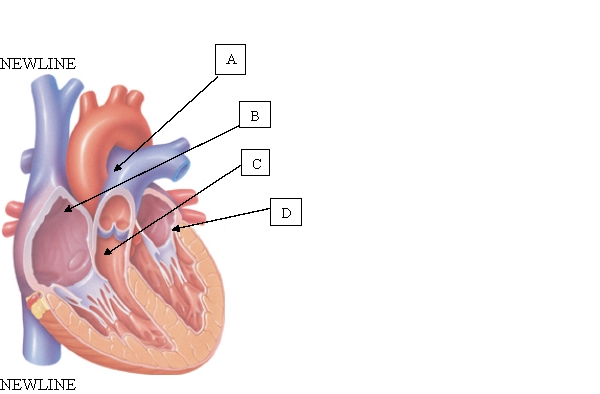
(Multiple Choice)
5.0/5 (91)
(91) The nurse is interviewing a client who has recently been diagnosed with atherosclerosis in the coronary arteries. Which question by the nurse is the priority when determining risk factors for this condition?
(Multiple Choice)
4.9/5 (80)
(80) The nurse is percussing the client's anterior chest and notes a dull sound over an area where lung tissue is normally found. Which conclusion by the nurse is the most appropriate based on this data?
(Multiple Choice)
4.8/5 (82)
(82) The nurse is caring for a client admitted with a grade-3 heart murmur heard during systole. Which cardiac conditions does the nurse anticipate based on this data?.
(Multiple Choice)
4.8/5 (77)
(77) The nurse is assessing a full-term African American newborn who is 18 hours old. Which assessment finding would the nurse document as normal for this newborn?
(Multiple Choice)
4.9/5 (83)
(83) The client is admitted to the coronary care unit with a myocardial infarction. Prior to discharge, which client statement indicates that adequate learning has occurred?
(Multiple Choice)
4.8/5 (72)
(72) 
Filters
- Essay(0)
- Multiple Choice(0)
- Short Answer(0)
- True False(0)
- Matching(0)