



 Chat with AI
Exam 21: Abdomen

Exam 1: Health Assessment29 Questions
Exam 2: Human Development Across the Lifespan29 Questions
Exam 3: Wellness and Health Promotion29 Questions
Exam 4: Cultural Considerations29 Questions
Exam 5: Psychosocial Assessment29 Questions
Exam 6: Assessment of Vulnerable Populations30 Questions
Exam 7: Interviewing and Communication Techniques30 Questions
Exam 8: The Health History28 Questions
Exam 9: Techniques and Equipment29 Questions
Exam 10: General Survey32 Questions
Exam 11: Pain Assessment29 Questions
Exam 12: Nutritional Assessment31 Questions
Exam 13: Skin, Hair, Nails29 Questions
Exam 14: Head, Neck, and Related Lymphatics34 Questions
Exam 15: Eye34 Questions
Exam 16: Ears, Nose, Mouth, and Throat34 Questions
Exam 17: Respiratory System31 Questions
Exam 18: Breasts and Axillae31 Questions
Exam 19: Cardiovascular System28 Questions
Exam 20: Peripheral Vascular System28 Questions
Exam 21: Abdomen29 Questions
Exam 22: Urinary System33 Questions
Exam 23: Male Reproduction System29 Questions
Exam 24: Female Reproduction System30 Questions
Exam 25: Musculoskeletal System32 Questions
Exam 26: Neurologic System34 Questions
Exam 27: Pregnant Females26 Questions
Exam 28: Hospitalized Patient25 Questions
Exam 29: Complete Health Assessment26 Questions
Select questions type


The nurse is performing a focused interview with an older adult client. Which statements by the client are expected?

Free
(Multiple Choice)
4.9/5  (68)
(68) Correct Answer: Verified
B,C,D
The nurse is auscultating the abdomen of a client for vascular sounds with the bell of the stethoscope. The nurse hears a soft, continuous humming sound. Based on this data, the nurse suspects dysfunction with which organ?
Free
(Multiple Choice)
4.9/5 (82)
(82) Correct Answer:Verified
VerifiedD
The nurse is performing an abdominal assessment. After percussing the abdomen, the nurse notes that the liver span is approximately 11 centimeters. How will the nurse document this finding in the medical record?
Free
(Multiple Choice)
4.9/5 (88)
(88) Correct Answer:Verified
VerifiedA
The nurse is documenting the findings of an abdominal assessment on a client and documents the following information, "pain noted during palpation at McBurney point." How did the nurse elicit this response during the assessment?
(Multiple Choice)
4.8/5 (82)
(82) The nurse is performing an abdominal assessment on a client who had been previously diagnosed with cirrhosis. As the nurse inspected the client's abdomen and notes ascites. Based on this data, which interventions will the nurse perform next?
(Multiple Choice)
4.9/5 (69)
(69) The nurse is interviewing an older adult Hispanic client who complains of recent weight loss, anorexia, and epigastric pain. The client reports recent use of "mints" for stomach upset. Based on this assessment data, which interventions are appropriate for this client?
(Multiple Choice)
4.7/5 (65)
(65) The nurse is speaking with the client during the focused interview. The client states, "My doctor said that my spleen was enlarged. Where is my spleen?" Which location will the nurse point to when answering this client's question? 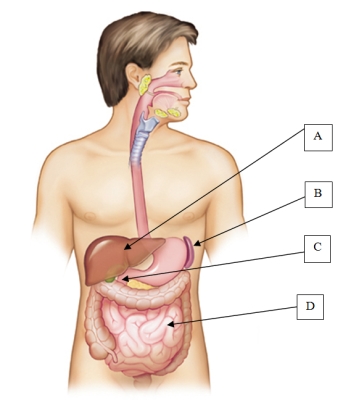
(Multiple Choice)
4.9/5 (80)
(80) The client was recently admitted to the hospital with left lower quadrant pain. The client states, "It feels like my belly is cramping." During the focused interview, the client admitted to experiencing a significant amount of occupational stress. Guarding is noted during the abdominal examination. The nurse reviews the medical record (see chart below) and concludes that the client has developed a diverticulitis. Which client statement supports this conclusion by the nurse? 
(Multiple Choice)
4.9/5 (77)
(77) The nurse is palpating the left upper quadrant of a client's abdomen. Which organs may be assessed during this portion of the assessment?
(Multiple Choice)
4.8/5 (68)
(68) The nurse is preparing to perform an abdominal assessment. The client states, "Can you point to where my appendix is located?" Which location will the nurse point to when answering this client's question? 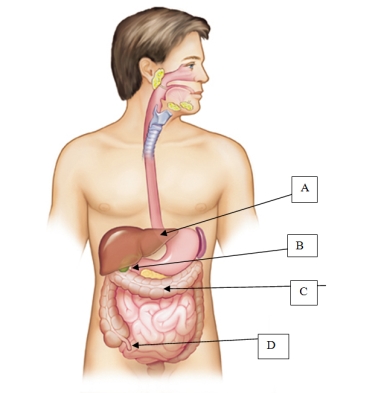
(Multiple Choice)
5.0/5 (71)
(71) A client asks the nurse, "What's the purpose of a gall bladder anyway? My mom lived for many years without her gallbladder." Which information would be beneficial for the nurse to share with this client?
(Multiple Choice)
4.7/5 (75)
(75) The nurse is preparing to examine a client who is complaining of right lower quadrant abdominal pain. Which actions by the nurse are appropriate in this situation?
(Multiple Choice)
4.9/5 (71)
(71) An adolescent client is seen for abdominal pain in the local clinic. The client states, "The pain is sort of all over my belly. I can't really find one place that hurts more than another area." Based on the nurse's understanding about disorders of abdomen and associated symptomatology, which nursing diagnoses are appropriate for this client?
(Multiple Choice)
4.7/5 (79)
(79) The nurse is completing discharge instructions for a client admitted with esophagitis. Which client statements indicate the need for further education?
(Multiple Choice)
4.8/5 (80)
(80) The nurse is assessing a client with reports of right upper quadrant pain that radiates toward the right upper portion of the back. The client states, "This has been happening more often after I eat rich, high-fat foods." Which disorder does the nurse suspect based on these findings?
(Multiple Choice)
4.8/5 (74)
(74) The nurse is assessing the client's abdomen and notes dullness when percussing over the left lower quadrant. Which question is most appropriate for the nurse to ask the client at this time?
(Multiple Choice)
4.8/5 (71)
(71) The nurse is assessing a client in the emergency department (ED) who complains of right lower quadrant pain. The nurse determines that the client is exhibiting a positive psoas sign. Based on the client's assessment data, which conditions does the nurse suspect?
(Multiple Choice)
4.9/5 (73)
(73) A client asks the nurse, "What's the purpose of the liver?" Which statements will the nurse include in the response to this client's question?
(Multiple Choice)
4.9/5 (96)
(96) The nurse is completing an abdominal assessment and is percussing over the left side of the upper portion of the client's abdomen over the area of the stomach. The client states, "I haven't had my breakfast, yet." Based on this statement, which does the nurse anticipate?
(Multiple Choice)
4.9/5 (80)
(80) The nurse is performing an abdominal assessment on an infant. The nurse notes that the umbilicus is bulging and has been displaced slightly to the left of midline. Based on this data, which diagnosis does the nurse anticipate?
(Multiple Choice)
4.9/5 (89)
(89) 
Filters
- Essay(0)
- Multiple Choice(0)
- Short Answer(0)
- True False(0)
- Matching(0)