



 Chat with AI
Exam 17: Respiratory System

Exam 1: Health Assessment29 Questions
Exam 2: Human Development Across the Lifespan29 Questions
Exam 3: Wellness and Health Promotion29 Questions
Exam 4: Cultural Considerations29 Questions
Exam 5: Psychosocial Assessment29 Questions
Exam 6: Assessment of Vulnerable Populations30 Questions
Exam 7: Interviewing and Communication Techniques30 Questions
Exam 8: The Health History28 Questions
Exam 9: Techniques and Equipment29 Questions
Exam 10: General Survey32 Questions
Exam 11: Pain Assessment29 Questions
Exam 12: Nutritional Assessment31 Questions
Exam 13: Skin, Hair, Nails29 Questions
Exam 14: Head, Neck, and Related Lymphatics34 Questions
Exam 15: Eye34 Questions
Exam 16: Ears, Nose, Mouth, and Throat34 Questions
Exam 17: Respiratory System31 Questions
Exam 18: Breasts and Axillae31 Questions
Exam 19: Cardiovascular System28 Questions
Exam 20: Peripheral Vascular System28 Questions
Exam 21: Abdomen29 Questions
Exam 22: Urinary System33 Questions
Exam 23: Male Reproduction System29 Questions
Exam 24: Female Reproduction System30 Questions
Exam 25: Musculoskeletal System32 Questions
Exam 26: Neurologic System34 Questions
Exam 27: Pregnant Females26 Questions
Exam 28: Hospitalized Patient25 Questions
Exam 29: Complete Health Assessment26 Questions
Select questions type


The nurse is conducting an assessment. Where is the right anterior axillary line (ALL) located? 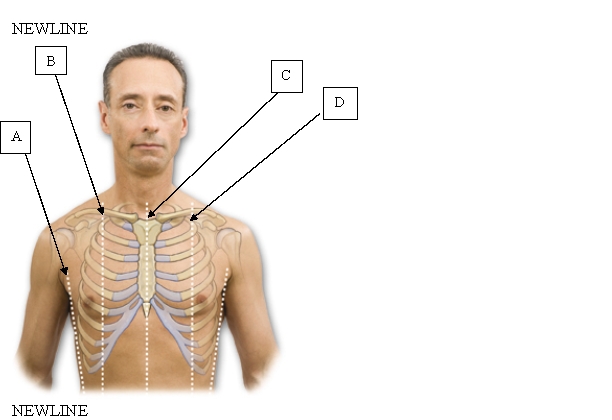
(Multiple Choice)
4.8/5  (87)
(87) While assessing the client, the nurse notes that the client has a productive cough. Based on this observation, which question is appropriate for the nurse to include in the focused interview?
(Multiple Choice)
4.8/5 (81)
(81) During the assessment of a client's voice sounds, the nurse hears louder sounds over the client's right lower lobe. The nurse suspects the client has which condition based on this assessment finding?
(Multiple Choice)
4.9/5 (78)
(78) As the nurse assesses the pregnant client, the client states that she sometimes feels like she has difficulty breathing. The client has reached the 36th week of her pregnancy. Which is the reason that the client is experiencing this phenomenon?
(Multiple Choice)
4.7/5 (85)
(85) The client aspirated a pea during a meal. The healthcare provider notes that the pea is located in the bronchus. When educating the client regarding the location of the pea, which is the correct location for the nurse to use? 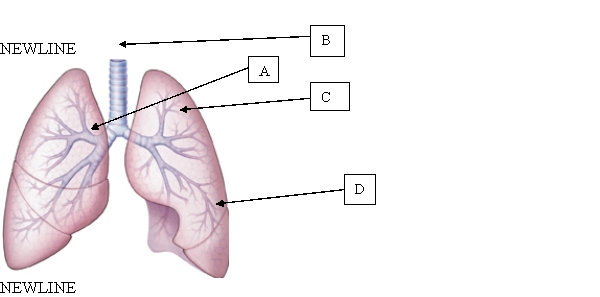
(Multiple Choice)
4.9/5 (78)
(78) The nurse is providing care to a client in the emergency department who received a breathing treatment earlier. The nurse is now preparing the client for a procedure and notes that the client is breathing in a shallow manner and the client's hands are trembling. Which action will help decrease the client's level of anxiety?
(Multiple Choice)
4.8/5 (82)
(82) The nurse is percussing the anterior chest of an older adult client. Which finding does the nurse anticipate for this client based on the age?
(Multiple Choice)
4.9/5 (83)
(83) The nurse wants to assess the apex of a client's right lung. Which locations should the nurse place the stethoscope to assess this area on the client?
(Multiple Choice)
4.8/5 (80)
(80) The nurse is preparing to auscultate the client's chest. Where will the nurse place the stethoscope to auscultate tracheal breath sounds? 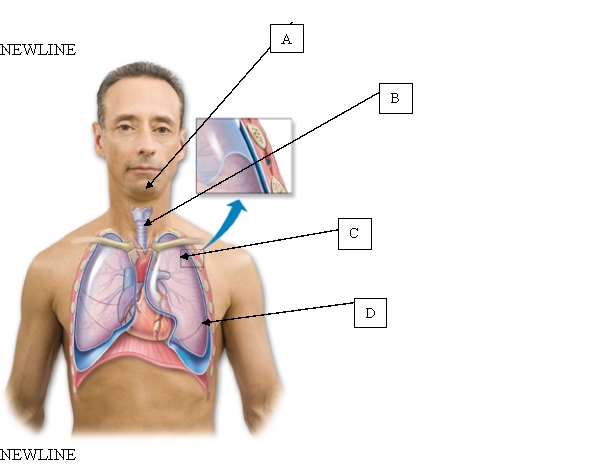
(Multiple Choice)
4.9/5 (70)
(70) The nurse is preparing an educational program regarding Healthy People 2020. Which pieces of information are important to include for caregivers of infants and young children?
(Multiple Choice)
4.7/5 (94)
(94) The nurse is assessing the client and notes low-pitched, continuous respiratory sounds that have a snoring quality while auscultating the client's lungs. Which term would the nurse use when documenting this finding?
(Multiple Choice)
4.9/5 (94)
(94) 
Filters
- Essay(0)
- Multiple Choice(0)
- Short Answer(0)
- True False(0)
- Matching(0)