



 Chat with AI
Exam 5: Stereochemistry

Exam 1: The Basics158 Questions
Exam 2: Families of Carbon151 Questions
Exam 3: Acids and Bases149 Questions
Exam 4: Nomenclature and Conformations of Alkanes and Cycloalkanes163 Questions
Exam 5: Stereochemistry179 Questions
Exam 6: Nucleophilic Reactions91 Questions
Exam 7: Alkenes and Alkynes I220 Questions
Exam 8: Alkenes and Alkynes II163 Questions
Exam 9: Nuclear Magnetic Resonance and Mass Spectrometry158 Questions
Exam 10: Radical Reactions148 Questions
Exam 11: Alcohols and Ethers256 Questions
Exam 12: Alcohols From Carbonyl Compounds210 Questions
Exam 13: Conjugated Unsaturated Systems201 Questions
Exam 14: Aromatic Compounds186 Questions
Exam 15: Reactions of Aromatic Compounds207 Questions
Exam 16: Aldehydes and Ketones189 Questions
Exam 17: Carboxylic Acids and Their Derivatives213 Questions
Exam 18: Reactions at the Α Carbon of Carbonyl Compounds190 Questions
Exam 19: Condensation and Conjugate Addition Reactions of Carbonyl Compounds182 Questions
Exam 20: Amines207 Questions
Exam 21: Transition Metal Complexes86 Questions
Exam 22: Carbohydrates124 Questions
Exam 23: Lipids127 Questions
Exam 24: Amino Acids and Proteins135 Questions
Exam 25: Nucleic Acids and Protein Synthesis126 Questions
Select questions type


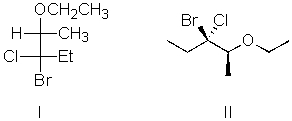

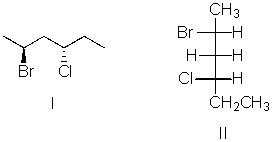
The Cahn-Ingold-Prelog stereochemical designations used for the following substance are: 
(Multiple Choice)
4.9/5  (81)
(81) 
Draw a dash-wedge structure for (3S,4R)-4-fluoro-2,4-dimethylheptan-3-ol
(Essay)
4.9/5 (87)
(87) In the absence of specific data,it can only be said that (R)-2-bromopentane is:
(Multiple Choice)
5.0/5 (104)
(104) 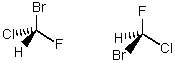
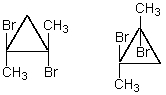
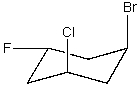
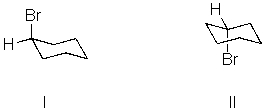
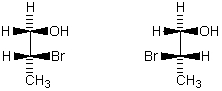
What is the complete IUPAC name of the following substance? (Remember to give stereochemical details,as relevant.) 
(Short Answer)
4.9/5 (83)
(83) Draw a dash-wedge structure for (1R)-1-bromo-1,3,3-trimethylcyclohexane
(Essay)
4.9/5 (96)
(96) 
Draw a dash-wedge structure for (1S,3R)-1-ethyl-1,3-dimethylcyclopentane
(Essay)
4.7/5 (78)
(78) The name of the compound formed when 1,2-dimethylcyclohexene is treated with H2 in Pd/C is:
(Multiple Choice)
4.9/5 (84)
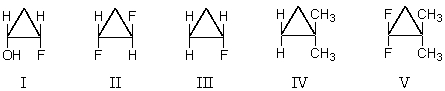
(84) 
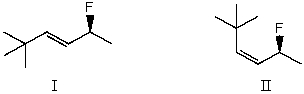
Which of the following is the enantiomer of the following substance? 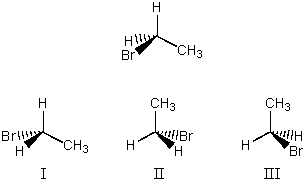
(Multiple Choice)
5.0/5 (77)
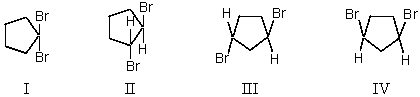
(77) Which of the following compounds (I-IV)represent enantiomers? 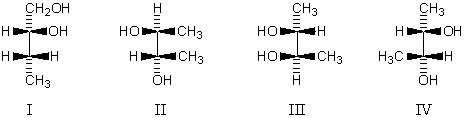
(Multiple Choice)
4.9/5 (86)
(86) 
Filters
- Essay(0)
- Multiple Choice(0)
- Short Answer(0)
- True False(0)
- Matching(0)