



 Chat with AI
Exam 6: Elasticities

Exam 1: The Role and Method of Economics194 Questions
Exam 2: Eight Powerful Ideas212 Questions
Exam 3: Scarcity, Trade-Offs, and Production Possibilities182 Questions
Exam 4: Demand, Supply, and Market Equilibrium231 Questions
Exam 5: Market in Motion and Price Controls252 Questions
Exam 6: Elasticities271 Questions
Exam 7: Market Efficiency and Welfare128 Questions
Exam 8: Market Failure259 Questions
Exam 9: Public Finance and Public Choice62 Questions
Exam 10: Consumer Choice Theory206 Questions
Exam 11: The Firm: Production and Costs147 Questions
Exam 12: Firms in Perfectly Competitive Markets124 Questions
Exam 13: Monopoly and Antitrust62 Questions
Exam 14: Monopolistic Competition and Product Differentiation207 Questions
Exam 15: Oligopoly and Strategic Behavior68 Questions
Exam 16: The Markets for Labor, Capital, and Land131 Questions
Exam 17: Income, Poverty and Health Care252 Questions
Exam 18: Introduction to Macroeconomics: Unemployment, Inflation, and Economic Fluctuations152 Questions
Exam 19: Measuring Economic Performance152 Questions
Exam 20: Economic Growth in the Global Economy163 Questions
Exam 21: Financial Markets, Saving, and Investment146 Questions
Select questions type


If the cross price elasticity between Goods A and B equals 0.7, then a reduction in the price of Good B will:
(Multiple Choice)
4.9/5  (81)
(81) For a given increase in price, a greater elasticity of demand will result in a greater
(Multiple Choice)
4.8/5 (79)
(79) If the elasticity of supply coefficient for a good is 6, we know:
(Multiple Choice)
4.8/5 (85)
(85) The price elasticity of demand for tickets to local hockey matches is estimated to be equal to 0.89. In order to boost ticket revenues, an economist would advise:
(Multiple Choice)
4.9/5 (73)
(73) 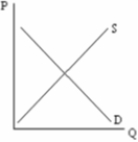
Exhibit 6-4  -Refer to Exhibit 6-4. With reference to Graph A, at a price of $5, total revenue equals:
 (Multiple Choice)
4.9/5 (74)
(74) Moving along an elastic portion of a demand curve, a small percentage change in price leads to a larger percentage change in quantity demanded.
(True/False)
4.8/5 (90)
(90) In a recent fare war, America West reduced the price of its roundtrip airfare from Charlotte, North Carolina, to New York City from $198 to $138 to match American Airlines. America West matched the fare reluctantly, saying it would cost the company millions of dollars in revenue for those tickets to be sold for less. American, on the other hand, believed the fare cut would increase its revenue even if rival airlines matched the lower fares. What different assumptions about the underlying price elasticity of demand for airline tickets on that route did each airline believe true?
(Essay)
4.9/5 (71)
(71) If the price elasticity of demand for a good is 5.0, then a 10 percent increase in price results in a
(Multiple Choice)
4.8/5 (71)
(71) When a 5% increase in price leads to an 8% increase in quantity supplied, supply is relatively inelastic.
(True/False)
5.0/5 (75)
(75) If the measured elasticity of supply coefficient equals 1.3, then supply is:
(Multiple Choice)
5.0/5 (82)
(82) Unlike demand, the longer the time suppliers have to respond to a change in price, the less elastic is the supply curve.
(True/False)
4.9/5 (76)
(76) Supply is said to be ____ when the quantity supplied is very responsive to changes in price.
(Multiple Choice)
4.8/5 (86)
(86) When a product's price increases from $800 to $1,200, the quantity demanded decreases from 11,000 to 9,000. Based on this information, the price elasticity of demand (in absolute terms) is estimated to be equal to:
(Multiple Choice)
4.7/5 (65)
(65) If the short run elasticity of demand for widgets is 0.7 and the long run elasticity of demand for widgets is 1.5, an increase in price will ____ total revenue in the short run and ____ total revenue in the long run.
(Multiple Choice)
4.9/5 (75)
(75) If a university charged a lower price for tuition during summer school than during the regular session, in search of added total revenue,
(Multiple Choice)
4.8/5 (81)
(81) If two goods both had positive cross elasticities and positive income elasticities,
(Multiple Choice)
4.7/5 (65)
(65) 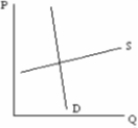
Which of the following is the most important determinant of the elasticity of supply?
(Multiple Choice)
4.7/5 (70)
(70) 
Filters
- Essay(0)
- Multiple Choice(0)
- Short Answer(0)
- True False(0)
- Matching(0)