



 Chat with AI
Exam 38: Medication Administration and Safety for Infants and Children

Exam 1: Foundations of Maternity, Women’s Health, and Child Health Nursing26 Questions
Exam 2: The Nurse’s Role in Maternity, Women’s Health, and Pediatric Nursing17 Questions
Exam 3: The Childbearing and Child-Rearing Family23 Questions
Exam 4: Communicating with Children and Families18 Questions
Exam 5: Health Promotion for the Developing Child20 Questions
Exam 6: Health Promotion for the Infant26 Questions
Exam 7: Health Promotion During Early Childhood26 Questions
Exam 8: Health Promotion for the School-Age Child27 Questions
Exam 9: Health Promotion for the Adolescent26 Questions
Exam 10: Hereditary and Environmental Influences on Development20 Questions
Exam 11: Reproductive Anatomy and Physiology15 Questions
Exam 12: Conception and Prenatal Development25 Questions
Exam 13: Adaptations to Pregnancy43 Questions
Exam 14: Nutrition for Childbearing30 Questions
Exam 15: Prenatal Diagnostic Tests21 Questions
Exam 16: Giving Birth41 Questions
Exam 17: Intrapartum Fetal Surveillance27 Questions
Exam 18: Pain Management for Childbirth35 Questions
Exam 19: Nursing Care during Obstetric Procedures28 Questions
Exam 20: Postpartum Adaptations41 Questions
Exam 21: The Normal Newborn: Adaptation and Assessment44 Questions
Exam 22: The Normal Newborn: Nursing Care21 Questions
Exam 23: Newborn Feeding37 Questions
Exam 24: The Childbearing Family with Special Needs23 Questions
Exam 25: Pregnancy-Related Complications35 Questions
Exam 26: Concurrent Disorders during Pregnancy30 Questions
Exam 27: The Woman with an Intrapartum Complication30 Questions
Exam 28: The Woman with a Postpartum Complication34 Questions
Exam 29: The High-Risk Newborn: Problems Related to Gestational Age and Development25 Questions
Exam 30: The High-Risk Newborn: Acquired and Congenital Conditions30 Questions
Exam 31: Management of Fertility and Infertility25 Questions
Exam 32: Women’s HealthCare37 Questions
Exam 33: Physical Assessment of Children37 Questions
Exam 34: Emergency Care of the Child30 Questions
Exam 35: The Ill Child in the Hospital and Other Care Settings28 Questions
Exam 36: The Child with a Chronic Condition or Terminal Illness35 Questions
Exam 37: Principles and Procedures for Nursing Care of Children25 Questions
Exam 38: Medication Administration and Safety for Infants and Children26 Questions
Exam 39: Pain Management for Children20 Questions
Exam 40: The Child with a Fluid and Electrolyte Alteration17 Questions
Exam 41: The Child with an Infectious Disease22 Questions
Exam 42: The Child with an Immunologic Alteration22 Questions
Exam 43: The Child with a Gastrointestinal Alteration55 Questions
Exam 44: The Child with a Genitourinary Alteration33 Questions
Exam 45: The Child with a Respiratory Alteration48 Questions
Exam 46: The Child with a Cardiovascular Alteration39 Questions
Exam 47: The Child with a Hematologic Alteration25 Questions
Exam 48: The Child with Cancer27 Questions
Exam 49: The Child with an Alteration in Tissue Integrity34 Questions
Exam 50: The Child with a Musculoskeletal Alteration37 Questions
Exam 51: The Child with an Endocrine or Metabolic Alteration31 Questions
Exam 52: The Child with a Neurologic Alteration41 Questions
Exam 53: Psychosocial Problems in Children and Families20 Questions
Exam 54: The Child With an Intellectual Disability or Developmental Disability25 Questions
Exam 55: The Child with a Sensory Alteration32 Questions
Select questions type


When teaching a mother how to administer eye drops,where should the nurse tell her to place them?

Free
(Multiple Choice)
4.9/5  (80)
(80) Correct Answer: Verified
A
What is the best action for the nurse to take when giving medications to a 3-year-old child?
Free
(Multiple Choice)
4.9/5 (82)
(82) Correct Answer:Verified
VerifiedC
A child is being discharged from the hospital on insulin.The mother is apprehensive about giving the medication.What action by the nurse is most important?
Free
(Multiple Choice)
4.7/5 (85)
(85) Correct Answer:Verified
VerifiedC
Guidelines for intramuscular administration of medication in school-age children include
(Multiple Choice)
5.0/5 (75)
(75) What nursing action is indicated when a child receiving a unit of packed red blood cells complains of chills,headache,and nausea?
(Multiple Choice)
4.8/5 (84)
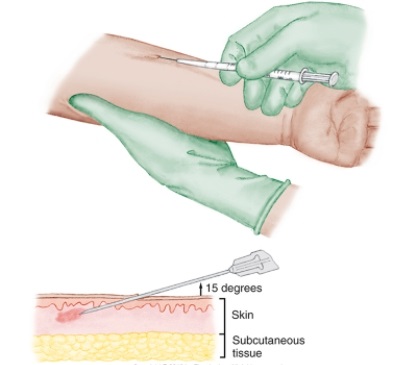
(84) What nursing actions are correct when administering subcutaneously? (Select all that apply.)
(Multiple Choice)
4.8/5 (78)
(78) Which physiologic difference affects the absorption of oral medications administered to a 3-month-old infant?
(Multiple Choice)
4.8/5 (83)
(83) When liquid medication is given to a crying 10-month-old infant,which approach minimizes the possibility of aspiration?
(Multiple Choice)
5.0/5 (77)
(77) What is the maximum safe volume that a neonate can receive in an intramuscular injection?
(Multiple Choice)
5.0/5 (85)
(85) The nurse administering an IV piggyback medication to a preschool child should
(Multiple Choice)
4.9/5 (75)
(75) What action indicates that a school-age child is using a metered-dose inhaler correctly?
(Multiple Choice)
4.8/5 (79)
(79) What is the main purpose for using a volume-control device or an infusion pump to administer intravenous fluids to children?
(Multiple Choice)
4.8/5 (81)
(81) A child is receiving intravenous fluids.How frequently should the nurse assess and document the condition of the child's intravenous site?
(Multiple Choice)
4.8/5 (90)
(90) What action is appropriate when using an EMLA cream before intravenous catheter insertion?
(Multiple Choice)
4.9/5 (74)
(74) What is the appropriate nursing response to a parent who asks,"What should I do if my child cannot take a tablet?"
(Multiple Choice)
4.9/5 (84)
(84) What is the hourly maintenance fluid rate for an intravenous infusion in a child weighing 19.5 kg?
(Multiple Choice)
5.0/5 (81)
(81) A registered nurse is watching a student nurse give an IM injection to a 1-year-old.The student identifies the following site for the injection.What action by the registered nurse is best?
(Multiple Choice)
4.8/5 (75)
(75) What should the nurse use to prepare liquid medication in volumes less than 5 mL?
(Multiple Choice)
4.9/5 (88)
(88) A nurse should routinely ask a colleague to double-check a medication calculation and the actual medication before administering which medications? (Select all that apply.)
(Multiple Choice)
4.7/5 (84)
(84) 
Filters
- Essay(0)
- Multiple Choice(0)
- Short Answer(0)
- True False(0)
- Matching(0)