



 Chat with AI
Exam 2: Water and Carbon: the Chemical Basis of Life

Exam 1: Biology and the Tree of Life37 Questions
Exam 2: Water and Carbon: the Chemical Basis of Life59 Questions
Exam 3: Protein Structure and Function59 Questions
Exam 4: Nucleic Acids and the Rna World43 Questions
Exam 5: An Introduction to Carbohydrates44 Questions
Exam 53: Ecosystems and Global Ecology57 Questions
Exam 6: Lipids, Membranes, and the First Cells59 Questions
Exam 7: Inside the Cell60 Questions
Exam 8: Energy and Enzymes: an Introduction to Metabolism60 Questions
Exam 9: Cellular Respiration and Fermentation61 Questions
Exam 10: Photosynthesis58 Questions
Exam 11: Cellcell Interactions52 Questions
Exam 12: The Cell Cycle59 Questions
Exam 13: Meiosis63 Questions
Exam 14: Mendel and the Gene60 Questions
Exam 15: Dna and the Gene: Synthesis and Repair51 Questions
Exam 16: How Genes Work48 Questions
Exam 17: Transcription, Rna Processing, and Translation58 Questions
Exam 18: Control of Gene Expression in Bacteria29 Questions
Exam 19: Control of Gene Expression in Eukaryotes56 Questions
Exam 20: The Molecular Revolution: Biotechnology and Beyond70 Questions
Exam 21: Genes, Development, and Evolution38 Questions
Exam 22: Evolution by Natural Selection38 Questions
Exam 23: Evolutionary Processes37 Questions
Exam 24: Speciation56 Questions
Exam 25: Phylogenies and the History of Life63 Questions
Exam 26: Bacteria and Archaea38 Questions
Exam 27: Protists37 Questions
Exam 28: Green Algae and Land Plants59 Questions
Exam 29: Fungi47 Questions
Exam 30: An Introduction to Animals48 Questions
Exam 31: Protostome Animals54 Questions
Exam 32: Deuterostome Animals60 Questions
Exam 33: Viruses44 Questions
Exam 34: Plant Form and Function46 Questions
Exam 35: Water and Sugar Transport in Plants47 Questions
Exam 36: Plant Nutrition54 Questions
Exam 37: Plant Sensory Systems, Signals, and Responses48 Questions
Exam 38: Plant Reproduction and Development51 Questions
Exam 39: Animal Form and Function53 Questions
Exam 40: Water and Electrolyte Balance in Animals60 Questions
Exam 41: Animal Nutrition94 Questions
Exam 42: Gas Exchange and Circulation93 Questions
Exam 43: Animal Nervous Systems100 Questions
Exam 44: Animal Sensory Systems50 Questions
Exam 45: Animal Movement40 Questions
Exam 46: Chemical Signals in Animals59 Questions
Exam 47: Animal Reproduction and Development104 Questions
Exam 48: The Immune System in Animals77 Questions
Exam 49: An Introduction to Ecology40 Questions
Exam 50: Behavioral Ecology40 Questions
Exam 51: Population Ecology57 Questions
Exam 52: Community Ecology55 Questions
Exam 54: Biodiversity and Conservation Biology43 Questions
Select questions type


Ice melts spontaneously at room temperature, even though the process is endothermic. How is this possible?
(Multiple Choice)
4.9/5  (80)
(80) Based on your knowledge of the polarity of water molecules, the solute molecule depicted here is most likely ________. 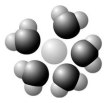
(Multiple Choice)
4.8/5 (84)
(84) 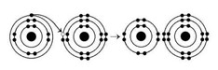 What results from the chemical reaction illustrated above? The reactants have no charge.
 (Multiple Choice)
4.7/5 (78)
(78) A solution contains 0.0000001 (10−7) moles of hydroxyl ions [OH−] per liter. Which of the following best describes this solution?
(Multiple Choice)
4.8/5 (88)
(88) During chemical evolution, which of the following occurred in the molecules involved?
(Multiple Choice)
4.7/5 (73)
(73) Which of the following is a property of liquid water? Liquid water ________.
(Multiple Choice)
4.8/5 (93)
(93) Stanley Miller's 1953 experiments supported the hypothesis that ________.
(Multiple Choice)
5.0/5 (79)
(79) What is the difference between covalent bonds and ionic bonds?
(Multiple Choice)
4.7/5 (74)
(74) Nitrogen (N) is more electronegative than hydrogen (H). Which of the following is a correct statement about the atoms in ammonia (NH3)?
(Multiple Choice)
4.7/5 (80)
(80) 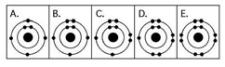 -Which drawing in the figure above depicts an atom with six valence electrons?
 (Multiple Choice)
5.0/5 (91)
(91) About twenty-five of the 92 natural elements are known to be essential to life. Which 4 of these 25 elements make up approximately 96 percent of living matter?
(Multiple Choice)
5.0/5 (83)
(83) Which of the following is the most spontaneous reaction? A reaction that is ________.
(Multiple Choice)
4.7/5 (83)
(83) Which of the following effects can occur because of the high surface tension of water?
(Multiple Choice)
4.8/5 (74)
(74) What is the pH of a solution with a hydroxyl ion (OH−) concentration of 10−12 M?
(Multiple Choice)
4.8/5 (72)
(72) Why is each element unique with respect to its chemical properties? Each element has a distinctive ________.
(Multiple Choice)
5.0/5 (82)
(82) When the atoms involved in a covalent bond have the same electronegativity, what type of bond results?
(Multiple Choice)
4.8/5 (70)
(70) 
Filters
- Essay(0)
- Multiple Choice(0)
- Short Answer(0)
- True False(0)
- Matching(0)