



 Chat with AI
Exam 11: Derivatives Continued

Exam 1: Linear Equations and Functions245 Questions
Exam 2: Quadratic and Other Special Functions120 Questions
Exam 3: Matrices230 Questions
Exam 4: Inequalities and Linear Programming119 Questions
Exam 5: Exponential and Logarithmic Functions109 Questions
Exam 6: Mathematics of Finance131 Questions
Exam 7: Introduction to Probability180 Questions
Exam 8: Further Topics in Probability and Data Description114 Questions
Exam 9: Derivatives249 Questions
Exam 10: Derivatives172 Questions
Exam 11: Derivatives Continued139 Questions
Exam 12: Indefinite Integrals120 Questions
Exam 13: Definite Integrals - Techniques370 Questions
Exam 13: A: Definite Integrals - Techniques370 Questions
Exam 14: Functions of Two or More Variables122 Questions
Exam 15: Algebraic Concepts 240 Questions
Exam 15: Algebraic Concepts 374 Questions
Exam 15: Algebraic Concepts 496 Questions
Exam 15: Algebraic Concepts 599 Questions
Select questions type


Suppose the concentration C(t), in mg/ml, of a drug in the bloodstream t minutes after an injection is given by 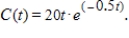 Find the maximum concentration and when it occurs.
 (Multiple Choice)
4.8/5  (74)
(74) 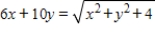 .
Find dy/dx at the given point without first solving for y.  at

at (Multiple Choice)
4.9/5 (74)
(74) Suppose that production of a certain agricultural crop is related to the number of hours of labor x, and the number of acres of the crop y, according to  Find the rate of change of the number of hours, with respect to the number of acres.
 (Multiple Choice)
4.9/5 (88)
(88) 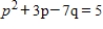 .
 if
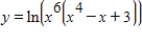
Total personal income in the U.S. (in billions of dollars) for selected years from 1960 to 2002 is given in the following table.

These data can be modeled by
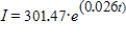 , where x is the number of years past 1960. If this model is accurate, find the rate of change of the total U.S. personal income in 2001. Round your answer to the nearest ten million dollar.
These data can be modeled by , where x is the number of years past 1960. If this model is accurate, find the rate of change of the total U.S. personal income in 2001. Round your answer to the nearest ten million dollar.
(Multiple Choice)
5.0/5 (87)
(87) Assume that x and y are differentiable functions of t. Find  given that
 ,
 , and
 . Round your answer to two decimal places.

given that , , and . Round your answer to two decimal places. (Multiple Choice)
4.9/5 (81)
(81) Suppose that the supply of x units of a product at price p dollars per unit is given by  . Find the rate of change of supply price with respect to the number of units supplied.
 (Multiple Choice)
4.7/5 (74)
(74) 
p is in dollars and q is the number of units. Find the elasticity of the demand function  at the price p = $10. Round your answer to two decimal places.
 (Multiple Choice)
4.9/5 (75)
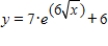
(75) 
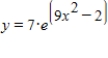
Suppose that the total cost (in dollars) for a product is given by  , where x is the number of units produced. Find the marginal cost when 500 units are produced, and interpret your result. Round your answer to the nearest cent.
 (Multiple Choice)
4.8/5 (76)
(76)  .
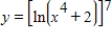
Assume that x and y are differentiable functions of t. If  find dx/dt when
 ,
 , and
 .
find dx/dt when , , and . (Multiple Choice)
4.9/5 (80)
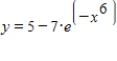
(80) 
The resistance R of a blood vessel to the flow of blood is a function of the radius r of the blood vessel and is given by  , where k is a constant. For
 find the percent rate of change of the resistance of a blood vessel in terms of the percent rate of change in the radius of the blood vessel.
, where k is a constant. For find the percent rate of change of the resistance of a blood vessel in terms of the percent rate of change in the radius of the blood vessel. (Multiple Choice)
4.9/5 (87)
(87) 
Filters
- Essay(0)
- Multiple Choice(0)
- Short Answer(0)
- True False(0)
- Matching(0)