



 Chat with AI
Exam 1: The Derivative

Exam 1: The Derivative189 Questions
Exam 2: Applications of the Derivative93 Questions
Exam 3: Techniques of Differentiation69 Questions
Exam 4: Logarithm Functions135 Questions
Exam 5: Applications of the Exponential and Natural Logarithm Functions73 Questions
Exam 6: The Definite Integral135 Questions
Exam 7: Functions of Several Variables119 Questions
Exam 8: The Trigonometric Functions128 Questions
Exam 9: Techniques of Integration178 Questions
Exam 10: Differential Equations126 Questions
Exam 11: Taylor Polynomials and Infinite Series132 Questions
Exam 12: Probability and Calculus92 Questions
Select questions type


Find the equation of the following line: Slope is 3; y-intercept is 5.
Enter your answer in slope-intercept form.
(Short Answer)
4.8/5  (97)
(97) A point P is moving along the x-axis. At any time t, the location of P on the x-axis is described by . Determine the instantaneous acceleration at time of the point P.
Enter just an integer.
(Short Answer)
4.7/5 (88)
(88) Find the slope of the line with equation 2x + 4 = 2(2y + 3).
Enter just a fraction of form in lowest terms.
(Short Answer)
4.7/5 (73)
(73) Find the equation of the tangent line to the curve y = 1 + 3x - at x = 5.
Enter your answer in standard slope-intercept form.
(Short Answer)
4.7/5 (75)
(75) Consider 2 lines each having slope , one passing through the point (-1, 2) and the other through (3, 5). Which of the following is/are true?
(I) They are parallel.
(II) They are the same line.
(III) They cross the x-axis at the same point.
(IV) They intersect at the point (0, 3).
(Multiple Choice)
5.0/5 (76)
(76) Find the derivative of f(x) = .
Enter your answer exactly in the form: a . Do not use parentheses.
No parentheses.
(Short Answer)
5.0/5 (72)
(72) The function i(x) = is continuous everywhere except at x = -7. If possible, define f(x) at in a way that makes f(x) continuous for all x.
Enter your answer exactly as just: f(-7) = a where a is an integer or enter the words "not possible".
(Short Answer)
4.8/5 (75)
(75) Find the equation of the following line: and (2, 0) on line.
Enter your answer in point-slope form using .
(Short Answer)
4.8/5 (82)
(82) Which of the following lines is/are parallel to the tangent line of the graph of at the point where and the slope of the tangent line is .
(I) y = -3x + 1
(II) y = 3x + 1
(III) y = -3x - 4
(IV) y = 3x + 1
(Multiple Choice)
4.8/5 (80)
(80) Calculate the following limit(s) if they exist.
- + 1
Enter either a fraction, integer, or the words "does not exist"
(Short Answer)
4.8/5 (81)
(81) A ball is thrown straight up. Its height, in feet, at time t, in seconds, is represented by the equation . Determine the instantaneous velocity of the ball at .
Enter just an integer (no units)
(Short Answer)
4.9/5 (92)
(92) If g(x) = 2 - x + 3, compute g(1) and g'(1).
Enter your answer exactly in the form: g(1) = a, g'(1) = b
where a,b are integers
(Short Answer)
4.8/5 (76)
(76) A rock is thrown off a cliff. Its distance from the ground below at t seconds is feet. What is the velocity of the rock when it slams into the ground?
Enter just an integer.
(Short Answer)
4.9/5 (71)
(71) Let f(t) = - . Compute .
Enter just a fraction in lowest terms.
(Short Answer)
4.8/5 (76)
(76) Calculate the following limit(s) if they exist.
- Enter your answer as a fraction, integer, or "does not exist".
(Short Answer)
4.9/5 (92)
(92) Find the derivative of f(x) = .
Enter your answer exactly in the form: where a, b are integers. Do not use parentheses.
(Short Answer)
4.9/5 (81)
(81) For the following function f(x), determine whether or not f(x) exists. If so, give the limit. 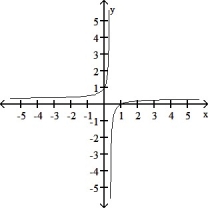
(Multiple Choice)
4.7/5 (91)
(91) For the following function f(x), determine whether or not f(x) exists. If so, give the limit.
Enter either a real number or the words "does not exist". 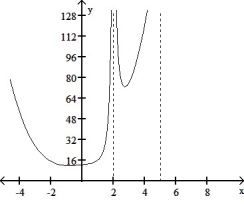
(Short Answer)
4.9/5 (85)
(85) 
Filters
- Essay(0)
- Multiple Choice(0)
- Short Answer(0)
- True False(0)
- Matching(0)