



 Chat with AI
Exam 1: The Derivative

Exam 1: The Derivative189 Questions
Exam 2: Applications of the Derivative93 Questions
Exam 3: Techniques of Differentiation69 Questions
Exam 4: Logarithm Functions135 Questions
Exam 5: Applications of the Exponential and Natural Logarithm Functions73 Questions
Exam 6: The Definite Integral135 Questions
Exam 7: Functions of Several Variables119 Questions
Exam 8: The Trigonometric Functions128 Questions
Exam 9: Techniques of Integration178 Questions
Exam 10: Differential Equations126 Questions
Exam 11: Taylor Polynomials and Infinite Series132 Questions
Exam 12: Probability and Calculus92 Questions
Select questions type


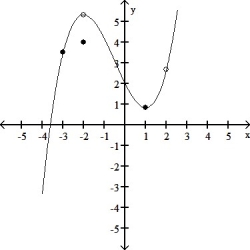

Write the word or phrase that best completes each statement or answers the question.
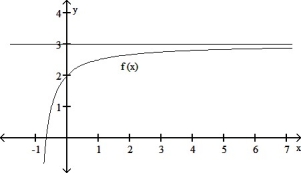
-y = Enter your answer as just: where P(x) and Q(x) are polynomials in standard form.
(Short Answer)
4.7/5  (76)
(76)  -
Write the word or phrase that best completes each statement or answers the question.
-y = Enter your answer exactly as just: where P(x) and Q(x) are polynomials in standard form.
(Short Answer)
4.8/5 (73)
(73) 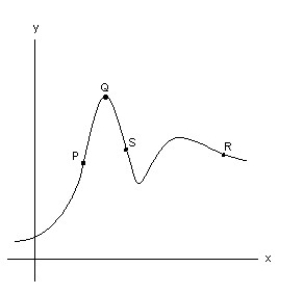 -R
Calculate the following limit(s) if they exist.
- Enter your answer as just an integer or a fraction in lowest terms, or the words "does not exist".
(Short Answer)
4.9/5 (91)
(91) Find the second derivative of f(x) = 3 - 4 + 5x + 1.
Enter just a polynomial in standard form, unlabeled.
(Short Answer)
5.0/5 (76)
(76) If f(t) = 5t - 4, find where h ≠ 0 and simplify.
Enter your answer as just an integer.
(Short Answer)
5.0/5 (70)
(70) Calculate the following limit(s) if they exist.
- Enter your answer as just a fraction or an integer, or the words " does not exist"
(Short Answer)
4.9/5 (74)
(74) Calculate the following limit(s) if they exist.
- + 1
Enter either a fraction in lowest terms, an integer, or "does not exist".
(Short Answer)
4.8/5 (89)
(89) The tangent line to the curve y = - - x + 4 is perpendicular to the line at two points on the curve. Find the two points.
(Multiple Choice)
4.9/5 (74)
(74) Find second derivative of y = at x = -1.
Enter just an integer.
(Short Answer)
4.9/5 (72)
(72) 
Filters
- Essay(0)
- Multiple Choice(0)
- Short Answer(0)
- True False(0)
- Matching(0)