



 Chat with AI
Exam 10: Monopolistic Competition and Oligopoly

Exam 1: Thinking Like an Economist89 Questions
Exam 2: Applying Graphs to Economics37 Questions
Exam 3: Production Possibilities and Opportunity Cost122 Questions
Exam 4: Market Demand and Supply120 Questions
Exam 5: Markets in Action120 Questions
Exam 6: Elasticity of Demand and Supply118 Questions
Exam 7: Production Costs119 Questions
Exam 8: Perfect Competition124 Questions
Exam 9: Monopoly120 Questions
Exam 10: Monopolistic Competition and Oligopoly124 Questions
Exam 11: Policy Issues: Housing Affordability and Climate Change79 Questions
Exam 12: Measuring the Size of the Economy124 Questions
Exam 13: Business Cycles and Economic Growth120 Questions
Exam 14: Inflation and Unemployment116 Questions
Exam 15: A Simple Model of the Macro Economy134 Questions
Exam 16: The Monetary and Financial System123 Questions
Exam 17: Macroeconomic Policy I: Monetary Policy120 Questions
Exam 18: Macroeconomic Policy II: Fiscal Policy123 Questions
Exam 19: International Trade and Finance132 Questions
Select questions type


In the long run, marginal cost must equal marginal revenue for a monopolistically competitive firm, and the minimum point of the long-run average cost curve.
(True/False)
4.8/5  (74)
(74) Oligopolies are mutually interdependent because an action by one firm may cause a reaction on the part of other firms.
(True/False)
5.0/5 (75)
(75) When Pepsi is considering a price hike, it needs to consider how Coke may react. This situation is called:
(Multiple Choice)
4.8/5 (88)
(88) Which of the following is true in long-run equilibrium for both perfect competition and monopolistic competition?
(Multiple Choice)
5.0/5 (74)
(74) In which of the following market structures must the price and output decisions of an individual firm include the possible price and output reactions of the firm's rivals?
(Multiple Choice)
4.9/5 (85)
(85) Product differentiation makes the demand for a monopolistically competitive firm's product:
(Multiple Choice)
4.8/5 (94)
(94) It is more difficult to evaluate oligopoly than other market structures because:
(Multiple Choice)
4.7/5 (80)
(80) Narrbegin Exhibit 9.3 Kinked demand curves  -In Exhibit 9.3, the exhibit represents a kinked-demand oligopoly model. Suppose the current price is $50. If one firm in the oligopoly now attempts to lower its price, all firms will:
 (Multiple Choice)
4.8/5 (71)
(71) Suppose an oligopoly has a dominant firm that sets the price for the entire industry. In this situation, the oligopoly has:
(Multiple Choice)
4.8/5 (90)
(90) A group of firms that collude to limit competition is called a/an:
(Multiple Choice)
4.8/5 (79)
(79) We can represent the entry of new firms into a monopolistically competitive market by making the existing firms':
(Multiple Choice)
4.9/5 (73)
(73) One of the differences between perfect competition and oligopoly is:
(Multiple Choice)
4.7/5 (87)
(87) Narrbegin Exhibit 9.1 A monopolistic competitive firm 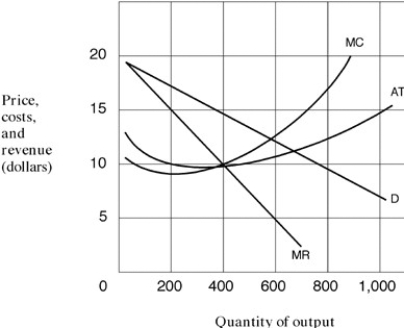 -As presented in Exhibit 9.1, in the short-run the monopolistically competitive firm will charge a price per unit of:
 (Multiple Choice)
4.9/5 (79)
(79) 
Filters
- Essay(0)
- Multiple Choice(0)
- Short Answer(0)
- True False(0)
- Matching(0)